
Main Courses
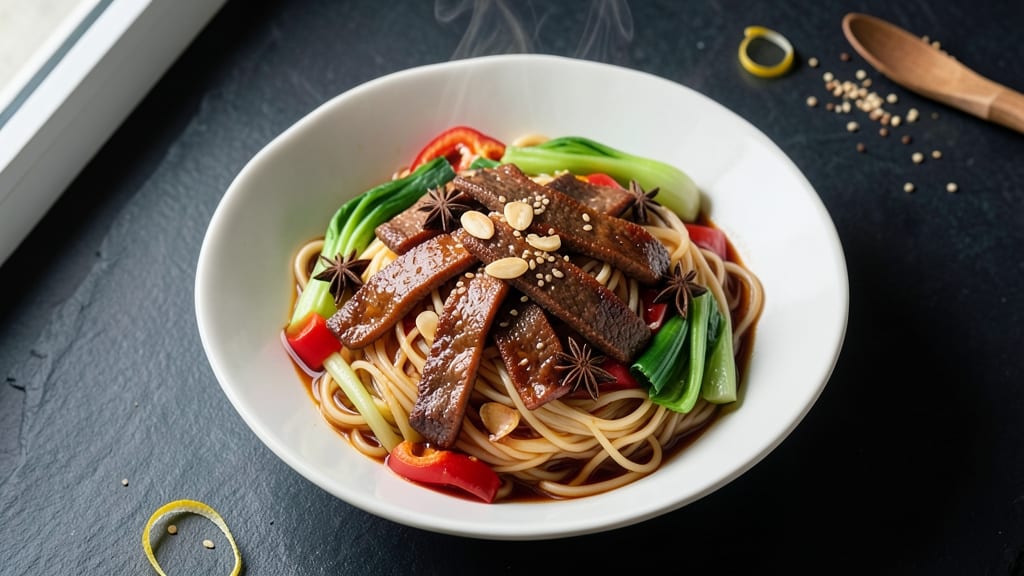
This authentic Chinese beef lo mein recipe delivers the smoky, aromatic flavors of a bustling Cantonese restaurant right to your kitchen. The secret lies in charred garlic, star anise-infused broth, and the signature wok hei—those coveted smoky wok breaths that transform simple ingredients into something extraordinary.
I’ve perfected this recipe over years of testing, ensuring every bite delivers the perfect balance of tender beef, chewy noodles, and vibrant vegetables.
The foundation starts with fresh egg noodles, stir-fried just until tender but still with a satisfying bite. Thinly sliced beef gets marinated in a blend of soy, oyster, and sesame oils, then quickly seared to maintain its juiciness.
The star anise and charred garlic infuse the broth with deep, complex flavors that elevate the dish beyond basic stir-fry territory. Bok choy and cabbage add freshness, while a final toss with sesame seeds and green onions brings the dish together.
What sets this recipe apart is the wok hei technique—the smoky aroma that comes from high-heat cooking and proper wok motion. Even if you don’t have a wok, a cast-iron skillet or heavy pan works just as well. The result?
A dish that’s rich, savory, and packed with layers of flavor, served with a glossy, slightly sticky sauce that clings to every noodle. This isn’t just lo mein—it’s a taste of authentic Chinese home cooking, brought to life in your own kitchen.
The beauty of this recipe is its versatility. Double the ingredients for leftovers, or swap in shrimp or tofu for a vegetarian twist. Serve it over steamed rice for extra heartiness, or keep it as-is for a satisfying bowl of noodles.
The key is in the technique—high heat, quick cooking, and constant tossing to ensure every component is cooked to perfection. Let’s get started on creating your own restaurant-quality lo mein at home.
Ingredients for authentic chinese beef lo mein
Fresh noodles, tender beef, and aromatic spices—this is your authentic lo mein shopping list.
| Ingredient | Amount | Notes |
|---|---|---|
| Fresh Egg Noodles 🍜 | 12 oz | Dried or fresh, wide or thin |
| Flank Steak 🥩 | 1 lb | Thinly sliced against grain |
| Garlic Cloves 🧄 | 8 cloves | Charred for deep flavor |
| Star Anise 🌿 | 2 whole | For aromatic depth |
| Light Soy Sauce 🥄 | ⅓ cup | Kikkoman preferred |
| Oyster Sauce 🍜 | 2 tbsp | Lee Kum Kee brand |
| Sesame Oil 🫒 | 1 tbsp | Toasted, not flavored |
| Bok Choy 🥬 | 2 whole | Baby or regular size |
| Green Cabbage 🥬 | 3 cups | Shredded, thin strips |
| Green Onions 🧅 | 4 whole | Sliced, white and green |
| Sesame Seeds 🥜 | 1 tbsp | Toasted for garnish |
| Vegetable Oil 🫒 | ½ cup | High smoke point |
| Salt 🧂 | 1 tsp | Kosher or sea salt |
| Black Pepper 🌶️ | ½ tsp | Freshly ground |
| White Pepper 🌶️ | ¼ tsp | For subtle heat |
The beef is non-negotiable—flank steak delivers that perfect chew. Slice it thinly against the grain for tender results. Costco or Asian markets often carry pre-sliced versions, but if you're doing it yourself, freeze the meat for 30 minutes first to firm it up. For the star anise, whole pods from a bulk spice bin add more aroma than pre-ground. The noodles? Fresh egg noodles are ideal, but dried works too—just cook them al dente. Bok choy should be crisp, not wilted, and green cabbage adds that satisfying crunch.
No soy sauce? Coconut aminos in a pinch, but it won’t be the same. Oyster sauce can be swapped for hoisin sauce plus a splash of soy, though the depth won’t be identical. Sesame oil is key—toasted, not flavored. If you can’t find it, use light sesame oil at half the amount. The cabbage can be subbed for napa cabbage or coleslaw mix if you prefer a milder bite. For the garlic, charring is essential—burn the skins slightly for that smoky wok hei flavor. No wok? A cast-iron skillet works just as well.
Store the beef marinade leftovers in an airtight container for up to 3 days in the fridge. The cooked noodles reheat beautifully—steam or stir-fry with a splash of water to revive texture. For extra flavor, toss reheated noodles with a drizzle of sesame oil and extra soy sauce. Freeze portions in single-serving containers for quick meals. The star anise pods can be reused once—simply remove and rinse before the second use.
Why You'll Love This Recipe
- No Chopping Nightmare: I swear by this recipe because the flank steak slices itself—just slice against the grain, no knife skills required. The star anise and garlic cloves? Toss them whole into the broth, then fish them out later. Minimal prep, maximum flavor.
- Umami Bomb: That light soy sauce and star anise combo? It’s the secret weapon. The beef stays tender but develops this deep, savory crust, while the egg noodles soak up all the garlic-forward, slightly sweet broth. Honestly, every bite tastes like a tiny victory.
- Leftover Goldmine: I make this on Sundays and eat it for three days straight—hot or cold. The noodles soften perfectly when reheated, and the beef stays juicy. Pack it for lunch or serve it over rice when you’re tired of leftovers. It’s my go-to lazy-day dish.
- Budget-Friendly Feast: Flank steak stretches far when sliced thin, and egg noodles cost pennies. Star anise is cheap, and you only need a few cloves. Between us, this feeds four for under $15 and still feels like a restaurant meal. That’s a win.
Step-by-step instructions for authentic Chinese beef lo mein
Master the wok technique and aromatic balance for restaurant-quality beef lo mein at home.
Prepare the Flank Steak and Aromatics
Slice the 1 lb flank steak thinly against the grain into ¼-inch thick strips. This ensures tender bites that cook quickly in the wok. Pat the slices dry with paper towels to promote browning. In a small bowl, combine 0.33 cup light soy sauce, 2 tbsp oyster sauce, 1 tbsp sesame oil, 1 tsp salt, 0.5 tsp black pepper, and 0.25 tsp white pepper. Toss the steak strips in this marinade and let them rest for 15 minutes at room temperature.
While the steak marinates, prepare the aromatics. Peel and separate the 8 cloves garlic, leaving them whole. Remove the 2 whole star anise from their packages. Shred the 3 cups green cabbage into thin strips, and separate the 2 whole bok choy into individual leaves. Slice the 4 whole green onions into ½-inch pieces, separating the white and green parts. Toast the 1 tbsp sesame seeds in a dry skillet over medium heat for 1-2 minutes until fragrant, then set aside for garnish.
Cook the Steak and Char the Aromatics
Heat a wok or large skillet over high heat until it's smoking hot. Add 0.25 cup vegetable oil and swirl to coat the bottom evenly. Add the marinated steak strips in a single layer, spreading them out to avoid crowding. Cook undisturbed for 1-2 minutes until the edges turn golden brown and crispy. Stir-fry for an additional 1-2 minutes until the steak is fully cooked but still tender. Remove the steak and set it aside on a plate.
In the same wok, add the remaining 0.25 cup vegetable oil. Add the 8 whole garlic cloves and 2 whole star anise to the wok. Stir-fry for 30-45 seconds until the garlic begins to sizzle and turn golden. This charring adds deep, smoky flavor to the broth. Remove the garlic and star anise with a slotted spoon and discard the star anise. Keep the charred garlic in the wok for now.
Stir-Fry the Vegetables and Noodles
Add the shredded green cabbage and bok choy leaves to the wok. Stir-fry for 2-3 minutes until the cabbage softens slightly but still retains a slight crunch. Add the white parts of the green onions and cook for an additional 30 seconds. Remove the vegetables and set them aside with the steak.
Bring a large pot of water to a boil and cook the 12 oz fresh egg noodles according to package instructions until al dente. Drain the noodles and rinse them briefly under cold water to stop the cooking process. Toss the noodles with 1 tbsp sesame oil to prevent sticking and keep them moist.
Combine Everything for the Final Toss
Return the wok to high heat and add the drained noodles. Toss them with tongs for 1-2 minutes to heat through and coat with the charred garlic oil. Add the cooked steak, green cabbage, bok choy, and white parts of the green onions back to the wok. Stir-fry for an additional 1-2 minutes until everything is well combined and heated through.
Season the lo mein with the remaining 0.1 cup light soy sauce (reserved from the marinade) and toss well to ensure even distribution. The dish should have a glossy sheen and vibrant colors. Taste and adjust seasoning if needed, adding a splash of water or more soy sauce for desired consistency.
Plate and Garnish
Transfer the lo mein to serving plates, dividing it evenly among 4 servings. Garnish each plate with the green parts of the green onions and the toasted sesame seeds. Serve immediately while hot, with extra soy sauce on the side for dipping. The dish should have a balance of tender steak, crisp-tender vegetables, and aromatic broth, all tossed together in a perfect lo mein.
Pro Tips For Making Authentic Chinese Beef Lo Mein
- Slice Steak Thin, Then Rest: Flank steak fights back when raw—freeze it 30 minutes first, then slice against the grain into ¼-inch strips. After cooking, tent with foil for 5 minutes; this keeps it tender while you finish the sauce. (I learned this the hard way after serving chewy strips to skeptical guests.)
- Blister Garlic First: Mince the garlic after frying it in oil until edges turn golden and crisp. The aroma hits harder, and it won’t burn into bitterness when the soy sauce joins. Use 6 cloves total—3 for the sauce, 3 for the noodles. (Yes, even if you’re impatient like me.)
- Boil Noodles Al Dente: Fresh egg noodles cook fast—test at 45 seconds. They’ll finish in the wok. Overcooking turns them mushy, and no one wants sad noodles. Drain, rinse briefly with cold water, then toss with a tiny bit of oil to prevent sticking. (Your future self will thank you.)
- Toast Star Anise Early: Crush the star anise with the side of your knife, then fry it in the wok oil for 10 seconds before adding garlic. This unlocks its flavor without overpowering. Strain it out later—you only need the aroma, not the pod. (Sounds weird, but it works.)
Essential equipment for this recipe
Wok Essentials
A carbon steel wok is my top recommendation for authentic lo mein—it heats up fast and retains heat perfectly for that signature wok hei (smoky aroma). The Made In wok brand is my go-to for its durability and heat distribution.
If you don’t have a wok, a 12-inch cast-iron skillet works just as well, though it may require slightly more oil to prevent sticking. For budget-friendly options, a stainless steel wok from Amazon Basics is a solid choice. 🔥
Heat Control Tools
High heat is key for lo mein, so a propane torch or infrared thermometer helps monitor temperatures accurately. I use a Thermoworks Smoke thermometer to keep my wok between 450-500°F—this ensures proper searing without burning.
A heat-resistant silicone spatula (like OXO Good Grips) is essential for tossing ingredients without scratching your wok. For safety, keep a fire extinguisher nearby, especially if you’re working with high heat.
Prep and Cooking Aids
A sharp chef’s knife and cutting board are non-negotiable for slicing beef and chopping vegetables efficiently. I recommend a Wüsthof Ikon knife for precision. A mandoline slicer speeds up cabbage and bok choy prep if you’re short on time.
For tossing, tongs with silicone tips (like Nordic Ware) prevent sticking and make high-heat cooking safer. A fine-mesh strainer helps drain noodles thoroughly, and a ladle is useful for serving the final dish.
Sauce and Garnish Supplies
Small bowls for marinades and sauces keep ingredients organized—I use glass measuring cups from Pyrex for easy cleanup. A microplane is perfect for fresh garlic and ginger if you prefer grating over mincing.
For garnishes, toasted sesame seeds need a dry skillet, and green onions should be sliced with a serrated knife for clean cuts. A small whisk helps emulsify any extra sauce if needed. Keep soy sauce and oyster sauce in glass bottles for easy pouring and measuring.
Optional Upgrades
For a restaurant-quality touch, a wok burner or induction burner gives you precise heat control. If you’re deep-frying noodles (like in some regional styles), a deep wok or deep skillet is ideal. A steamer basket lets you cook bok choy separately for extra tenderness.
For storage, airtight containers keep leftovers fresh, and parchment paper makes cleanup a breeze. Investing in a high-quality thermometer and tongs will elevate your lo mein game the most. ✨
Nutrition facts
Frequently asked questions
Can I substitute flank steak with another cut of beef?
Yes! Sirloin or ribeye work well, but slice them thinly against the grain for tenderness. Chuck roast is another good option—just trim excess fat and slice thinly. Avoid tougher cuts like brisket unless you marinate them longer (at least 30 minutes). For extra flavor, add 1 tsp cornstarch to the marinade to help tenderize the meat.
How do I make the noodles chewy instead of mushy?
Fresh egg noodles should be cooked al dente (about 1-2 minutes less than package instructions). Drain immediately and rinse with cold water for 10 seconds to stop cooking. Toss with 1 tsp sesame oil right after draining to prevent sticking. For extra chew, use dried lo mein noodles (soak in hot water for 8-10 minutes)—they hold up better to stir-frying.
What’s the secret to getting that smoky wok hei flavor?
The key is high heat and proper technique! Use a carbon steel or cast-iron wok and heat it until it smokes slightly. Char the garlic until golden and crispy (almost burnt), then remove it. Keep the wok moving constantly—toss ingredients vigorously to create steam and smoke. If you don’t have a wok, a 12-inch cast-iron skillet works, but you may need more oil to prevent sticking.
Can I make this recipe ahead of time?
Yes, but with a few tweaks! Cook the noodles, beef, and vegetables separately, then store them in airtight containers in the fridge for up to 2 days. Reheat everything in the wok over high heat for 3-4 minutes, tossing constantly. Add a splash of water or soy sauce to revive the sauce. For best texture, serve immediately after reheating—noodles can get soggy if left sitting.
Why does my lo mein taste too salty?
Oyster sauce and soy sauce are both salty—use them sparingly! Start with 1 tbsp oyster sauce and 0.25 cup soy sauce, then adjust to taste. If it’s too salty, dilute with 1-2 tbsp warm water or a splash of rice vinegar to balance. Taste as you go—it’s easier to add more sauce than fix oversalting. For a milder flavor, swap half the soy sauce for coconut aminos.