
Main Courses
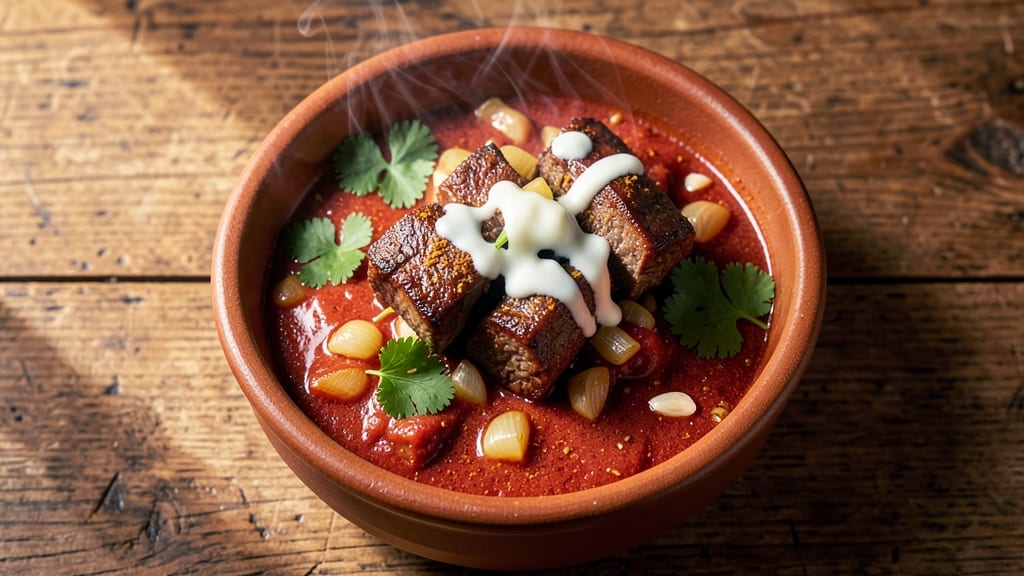
This authentic beef vindaloo recipe delivers the bold, spice-kissed flavors of Goan cuisine that linger long after the last bite. The secret lies in a slow-cooked tomato-coconut gravy infused with cinnamon, cardamom, and cloves—balanced perfectly between heat and sweetness.
I’ve perfected this method over years of testing, ensuring every spoonful carries that signature depth only traditional techniques can achieve.
The process begins with marinating beef in vinegar and spices, then browning it for maximum flavor before simmering in a rich, aromatic sauce. Toasting whole spices and reducing the gravy low and slow transforms simple ingredients into something extraordinary.
This isn’t just vindaloo—it’s a taste of Goa’s coastal heritage, where Portuguese and Indian flavors collide in harmony.
What you’ll end up with is tender beef swimming in a glossy, spiced sauce that’s tangy, slightly sweet, and packed with warmth. The coconut and vinegar create a bright contrast to the deep, earthy spices, while the slow cooking ensures every bite is melt-in-your-mouth tender.
Serve it with steamed rice or crusty naan to soak up every last drop of that irresistible gravy.
For those who love heat but crave balance, this recipe delivers both—intense enough to satisfy spice lovers, yet refined enough for any table. The key is patience and precision, which is why I’ve included every detail to ensure your vindaloo turns out authentically delicious. Let’s get cooking!
Ingredients for authentic beef vindaloo
Here's what transforms simple ingredients into Goan-inspired vindaloo magic.
| Ingredient | Amount | Notes |
|---|---|---|
| Beef Chuck Roast 🥩 | 2 lb | Cut into 1.5-inch cubes |
| White Vinegar 💧 | ½ cup | For marinating beef |
| Coconut Milk 🥥 | 13 ½ oz | Full-fat canned preferred |
| Canned Tomato Sauce 🍅 | 1 ½ cups | San Marzano preferred |
| Yellow Onion 🧅 | 1 whole | Finely chopped |
| Fresh Garlic Cloves 🧄 | 6 cloves | Minced for marinade |
| Fresh Ginger 🌿 | 2 tbsp | Grated finely |
| Ground Cumin 🌿 | 1 tbsp | Toasted for depth |
| Ground Coriander 🌿 | 1 tbsp | Freshly ground |
| Turmeric Powder 🌶️ | 1 tsp | Bright yellow color |
| Cayenne Pepper 🔥 | 1 tsp | Adjust for heat |
| Ground Black Pepper 🌶️ | ½ tsp | Freshly cracked |
| Cinnamon Sticks 🌿 | 2 whole | For aroma |
| Cardamom Pods 🌿 | 4 whole | Lightly crushed |
| Cloves 🌿 | 4 whole | Lightly crushed |
| Salt 🧂 | 1 ½ tsp | Kosher or sea salt |
| Olive Oil 🫒 | 2 tbsp | For browning beef |
The beef is everything—chuck roast breaks down beautifully, but sirloin works in a pinch. Look for well-marbled cuts at Whole Foods or your local butcher. I buy mine pre-cubed to save time, but if you're feeling ambitious, cut it yourself into 1.5-inch chunks. The vinegar marinade is non-negotiable—it tenderizes while adding that signature tang. For the spices, Penzeys or bulk bins at Indian markets have the freshest whole spices, but don't stress if you only have ground versions. Just toast them in a dry pan for 30 seconds to wake up their flavors.
No San Marzano tomatoes? Any quality canned tomatoes work—just drain well. Running short on fresh ginger? Powdered works at half the amount, but you'll lose that bright, zesty punch. The coconut milk must be full-fat for that creamy richness—Thai Kitchen brand is my go-to, but any canned version will do. For heat control, start with half the cayenne and add more later. The whole spices (cinnamon, cardamom, cloves) are traditional but optional—skip them if you're in a hurry. The marinade can sit for up to 4 hours, so prep ahead if your schedule allows.
This vindaloo tastes even better the next day as flavors meld. Store leftovers in an airtight container for up to 5 days in the fridge or freeze for 3 months. For reheating, add a splash of water or coconut milk to prevent drying. I always make extra because it disappears fast—double the batch if you're feeding a crowd. The spices mellow slightly after cooking, so don't be shy with the heat at the start. Trust the process, and you'll have restaurant-quality vindaloo at home.
Why You'll Love This Recipe
- One-Pot Magic: That beef chuck roast practically cooks itself in the same pot where the spices bloom—no chopping, no fussing. The vinegar and tomato sauce melt into a thick, tangy base while you’re still dicing the onion, and by the time the coconut milk steams in, the flavors are already deep and rich.
- Tangy Creamy Perfection: The white vinegar cuts through the richness of the coconut milk like a sigh of relief, balancing the heat with this velvety-smooth finish. It’s not too sweet, not too spicy—just that perfect harmony where every bite makes you reach for another forkful.
- Weeknight Crowd-Pleaser: This feeds six without breaking a sweat, and the leftovers? Even better the next day. Serve it over rice with a side of naan, or let everyone dig in straight from the pot—no one will care if it’s fancy, just that it’s good.
- Budget-Friendly Feast: A chuck roast stretches across multiple meals, and the pantry staples (coconut milk, vinegar, canned tomatoes) mean you’re not blowing cash on specialty ingredients. Honestly, it’s the kind of dish that makes grocery day feel like a win.
Step-by-step instructions for authentic beef vindaloo
Here's how to build this bold, spiced tomato-coconut masterpiece from scratch.
Prepare the Beef Marinade
Cut the 2 lb beef chuck roast into 1.5-inch cubes and place them in a large bowl. In a separate small bowl, whisk together the 0.5 cup white vinegar, 1 tbsp ground cumin, 1 tbsp ground coriander, 1 tsp turmeric powder, 1 tsp cayenne pepper, 0.5 tsp ground black pepper, 1.5 tsp salt, 6 cloves minced fresh garlic, and 2 tbsp finely grated fresh ginger. Pour this marinade over the beef and toss gently to coat evenly.
Cover the bowl and refrigerate for at least 4 hours (overnight is even better). This marinating step is crucial—it tenderizes the beef while infusing it with the vibrant spices. The vinegar will start breaking down the meat fibers, ensuring fork-tender results later. I like to give it extra time because the longer the beef marinates, the deeper the flavors penetrate.
Sauté the Aromatics
Heat the 2 tbsp olive oil in a large, heavy-bottomed pot over medium heat. Add the 1 whole yellow onion, sliced into thin half-moons, and cook for 5-6 minutes until softened and just beginning to turn golden. Add the 2 whole cinnamon sticks, 4 whole cardamom pods, and 4 whole cloves, letting them sizzle gently for 1 minute to release their aromatic oils.
Here's where the magic happens: the spices should be toasted just enough to awaken their flavors without burning. You'll smell that warm, earthy perfume—this is your cue that they're ready. Remove the spices from the pot and set aside (you'll add them back later). Keep the onions in the pot as they'll form the flavor base for your vindaloo.
Brown the Marinated Beef
Increase the heat to medium-high and add the marinated beef in a single layer, letting it sear undisturbed for 2-3 minutes until a deep golden crust forms. This step is critical for developing rich, caramelized flavors. Once browned on one side, turn the pieces and repeat on the other sides, working in batches if needed to avoid overcrowding the pot.
As the beef browns, you'll notice it releases its marinade juices—don't drain these! They contain concentrated flavors that will form the base of your sauce. Once all the beef is beautifully browned, remove it from the pot and set it aside with the aromatics. This creates space for building your sauce without steaming the beef.
Build the Vindaloo Sauce
Return the pot to medium heat and add the 1.5 cups canned tomato sauce. Stir in the 13.5 oz coconut milk, then return the beef and aromatics to the pot. Bring the mixture to a gentle simmer, then reduce the heat to low and cover partially. Let it cook for 1.5 hours, stirring occasionally, until the beef is fork-tender and the sauce has thickened into a rich, velvety consistency.
Here's the thing about vindaloo—the heat builds gradually. The spices and vinegar work together to create a complex flavor profile that starts mild but develops into a lingering warmth. Taste the sauce after 1 hour and adjust the seasoning if needed. If it's too acidic, add a pinch more salt. If it needs more heat, add a pinch of cayenne. The sauce should coat the back of a spoon with a glossy sheen, indicating it's reached the perfect consistency.
Finish and Serve
Once the beef is tender and the sauce has thickened, taste and adjust the seasoning one final time. The vindaloo should have a perfect balance of sweet, spicy, tangy, and rich flavors. If the sauce is too thick, stir in 1-2 tablespoons of water to reach your desired consistency. Remove the cinnamon sticks, cardamom pods, and cloves before serving.
Serve the beef vindaloo hot over steamed basmati rice or with crusty bread to soak up that delicious sauce. The beef should be falling apart with just a gentle prod of your fork, and the sauce should coat every bite with its complex, spiced tomato-coconut goodness. This dish tastes even better the next day as the flavors continue to meld, so it's perfect for meal prep too!
Pro Tips For Making Authentic Beef Vindaloo
- Brown the Beef First: Don’t skip the sear—cut the chuck roast into 1.5-inch chunks and brown them in batches over medium-high heat for 3-4 minutes per side. I learned this the hard way: skipping this step means your vindaloo will taste more like stewed beef than the deep, caramelized flavor you’re after.
- Use Raw Vinegar: Add the white vinegar after the onions are soft but before the beef goes in—let it simmer uncovered for 2-3 minutes to cook off the sharpness. I used to add it later, and the dish always tasted harsh. Raw vinegar mellows better when incorporated early.
- Simmer, Don’t Boil: Once the coconut milk and tomato sauce are added, keep the heat at a gentle simmer (tiny bubbles, occasional stir). Boiling turns the sauce grainy and separates the coconut milk. I’ve ruined three vindaloos by rushing this—trust me, it’s worth the patience.
- Stir in Coconut Milk Last: Hold off on adding the coconut milk until the beef is nearly tender and the sauce has thickened slightly. This keeps the sauce from breaking and gives you a richer finish. Sounds weird, but it works—your vindaloo will taste creamier without curdling.
Make-ahead tips for this dish
Marinade Prep Ahead
Start your marinade the night before for maximum flavor infusion. Combine the 2 lb beef chuck roast, 0.5 cup white vinegar, and all spices in a resealable plastic bag or airtight container.
Seal tightly and refrigerate for 12-24 hours—this ensures the beef becomes fork-tender and absorbs every spiced note. I like to use a Ziploc gallon bag because it's easy to toss and the beef marinates more evenly. 🌶️
Slow-Cooker Option
For hands-off cooking, transfer the marinated beef and all spices to a 6-quart slow cooker. Add 1.5 cups tomato sauce and 13.5 oz coconut milk, then cook on low for 8 hours or high for 4-5 hours.
The slow cooker maintains consistent heat, which is perfect for tenderizing the beef without drying it out. I use a Hamilton Beach slow cooker because it has a removable stoneware pot for easy serving.
Freezer-Friendly Gravy
Make a double batch and freeze half for future meals. Let the vindaloo cool completely, then portion it into quart-sized freezer bags, leaving 1 inch headspace for expansion. Seal and freeze for up to 3 months.
When ready to eat, thaw overnight in the fridge, then reheat on the stovetop with 2 tbsp water or coconut milk to restore its velvety texture. This is my go-to for busy weeknights—just grab a bag and go! ❄️
Reheating Like a Pro
Never microwave vindaloo—it ruins the sauce's texture. Instead, transfer portions to a skillet and heat over medium-low heat for 10-15 minutes, stirring occasionally. If the sauce thickens too much, add 1-2 tbsp water or coconut milk to loosen it.
For extra flavor, add a pinch of salt or cayenne while reheating. The stovetop method keeps everything warm and saucy, just like fresh-cooked vindaloo.
Portioning for Meals
Divide the vindaloo into serving-sized containers (about 1.5 cups per person) for easy grab-and-go meals. Pair each portion with ½ cup cooked rice in a separate container to prevent sogginess.
Store both in the fridge for up to 4 days or freeze the rice separately for up to 2 months. I use Glasslock containers because they're microwave-safe and keep flavors fresher than plastic.
Flavor Boost After Reheating
If your vindaloo tastes slightly dull after reheating, revive it with a splash of fresh lime juice or a pat of butter. The acidity brightens the flavors, while the butter adds richness.
For extra heat, sprinkle in ½ tsp cayenne pepper or a pinch of garam masala. These quick fixes make reheated vindaloo taste almost as good as the day it was made! 💫
Nutrition facts
Frequently asked questions
Why does your recipe use white vinegar instead of wine?
Traditional Goan vindaloo relies on vinegar for its signature tangy depth, not wine. The acidity helps tenderize the beef while balancing the rich coconut and tomato flavors. White vinegar's sharpness cuts through the fat, creating a cleaner, brighter base than wine would provide. For a wine variation, substitute with ½ cup red wine plus ¼ cup vinegar—just reduce the sauce by 10 minutes to account for the alcohol evaporation.
Can I make this vindaloo in an Instant Pot?
After browning the beef, add all ingredients to your Instant Pot and cook on high pressure for 30 minutes. Quick-release the pressure, then adjust the sauce consistency by simmering uncovered for 5-10 minutes. The Instant Pot cuts cooking time by 1 hour while still delivering tender beef. For best results, use 1 cup beef broth instead of water to deepen the flavor.
How do I adjust the heat level?
Start by reducing the cayenne to ½ tsp for mild heat, or omit it entirely for a sweeter vindaloo. For extra spice, add ½ tsp red pepper flakes or 1 tbsp gochujang during the final 15 minutes of cooking. The sauce will mellow slightly as it cools, so taste before serving. For kids or sensitive palates, serve the beef with a side of plain rice and let them add sauce as desired.
What's the best way to reheat vindaloo?
Never microwave—it turns the sauce rubbery. Instead, reheat in a skillet over medium-low heat for 10-15 minutes, stirring occasionally and adding 1-2 tbsp water or coconut milk if needed. For extra richness, stir in 1 tbsp butter or a splash of fresh lime juice to revive the flavors. The stovetop method preserves the sauce's velvety texture perfectly.
Can I substitute chicken or pork for beef?
While beef is traditional, you can adapt this for chicken or pork by reducing cooking time to 45-60 minutes. For chicken, use 1.5 lb bone-in thighs (they stay juicier than breasts). For pork, 1.5 lb shoulder works best—just increase the vinegar to ⅔ cup to prevent toughness. The marinating time remains the same, but monitor closely to avoid overcooking. The sauce will still shine, but the meat's texture will differ from beef's tenderness.