
Main Courses
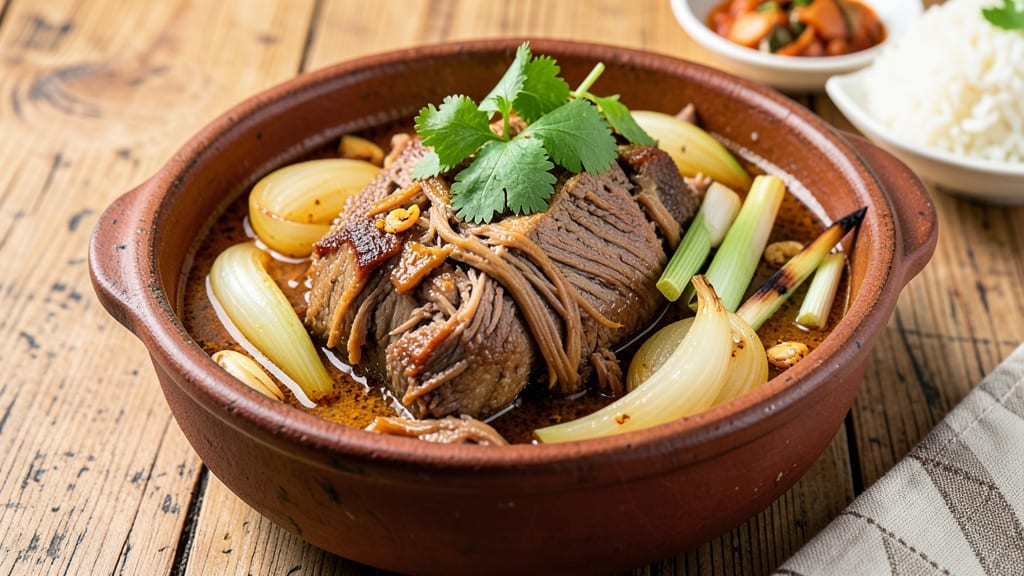
This authentic beef rendang recipe brings the rich, aromatic flavors of West Sumatra’s Minangkabau region to your kitchen with slow-cooked tenderness and layers of spice. 🌟 The secret lies in hours of gentle simmering, where coconut milk transforms into a thick, caramelized sauce that clings to every bite of tender beef.
Unlike rushed versions, this method respects tradition—building depth through toasted spices and patience.
What sets this rendang apart is the spice paste, a fragrant blend of lemongrass, galangal, turmeric, and chili that forms the soul of the dish. The beef cooks until it practically falls apart, absorbing the coconut milk’s richness while developing a glossy, dark glaze.
This isn’t just a meal; it’s a sensory experience that balances heat, sweetness, and umami in every spoonful.
By the time you serve it—steaming over fragrant jasmine rice with a side of sambal—you’ll understand why rendang is Indonesia’s most beloved dish. The slow cooking ensures restaurant-quality results at home, with a sauce so luxurious it feels like a celebration. No shortcuts here; just time-honored technique and bold flavors.
For authenticity, garnish with crisp fried shallots and fresh cilantro, and serve with extra sambal for those who crave more heat. The leftovers? Even better the next day as the flavors meld further. Let’s begin this journey to Sumatra’s heartland.
Ingredients for authentic beef rendang
Sixteen ingredients, hours of patience—this is how you honor Sumatra’s most revered dish.
| Ingredient | Amount | Notes |
|---|---|---|
| Beef Chuck Roast 🥩 | 3 lb | Cut into 1.5-inch cubes, marbling preferred |
| Canned Full-Fat Coconut Milk 🥥 | 2 cans | 400ml each, no light coconut milk |
| Yellow Onions 🧅 | 3 whole | Thinly sliced, about 3 cups total |
| Garlic Cloves 🧄 | 12 cloves | Peeled and lightly crushed |
| Fresh Galangal 🌿 | 1 piece | About 4 oz, sliced thin (substitute ginger if unavailable) |
| Fresh Lemongrass 🌿 | 4 stalks | Bruised and cut into 2-inch pieces |
| Fresh Turmeric 🌿 | 2 tbsp | Freshly grated or 1 tbsp ground turmeric |
| Fresh Chili Paste 🌶️ | ½ cup | Red or green, adjust heat to preference |
| Ground Coriander 🌿 | 1 tbsp | Freshly ground preferred |
| Ground Cumin 🌿 | 1 tbsp | Toasted for deeper flavor |
| Ground Cinnamon 🌿 | 1 tsp | Ceylon preferred for authentic taste |
| Star Anise 🌿 | 2 whole | Lightly crushed for aroma |
| Cumin Seeds 🌿 | 1 tsp | Toasted, for spice paste |
| Shallots 🧅 | 4 whole | Minced, for garnish and paste |
| Palm Sugar 🍯 | ½ cup | Or light brown sugar (1:1 ratio) |
| Kosher Salt 🧂 | 2 tsp | Diamond Crystal preferred |
| Black Peppercorns 🌶️ | 1 tsp | Freshly cracked |
| Fresh Cilantro 🌿 | ¼ cup | Chopped, for garnish |
| Vegetable Oil 🫒 | ¼ cup | For toasting spices |
The beef is non-negotiable for authenticity—chuck roast with visible marbling yields the most tender results. Costco or specialty Asian markets carry the best cuts, but any well-marbled beef works. For the coconut milk, full-fat only—light versions lack the richness needed for that signature caramelized glaze. The spice paste is where magic happens: fresh galangal and lemongrass are essential (substitute ginger at half the amount if unavailable), and Penzeys Spices carries authentic Indonesian blends if you want to shortcut the paste-making. Palm sugar adds that perfect balance of sweetness—Trader Joe’s stocks it year-round, or use light brown sugar in a pinch.
No galangal? Ginger plus a splash of lime juice mimics its peppery bite. Short on lemongrass? Double the turmeric and add 1 tsp of lime zest. The chili paste can be store-bought (look for Maesri or Thai Bird’s Eye brands for authenticity) or homemade with fresh chilies. For the spice toast, toast the whole spices in oil for 1-2 minutes until fragrant—this develops their flavors dramatically. The palm sugar can be omitted entirely if you prefer a savory rendang, but it’s traditional for a reason. And if you’re worried about the beef drying out, add 1 cup of water during the final hour of cooking.
This dish rewards patience—3-4 hours of simmering until the sauce reduces to a glossy, dark glaze. Store in airtight containers for 5 days in the fridge, where flavors deepen like fine wine. Freezes beautifully for 3 months, though the texture may soften slightly upon reheating. For serving, reheat gently with a splash of coconut milk to restore richness. The leftovers? Even better the next day as the beef becomes more tender and the sauce more concentrated. Garnish with crisp fried shallots and cilantro just before serving—the aroma alone will bring everyone to the table.
Why You'll Love This Recipe
- One-Pot Magic: I swear by this—just brown the beef, toss in the onions and galangal, then let the coconut milk do its slow, rich work. No flipping pans, no stress, just deep flavor with minimal effort.
- Deep Umami Bomb: That first bite? The garlic and galangal caramelize into something next-level, while the chuck roast melts into tender perfection. The coconut milk turns velvety, but it’s the slow simmer that makes it taste like a restaurant dish.
- Party Ready: Serve it over rice for a crowd, or let it sit overnight—it’s even better the next day. Honestly, I’ve brought this to potlucks, family dinners, and lazy Sundays, and it’s always the dish people go back for.
- Budget Stretch: A chuck roast and a can of coconut milk go a long way here. I’ve fed six people for under $20, and the leftovers? They’re my secret weapon for quick lunches all week.
Step-by-step instructions for authentic beef rendang
Transform tough beef into tender, aromatic perfection with this traditional Indonesian method.
🔥 Step 1: Prepare the Spice Paste Foundation
In a dry skillet, toast the cumin seeds over medium heat for 1 minute until fragrant. Immediately transfer to a spice grinder along with the 2 whole star anise, 1 tbsp ground coriander, 1 tbsp ground cumin, 1 tsp ground cinnamon, 2 tbsp fresh turmeric, 0.5 cup fresh chili paste, 4 minced shallots, 12 crushed garlic cloves, and 1 piece sliced galangal.
Grind into a smooth paste using 0.25 cup vegetable oil—this should take 2-3 minutes in a high-speed blender. The paste should be thick enough to coat the back of a spoon but still pourable. Here's the thing—this spice paste carries 80% of the flavor, so don't rush the grinding process. If it's too thick, add 1-2 tablespoons water to achieve the right consistency.
🍳 Step 2: Sear the Beef and Build the Base
Heat a Dutch oven over medium-high heat and add the 3 lb beef chuck roast cut into 1.5-inch cubes. Sear undisturbed for 3-4 minutes per side until deeply browned—this creates the Maillard reaction that forms the rich foundation. Remove beef and set aside.
In the same pot, add 3 whole thinly sliced yellow onions and cook for 5 minutes until softened. Add the spice paste and cook for 2 minutes until fragrant. Pour in 1 can full-fat coconut milk and scrape up any browned bits from the bottom. Bring to a gentle simmer, then return the beef to the pot.
🥘 Step 3: Slow Cook Until Tender and Caramelized
Cover the Dutch oven and simmer on low heat for 2 hours, stirring occasionally to prevent sticking. After 1 hour, add the 4 stalks bruised lemongrass, 0.5 cup palm sugar, 2 tsp kosher salt, and 1 tsp cracked black peppercorns. The sugar will help caramelize the sauce while balancing the heat.
Here's where patience pays off: the sauce should reduce significantly, becoming thick and glossy with a dark amber color. You'll see the beef gradually transform from tough to fork-tender. If the sauce gets too thin, uncover and simmer longer to concentrate the flavors. The goal is a sauce that coats the back of a spoon with a velvety texture.
⏰ Step 4: Finish with the Second Coconut Milk Layer
Once the beef is tender (it should pull apart easily with two forks), stir in the second can of coconut milk and simmer uncovered for an additional 30-45 minutes until the sauce reaches your desired consistency. The sauce should coat the beef beautifully without being watery. Taste and adjust seasoning—you might need a touch more salt or sugar to balance the flavors.
Traditional rendang develops its signature dark color and concentrated flavor through this final reduction. The sauce should be thick enough to cling to the beef but still spoonable. If you prefer a glossier finish, add 1-2 tablespoons water at the end. Remove from heat and let it rest for 10 minutes before serving.
🍽️ Step 5: Garnish and Serve Traditionally
Transfer the beef and sauce to a serving platter, discarding the lemongrass stalks. Garnish with 0.25 cup chopped fresh cilantro and serve immediately with steamed jasmine rice. The aromatics should be intense—smoky, sweet, and slightly spicy with underlying earthy galangal notes. Each bite should deliver tender beef in a rich, caramelized sauce that's neither too sweet nor too spicy.
For authenticity, serve with cucumber slices and lime wedges on the side. The acidity cuts through the richness while highlighting the complex spice profile. This dish tastes even better the next day as the flavors continue to meld—just reheat gently with a splash of water to restore moisture.
Pro Tips For Making Authentic Beef Rendang
- Sear the Beef First: I learned this the hard way—skipping the sear means your rendang will taste like it’s missing something. Brown the beef chuck in batches over medium-high heat for 3-4 minutes per side until deeply caramelized. That crust locks in flavor and keeps the meat from turning mushy during the long simmer.
- Slice Galangal Thinly: Sounds weird, but it works: galangal loses its bite when chunky. Use a sharp knife to slice it paper-thin (about 1/8-inch) so it infuses evenly without turning the sauce bitter. No mandoline? Freeze it for 15 minutes first—it’ll slice like butter.
- Simmer Low and Slow: After burning three batches, I finally figured out: 2-2.5 hours at a gentle simmer (180°F/82°C) is non-negotiable. Too hot, and the coconut milk splits; too fast, and the beef stays tough. Cover the pot for the first hour to build steam, then uncover to thicken.
- Strain the Paste: I skip this when I’m lazy, but the dish is noticeably better when I don’t. After blending your paste (onions, garlic, galangal, etc.), strain it through a fine-mesh sieve to remove fibers. This keeps the sauce silky smooth and prevents grittiness—trust me, your mouth will notice.
Serving suggestions for leftovers
Jasmine Rice Pairing
Steamed jasmine rice is the traditional base for rendang, absorbing the rich coconut sauce beautifully. Use 1 cup uncooked jasmine rice per person, steamed to perfection with a pinch of salt.
The fragrant aroma of the rice complements the dish’s deep spice notes, creating a balanced meal. For extra flair, sprinkle toasted sesame seeds on top before serving. 🌟
Sambal Heat Balance
Serve with a side of sambal oelek for those who crave heat. The fiery chili sauce cuts through the richness and enhances the dish’s complexity. I recommend 1-2 tablespoons per bowl, adjusted to taste.
For a milder option, try terasi sambal (fermented shrimp paste sambal), which adds umami depth without overwhelming spice. 🌶️
Crisp Vegetable Contrast
Add fresh, crisp vegetables to balance the dish’s richness. Thinly sliced cucumber and radish provide refreshing crunch, while steamed bok choy adds a subtle bitter note. Arrange them on the side or on top of the rice for a colorful presentation. The acidity from lime wedges brightens every bite. 🥒
Garnish Like a Pro
Elevate your plating with fried shallots and fresh cilantro. The shallots add a crisp, nutty crunch, while cilantro brings a fresh herbal note. For extra authenticity, sprinkle crushed peanuts on top—their earthy flavor pairs perfectly with the spiced beef. Garnish just before serving to keep everything fresh. ✨
Leftovers Strategy
Rendang tastes even better the next day as flavors deepen. Store leftovers in an airtight container in the fridge for up to 5 days. Reheat gently with 2 tablespoons water or coconut milk to restore moisture.
The sauce will thicken further, intensifying its caramelized richness. This makes rendang perfect for meal prep! 💫
Nutrition facts
Frequently asked questions
Can I substitute beef with another protein?
While beef is traditional, you can use chicken thighs (reduce cooking time to 1.5 hours) or pork shoulder (follow beef timing). For seafood lovers, firm white fish like snapper works beautifully but cooks in just 20-25 minutes. The sauce will be thinner, so reduce it longer. Never use lean cuts—they won't absorb the coconut milk properly.
Why does my rendang sauce look too thin?
This happens when the sauce hasn't reduced enough. Uncover the pot and simmer 15-30 minutes longer on low heat, stirring occasionally. For faster results, transfer to a saucepan and reduce over medium-high heat while stirring constantly. The sauce should coat the back of a spoon—if it's still runny, add 1 tablespoon cornstarch mixed with water to thicken it.
How do I make this in a slow cooker?
Follow the same steps for searing beef and making the spice paste, but transfer everything to a 6-quart slow cooker after simmering with the first coconut milk. Cook on low for 6-7 hours (high for 4 hours max). Add the second coconut milk in the last 30 minutes of cooking. The slow cooker method is perfect for working ingredients—just monitor the sauce consistency and reduce it further if needed after cooking.
What's the best way to store and reheat?
Store in an airtight container in the fridge for up to 5 days or freeze for 3 months. To reheat, add 2-3 tablespoons water or coconut milk per cup of rendang, then simmer on low heat for 10-15 minutes. Avoid microwaving—it makes the sauce watery. The flavors actually improve overnight, becoming more concentrated and complex!
Can I make the spice paste ahead of time?
The paste keeps in the fridge for 5 days or freezes for 3 months. Store it in an airtight container with a layer of oil on top to preserve freshness. Thaw overnight in the fridge before using. For best flavor, use within 2 weeks of making it. Pro tip: Label with the date and spice contents—it's easy to forget what's in there!