
Main Courses
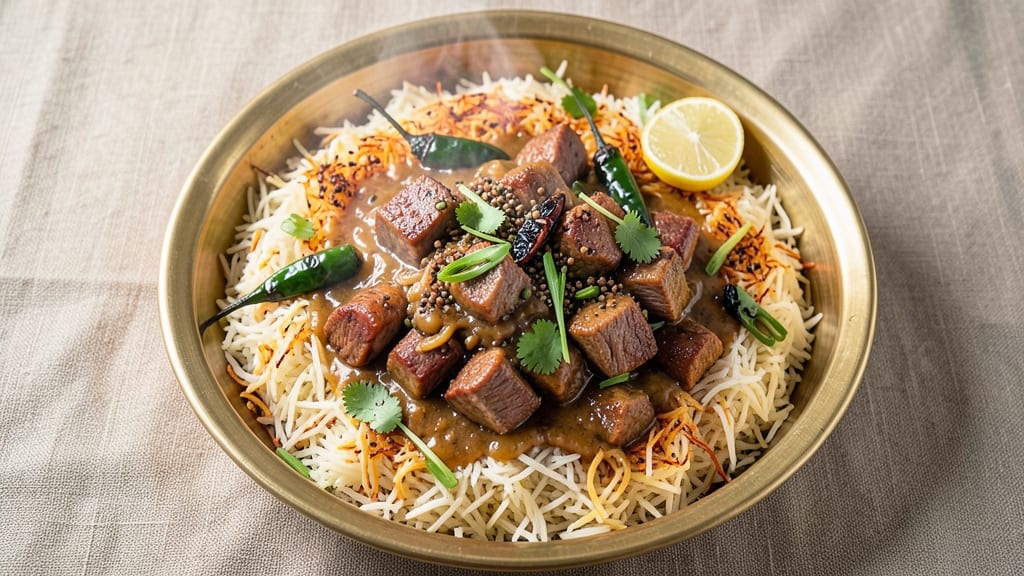
This authentic beef biryani recipe brings the rich, spiced flavors of South Asian kitchens to your table with layers of tender beef, fragrant basmati rice, and aromatic yogurt marinade. The secret lies in slow-cooked beef infused with whole spices and tangy yogurt, paired with perfectly fluffy rice cooked separately to preserve its texture. I’ve perfected this Hyderabadi-style version after years of testing, ensuring every bite delivers the deep, complex flavors of traditional biryani without shortcuts.
The magic starts with marinating the beef overnight in a blend of yogurt, ginger-garlic paste, and a carefully balanced spice mix—cardamom, cloves, cinnamon, and bay leaves.
While the beef simmers to tender perfection, basmati rice is cooked separately in lightly salted water, then layered with the marinated meat in a heavy pot. The final touch?
Dum cooking, where the pot is sealed with dough and cooked over low heat to infuse the biryani with steam and aroma, creating a dish that’s as visually stunning as it is delicious.
What you’ll end up with is a fragrant, golden-brown biryani where each layer reveals tender beef swimming in spiced gravy, surrounded by fluffy basmati rice. The charred edges from the dum cooking add a smoky depth, while fried onions, fresh mint, and cilantro garnishes elevate the presentation.
This is the kind of biryani that makes guests ask for seconds—and thirds.
Serve with a cooling cucumber raita or a simple salad to balance the richness. The recipe scales beautifully for gatherings, and leftovers taste even better the next day as the flavors meld further. Let’s get started on creating a biryani that rivals your favorite restaurant’s.
Ingredients for authentic beef biryani
Sixteen ingredients for a biryani that tastes like home. Each one matters—especially the spices and yogurt.
| Ingredient | Amount | Notes |
|---|---|---|
| Beef Chuck Roast 🥩 | 2 ½ lb | Cut into 1.5-inch cubes |
| Plain Whole Milk Yogurt 🥛 | 1 cup | Full-fat preferred |
| Ginger-Garlic Paste 🧄 | ½ cup | Homemade or store-bought |
| Basmati Rice 🌾 | 2 cups | Uncooked, long-grain |
| Yellow Onions 🧅 | 2 whole | Thinly sliced for frying |
| Green Chilies 🌶️ | 4 whole | Slit lengthwise, seeds removed |
| Bay Leaves 🌿 | 2 whole | Fresh preferred |
| Cardamom Pods 🌿 | 8 whole | Lightly crushed |
| Cloves 🌿 | 6 whole | Whole, not ground |
| Cinnamon Sticks 🌿 | 2 whole | 2-inch pieces |
| Fresh Mint Leaves 🌿 | ½ cup | Chopped for garnish |
| Fresh Cilantro 🌿 | 0.3 cup | Chopped for garnish |
| Ghee or Clarified Butter 🧈 | ½ cup | For cooking rice |
| Salt 🧂 | 1 ½ tsp | Adjust to taste |
| Water 💧 | 3 ½ cups | For rice cooking |
The beef is non-negotiable—chuck roast gives you that melt-in-your-mouth texture. Look for well-marbled cuts at Costco or your local butcher for the best flavor. Fresh whole spices make all the difference here: bay leaves, cardamom, and cloves should smell vibrant, not dusty. If you can't find fresh, toast the dried versions in a dry pan for 30 seconds to wake up their aroma. The ginger-garlic paste is the backbone of the marinade—homemade is ideal, but Trader Joe's makes a solid jarred version if you're short on time. For the yogurt, full-fat plain yogurt is key—it's what tenderizes the beef overnight.
No fresh mint or cilantro? Dried oregano or marjoram at half the amount will bridge the gap, though nothing beats the fresh stuff. Running low on ghee? Butter or neutral oil works in a pinch, but ghee adds that signature biryani richness. The green chilies can be swapped for red chili powder (1 tbsp), but fresh is always better. For the rice, basmati is non-negotiable—jasmine won't give you that same fluffy texture. And if you're feeling fancy, soak the rice for 30 minutes before cooking—it makes all the difference. The onions? Fry them until golden brown for that sweet, caramelized flavor that's essential in biryani.
This biryani tastes even better the next day as the flavors meld. Store leftovers in an airtight container in the fridge for up to 4 days. To reheat, cover with a damp paper towel and warm in the microwave for 2-3 minutes. For the dum cooking, if you don't have dough, aluminum foil works in a pinch—just make sure it's loose enough to let steam escape. The fried onions keep for 1 week in the fridge, so make extra for garnishing other dishes. And if you're making this for a crowd, double the recipe—the prep time is worth the effort.
Why You'll Love This Recipe
- I swear by this trick: layering the raw rice over the marinated beef means no separate pots, no extra pans. Just dump everything in, seal it, and let the yogurt and onions work their magic while you sip chai.
- One-Pot Magic: I swear by this trick: layering the raw rice over the marinated beef means no separate pots, no extra pans. Just dump everything in, seal it, and let the yogurt and onions work their magic while you sip chai.
- Flavor Explosion: That ginger-garlic paste? It’s the secret weapon—deep, aromatic, and lingering. The beef practically melts in your mouth, while the onions caramelize into sweet, golden pockets. Honestly, it’s the kind of dish that makes you close your eyes mid-bite.
- Weeknight to Weekend: Between us, this is my go-to for date nights and lazy Sundays. The leftovers reheat like a dream, and the rice-to-beef ratio stretches across three meals without feeling like a chore. (Yes, even on a Tuesday night.)
Step-by-step instructions for authentic beef biryani
Here's how to build the perfect layered biryani with tender beef and fragrant basmati rice.
Marinate the Beef for Maximum Flavor
Cut the 2.5 lb beef chuck roast into 1.5-inch cubes and place them in a large bowl. Add the 1 cup plain whole milk yogurt, 0.5 cup ginger-garlic paste, and 1.5 tsp salt. Mix gently until the beef is evenly coated. The yogurt helps tenderize the meat while adding richness.
Cover the bowl and refrigerate for at least 4 hours (overnight is ideal). This long marinating time ensures the beef becomes fork-tender and absorbs all the aromatic flavors. I like to press the marinade into the meat with my hands to guarantee even distribution.
Prepare the Rice and Spice Base
Rinse the 2 cups basmati rice under cold water until the water runs clear. Soak it in fresh water for 30 minutes, then drain well. In a large pot, heat 0.5 cup ghee or clarified butter over medium heat. Add 2 whole yellow onions (thinly sliced) and sauté for 5 minutes until golden brown.
Add the 2 whole bay leaves, 8 whole cardamom pods, 6 whole cloves, and 2 whole cinnamon sticks (2-inch pieces). Cook for 1 minute until fragrant. This aromatic base forms the flavor foundation of the biryani. Don't skip this step—it's what makes the dish truly authentic.
Cook the Beef Until Tender
In a separate heavy pot, heat 2 tablespoons ghee over medium-high heat. Add the marinated beef in batches, cooking for 3-4 minutes per side until browned. Remove the beef and set aside. In the same pot, add the remaining 0.3 cup ghee and the 4 whole green chilies (slit lengthwise). Cook for 1 minute until fragrant.
Return the beef to the pot and add 1 cup water. Bring to a boil, then reduce heat to low, cover, and simmer for 1.5 hours until the beef is fork-tender. The liquid should reduce significantly, leaving behind a rich, flavorful sauce. If needed, add a splash of water to prevent burning, but aim to keep it thick.
Layer the Biryani for Perfect Texture
Drain the cooked rice and spread half of it evenly in the bottom of a heavy pot or deep skillet. Arrange half of the cooked beef over the rice, then sprinkle with half of the 0.5 cup chopped fresh mint leaves and 0.3 cup chopped fresh cilantro. Repeat with the remaining rice and beef.
Drizzle the remaining 0.2 cup ghee evenly over the top layer. The ghee helps create a crispy, aromatic crust when sealed. Cover the pot tightly with aluminum foil or a lid, then seal the edges with water to create an airtight environment. This sealing technique is crucial for developing the biryani's signature flavors.
Dum Cook for Maximum Flavor Infusion
Place the sealed pot over medium-low heat and cook for 20 minutes. Then, reduce heat to low and cook for another 10 minutes. Finally, turn off the heat and let the biryani sit undisturbed for 10 minutes. This dum cooking method steams the rice and beef together, infusing them with the spices and creating a harmonious blend of textures and flavors.
Gently fluff the biryani with a fork, being careful not to break the grains. Garnish with the remaining fresh mint and cilantro. Serve immediately while hot, with a side of raita or a simple cucumber salad. The result should be layers of tender beef and fragrant basmati rice, each bite bursting with authentic biryani flavor.
Pro Tips For Making Authentic Beef Biryani
- Marinate Beef Overnight: I learned this the hard way—skipping the overnight soak means tough, flavorless beef. Use the yogurt as the base, mix in ginger-garlic paste, and let it sit covered in the fridge. The acid tenderizes the chuck roast while the spices seep in, giving you that melt-in-your-mouth texture.
- Layer Rice and Meat Separately: This isn’t the prettiest method, but it’s the tastiest. After parboiling the basmati rice, spread half the grains on the bottom of your pot, then add the beef, then the rest of the rice. The steam circulates better, and you avoid that mushy, overcooked rice mess.
- Sauté Onions Until Deep Gold: I used to rush this part and wondered why my biryani never had that caramelized depth. Cook the onions on medium-low heat for 10-12 minutes until they’re a rich, amber color—not burnt, just deeply golden. That’s where the sweetness comes from.
- Rest the Meat Before Mixing: Give it a solid 5-10 minutes under foil after searing the beef. This keeps the juices locked in instead of leaking out when you layer everything. Yes, even if you’re impatient like me—your future self will thank you.
Troubleshooting your authentic beef biryani
Dry Beef Problem
If your beef turns out dry, the marinating time was likely too short. Always marinate for at least 4 hours, but overnight is ideal for maximum tenderness. I’ve found that pressing the marinade into the meat with your hands ensures even distribution.
Also, avoid overcooking—beef should be fork-tender but still juicy, not falling apart. Use a meat thermometer to check for 160°F internal temperature before removing from heat. 💡
Rice Too Mushy
Overcooking the rice is the usual culprit here. Basmati rice should be cooked in a 1:1.75 ratio (rice to water)—never more. Drain it well before layering and avoid adding extra water during the dum cooking phase.
If your rice turns out mushy, try soaking it for 30 minutes before cooking and use a heavy pot to prevent sticking. I swear by a Lodge cast iron Dutch oven for perfect biryani texture. ✨
Weak Spice Flavor
Fresh whole spices are non-negotiable for authentic flavor. If your biryani tastes bland, your spices might be old or not toasted properly. Lightly toast whole spices (bay leaves, cardamom, cloves) in a dry pan for 30 seconds to wake up their aroma before adding to the onions.
Also, don’t skip the 1-minute fragrant base step when cooking the rice—this is where the magic happens. For extra depth, add ½ tsp ground turmeric to the beef marinade. 🌿
Uneven Cooking
If some parts of your biryani are undercooked while others are overdone, your heat source might be inconsistent. Use medium-low heat during the dum cooking phase and avoid opening the pot too soon.
For even cooking, place the pot on a heat diffuser or use a smaller pot that fits snugly on the burner. I’ve also had success with a slow cooker on low for 2 hours if my stove isn’t cooperating. 🔥
Gravy Too Thin
A watery biryani usually means too much liquid was added during cooking. When simmering the beef, reduce the heat to let the liquid evaporate naturally—never add extra water. For a richer gravy, reduce the beef sauce by half before layering.
If needed, stir in 1 tbsp cornstarch mixed with water to thicken it slightly. The goal is a thick, syrupy consistency that coats the beef beautifully. 💛
Dough Not Sealing
If your biryani leaks or doesn’t steam properly, the seal might not be tight enough. For a foolproof seal, use aluminum foil instead of dough (if unavailable) and crimp the edges tightly. Moisten the foil with water before sealing to create an airtight barrier.
If using dough, make sure it’s ¼-inch thick** and covers the entire pot. A proper seal is key to that signature biryani aroma and texture. 🌟
Nutrition facts
Frequently asked questions about authentic beef biryani
Can I use chicken or lamb instead of beef?
This recipe works beautifully with chicken or lamb—just adjust the cooking time. Chicken needs about 1 hour of simmering, while lamb may require 1.5 hours to become tender. The marinade and layering technique remain the same, but you might reduce the ginger-garlic paste slightly for chicken to avoid overpowering flavors.
Why does the biryani need to be sealed with dough?
The sealing technique (called "dum cooking") creates steam that infuses every layer with aromatic flavors. Without it, the biryani will lack that signature depth. If you don't have dough, use aluminum foil moistened with water to create an airtight seal. The steam also helps cook the rice perfectly without drying it out.
How do I make this recipe vegetarian?
Replace the beef with chickpeas or paneer (Indian cottage cheese) for a vegetarian version. Marinate the chickpeas in yogurt and spices for 2 hours instead of overnight, then proceed with the same layering method. For paneer, cube it and cook it separately until golden brown before layering. The rice preparation and dum cooking technique remain identical.
Can I prepare biryani ahead of time?
Yes! Biryani tastes even better the next day as flavors meld. Store leftovers in an airtight container in the fridge for up to 4 days. To reheat, cover with a damp paper towel and warm in the microwave for 2-3 minutes. For serving, garnish with fresh mint and cilantro to revive the presentation. The texture stays perfect when reheated properly.
What's the difference between biryani and pilaf?
Biryani is a layered dish where rice and meat are cooked together (often sealed for steaming), while pilaf involves cooking rice and meat separately then mixing them. The key differences are: biryani uses whole spices and yogurt marinade, has distinct layers, and relies on the dum cooking method for its signature aroma and texture. Pilaf is simpler and more straightforward.