
Sauces & Condiments
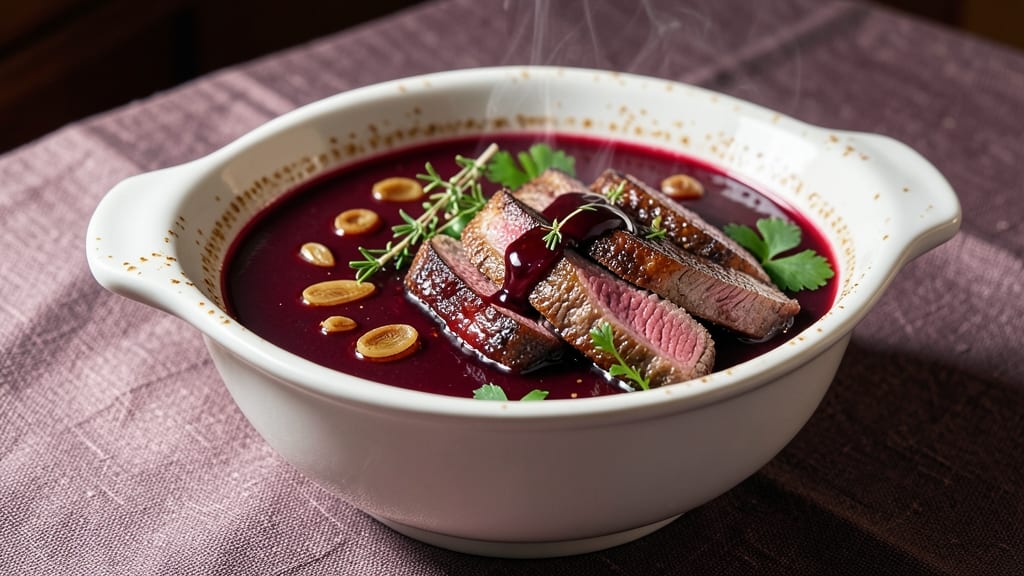
This au jus recipe with beef consommé transforms simple beef dishes into restaurant-worthy meals with its rich, umami depth. The secret lies in reducing high-quality consommé with wine and aromatics, creating a sauce that clings to every bite.
I’ve perfected this technique over years of testing—it’s the difference between good and extraordinary.
The process begins with clarifying the consommé to remove impurities, then simmering it with red wine and shallots until deeply concentrated. A final touch of Dijon mustard adds complexity, while a splash of beef stock ensures balance.
What you’ll end up with is a glossy, velvety sauce that enhances roasted beef, steak, or even meatloaf.
Perfect for drizzling over grilled entrees or as a dipping sauce for crusty bread, this au jus elevates any beef dish instantly. The key is patience—slow reduction builds layers of flavor that no bottled sauce can match.
Ready in under an hour, it’s a professional technique you can master at home.
Use it to transform weeknight dinners into special occasions. The rich, savory notes will have everyone asking for seconds. Here’s how to make it perfectly every time.
Ingredients for au jus recipe with beef consomme
Eleven ingredients transform basic beef dishes into restaurant-quality masterpieces with umami depth.
| Ingredient | Amount | Notes |
|---|---|---|
| High-Quality Beef Consommé 🥩 | 4 cups | Store-bought or homemade, clarified |
| Dry Red Wine 🍷 | 1 cup | Bold variety like Cabernet Sauvignon |
| Shallots 🧅 | 4 whole | Minced, thinly sliced for even cooking |
| Fresh Thyme Sprigs 🌿 | 4 whole | Or 1 tsp dried thyme if unavailable |
| Fresh Parsley Sprigs 🌿 | 4 whole | For garnish and final flavor |
| Dijon Mustard 🍯 | 1 tbsp | High-quality, smooth variety |
| Beef Stock 🍲 | ½ cup | Homemade preferred for depth |
| Extra-Virgin Olive Oil 🫒 | 2 tbsp | For deglazing and richness |
| Garlic Cloves 🧄 | 3 cloves | Minced, for aromatic base |
| Kosher Salt 🧂 | ½ tsp | Diamond Crystal preferred |
| Black Peppercorns 🌶️ | 10 whole | Freshly cracked for intensity |
The beef consommé is the foundation—store-bought high-quality brands like Kettle & Fire work, but homemade yields unmatched depth. Clarify it first to remove impurities, which ensures a silky texture. For wine, bold reds like Cabernet Sauvignon concentrate flavor best, while lighter varieties can taste flat. Shallots should be fresh, not dried, and minced finely for even cooking. Fresh thyme and parsley add aromatic complexity, but if you're using dried herbs, reduce to one-third the amount—they're concentrated. The Dijon mustard is non-negotiable for that signature tang.
No red wine? Substitute with beef broth and a splash of balsamic vinegar—it mimics the acidity and depth. Swap shallots for onions if needed, but they'll add a sharper bite. Fresh herbs unavailable? Dried thyme and parsley work, but toast the spices first to deepen their flavor. The beef stock can be vegetable stock in a pinch, though it'll lack umami richness. For a quicker version, instant consommé granules (like Knorr) can replace homemade, though they lack refinement. Always taste as you go—adjust salt and pepper to balance the wine's acidity.
This au jus keeps 3-4 days refrigerated in an airtight container, with a thin layer of olive oil on top to preserve freshness. For longer storage, freeze in ice cube trays—thaw and reduce briefly before using. Reheat gently over low heat, stirring constantly to prevent scorching. The sauce thickens as it cools, so add a splash of warm water if it becomes too viscous. Portion into small jars for easy reheating—perfect for drizzling over roasted meats or pairing with crusty bread.
Why You'll Love This Recipe
- Here’s what sold me: this au jus improves overnight. The flavors marry like old friends, and it reheats in seconds. I keep a jar in the fridge for emergencies—dull roast beef? Instant upgrade. Even my picky teen asks for seconds when it’s involved.
- Foolproof Simplicity: I swear by this recipe because it’s literally three steps: simmer, reduce, garnish. No peeling mountains of garlic or straining for hours—just toss in shallots, a splash of wine, and let the consommé do the heavy lifting while you sip your coffee.
- Wine-Infused Depth: That dry red wine isn’t just for show—it melts into the consommé, adding a velvety richness that’s way more complex than store-bought gravy. The thyme and parsley? They’re the secret handshake that makes it taste like a restaurant’s au jus, not a weeknight shortcut.
- Weeknight to Dinner Party: Between us, this is my go-to for both lazy Tuesdays and fancy guest nights. For mealtime, I drizzle it over steak or roasted potatoes. For company, I strain it through a fine sieve for crystal clarity and serve it in a pretty bowl—same effort, totally different vibe.
Step-by-step instructions for crafting rich beef consommé au jus
Master this classic technique to transform simple ingredients into a velvety, umami-packed sauce that complements beef dishes perfectly.
Build the Aromatic Base
Heat the 2 tablespoons extra-virgin olive oil in a heavy-bottomed saucepan over medium-low heat. Add the 4 whole shallots and 3 cloves garlic, cooking gently for 5-7 minutes until the shallots soften and turn translucent without browning. This slow cook prevents bitterness and develops sweetness in the base.
Add the 4 whole fresh thyme sprigs and 10 whole black peppercorns to the pan. Stir occasionally for 2 minutes until the thyme releases its aromatic oils. The peppercorns will infuse subtle heat without overpowering the delicate flavors. This aromatic foundation is the secret to depth in your au jus.
Deglaze and Reduce
Pour in the 1 cup dry red wine, scraping the bottom of the pan vigorously with a wooden spoon to release all the browned bits (fond) that contain concentrated flavor. Increase heat to medium-high and simmer for 3-4 minutes until the wine reduces by half and its alcohol content evaporates.
Add the 1 tablespoon Dijon mustard and 0.5 teaspoon kosher salt, stirring to combine. The mustard adds a subtle tang that balances the richness, while the salt enhances all the flavors. Let this mixture simmer for 1 minute to meld the flavors before proceeding.
Incorporate Liquids and Simmer
Pour in the 4 cups high-quality beef consommé and 0.5 cup beef stock, stirring gently to combine. Bring the mixture to a gentle simmer over medium heat, then reduce to low heat to maintain a slow, steady bubble. Skim off any foam that rises to the surface with a spoon—this ensures a clear, velvety finish.
Simmer uncovered for 15-20 minutes, stirring occasionally, until the sauce reduces by about 25% and thickens slightly. You'll notice the aroma intensify as the flavors concentrate. The sauce should coat the back of a spoon but remain pourable. This reduction process is crucial for developing the sauce's rich, complex character.
Finish and Garnish
Remove the saucepan from heat and carefully strain the au jus through a fine-mesh sieve into a clean saucepan, pressing gently on the solids with a wooden spoon to extract maximum flavor. Discard the solids. Return the strained sauce to low heat and stir in the 4 whole fresh parsley sprigs for 1 minute to infuse freshness.
Remove the parsley sprigs and adjust the seasoning if needed—add a pinch more salt or a crack of black pepper if desired. Serve immediately over sliced beef or use as a dipping sauce. The parsley not only brightens the sauce but also adds visual appeal. This au jus should be silky, with a deep umami flavor that complements beef dishes beautifully.
Pro Tips For Making Au Jus Recipe With Beef Consomme
- Sweat Shallots Low and Slow: I used to blast them in a hot pan and end up with bitter, browned bits—waste. Instead, cook shallots over medium-low heat in a splash of consommé for 8-10 minutes until translucent but still bright. The wine will caramelize gently later, and you’ll taste every layer of flavor.
- Deglaze with Wine First: Pour the red wine in before scraping up browned bits—it dissolves them faster and smoother. If you wait, you’re fighting a stubborn crust. Just tilt the pan, let the wine work its magic for 30 seconds, then scrape. The sauce will be cleaner and richer.
- Strain the Consommé Twice: The first strain removes solids; the second catches the fine sediment that muddies the sauce. Use a coffee filter in a fine-mesh strainer for the final pass—it’s tedious but makes the difference between cloudy and crystal-clear au jus. Trust me, your guests won’t notice the extra 2 minutes.
- Simmer, Don’t Boil: Bring the consommé to a bare simmer—tiny bubbles at the edges—and keep it there. Boiling turns the wine flat and the thyme bitter. A gentle roll keeps the herbs fragrant and the wine’s acidity bright. I learned this after a dinner where the au jus tasted like cooking wine.
Common mistakes when making great au jus recipe with beef consomme
Skipping Clarification
If your consommé isn't clarified first, you'll end up with a cloudy, bitter sauce. Clarifying removes impurities that create off-flavors and cloudiness. I recommend using Kettle & Fire store-bought consommé for convenience, but if making homemade, strain it through cheesecloth after simmering with aromatics.
This step is non-negotiable for professional results. 🥩
Rushing the Reduction
Simmering too quickly creates a thin, watery sauce instead of the rich, velvety texture you want. Maintain a gentle simmer—you should see small bubbles breaking the surface, not a vigorous boil.
I've ruined several batches by cranking the heat too high, so always use low heat after the initial simmer. Patience here makes all the difference. ⏰
Ignoring the Fond
Those browned bits stuck to your pan (fond) contain concentrated flavor that's essential for depth. Always deglaze with wine by scraping vigorously with a wooden spoon. I've made this mistake and the sauce tasted flat—those bits are flavor gold. Take the extra 30 seconds to release them properly. 🍷
Over-Salting Early
Adding all the salt at once can make your sauce taste bland after the wine and mustard mellow out. Instead, add half the salt during the initial seasoning, then taste at the end and adjust.
I learned this the hard way—my first attempt was too salty because I didn't account for how the wine would mellow the flavors. Taste as you go! 🧂
Using Low-Quality Wine
Cheap wine adds harsh alcohol notes that won't dissipate during cooking. Always use a bold red like Cabernet Sauvignon—it provides the acidity and depth needed. I've tried using leftover red blends, and the results were disappointing. Invest in a decent bottle for this recipe—your sauce will thank you. 🍇
Straining Too Aggressively
Pressing too hard on the solids when straining can reintroduce bitterness. Gently press with a wooden spoon to extract maximum flavor without forcing impurities through. I once strained too hard and ended up with a slightly bitter sauce.
The goal is to remove solids while keeping the silky texture intact. 🥄
Nutrition facts
Frequently asked questions
Can I use this au jus with other meats besides beef?
While this recipe is designed specifically for beef, you can adapt it for lamb or venison by using lamb stock instead of beef stock and a bold red wine like Syrah for deeper richness. For poultry, substitute with chicken consommé and white wine. The key is matching the protein to the base liquid—never use beef consommé with poultry, as it can make the dish taste overly heavy.
How do I store leftover au jus?
Transfer to an airtight container and refrigerate for up to 4 days. For longer storage, freeze in ice cube trays—thaw and reheat gently over low heat before using. Always add a splash of warm water if the sauce thickens too much upon reheating. A thin layer of olive oil on top preserves freshness and prevents oxidation.
What makes this different from regular gravy?
This au jus is clarified and reduced for a silky, velvety texture rather than the thick, roux-based consistency of gravy. The wine and consommé create a bright, umami-forward sauce that drizzles elegantly over meat, while traditional gravy coats dishes more heavily. Think of it as a refined, restaurant-quality drizzle that enhances rather than masks the natural flavors of your protein.
Can I make this au jus ahead of time?
This sauce actually improves overnight—the flavors meld and deepen during refrigeration. Prepare it a day ahead, then reheat gently before serving. For best results, reduce it slightly before storing to prevent over-thickening. The next day, add a splash of warm water or consommé to adjust consistency. This makes it perfect for holiday meals or special dinners where you want to minimize last-minute cooking.
What if I don't have red wine?
No problem! Substitute with beef broth plus 1 tablespoon balsamic vinegar to mimic the acidity and depth. For a non-alcoholic version, use grape juice reduction (simmer 1 cup grape juice until reduced by half). The key is maintaining the acidic balance—without it, the sauce may taste flat. If using vinegar, add it gradually and taste as you go.