
Sauces & Condiments
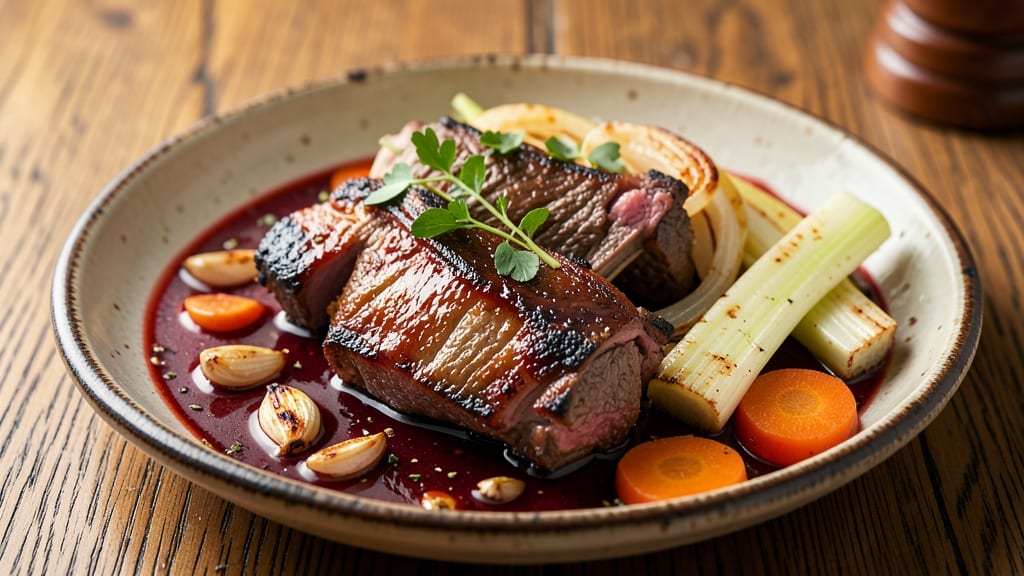
This au jus recipe with beef bones unlocks the deep, rich flavors hiding in your leftover roast—no store-bought packets needed. The secret lies in slow-cooking bone-in beef with aromatic vegetables, wine, and herbs, transforming tough scraps into a velvety, umami-packed sauce that elevates any meal.
French techniques meet modern convenience here, delivering restaurant-quality results with minimal effort.
What sets this au jus apart is the collagen-rich beef bones, which break down over hours to create a naturally thickened, gelatinous broth. The key steps—roasting the bones for depth, deglazing with red wine, and simmering with bay leaves and peppercorns—build layers of flavor that store-bought versions can't match.
This method works equally well with leftover roasts or purpose-bought bones.
By the end, you'll have a glossy, golden sauce with a perfect balance of savory and tangy notes—ideal for drizzling over steak, roasted potatoes, or even as a dipping sauce for crusty bread.
The beauty of this recipe is its versatility: use it immediately for maximum flavor or refrigerate for up to 5 days, where it only gets better as the flavors meld.
For those short on time, a pressure cooker cuts the cooking time by half without sacrificing depth. The result? A sauce so rich and complex, it'll make you question why you ever bought bottled au jus. Let's create something truly special from what most would toss.
Ingredients for au jus recipe with beef bones
These ten ingredients transform leftover bones into restaurant-quality au jus—no shortcuts needed.
| Ingredient | Amount | Notes |
|---|---|---|
| Beef Bones (bone-in roast or rib bones) 🦴 | 2 lb | Collagen-rich for gelatinous texture |
| Red Wine (dry, bold variety) 🍷 | 1 cup | Cabernet Sauvignon or Merlot preferred |
| Yellow Onion 🧅 | 1 whole | Chopped into 1/2-inch pieces |
| Garlic Cloves 🧄 | 4 cloves | Smashed for deeper flavor |
| Carrots 🥕 | 2 whole | Cut into 1-inch chunks |
| Celery Stalks 🌿 | 2 whole | Cut into 1-inch pieces |
| Fresh Thyme Sprigs 🌿 | 2 whole | Or 1 tsp dried thyme |
| Bay Leaves 🌿 | 2 whole | Standard dried leaves |
| Black Peppercorns 🌶️ | 10 whole | Crushed for bold flavor |
| Beef Stock (optional) 🥄 | 1 cup | Homemade or high-quality store-bought |
The beef bones are non-negotiable—bone-in roast or rib bones work best, as they release collagen for that signature silky texture. Costco or local butchers often sell them pre-cut, but if you're using leftover roasts, ask for the bone-heavy pieces. Fresh thyme and bay leaves add depth, so don't skip them—Trader Joe's sells affordable bundles. For the wine, grab whatever bold red you're drinking; Cabernet Sauvignon or Merlot are classic choices, but a cheap bottle works just as well.
No red wine? Beef broth with a splash of balsamic vinegar mimics the tang, though the color will differ. Fresh herbs are ideal, but dried thyme at one-third the amount works in a pinch. The carrots and celery are flavor anchors—no need to peel them, just chop and toss in. If you're short on time, a pressure cooker cuts the simmer time to 30 minutes instead of hours, but the slow method builds more complexity. For extra richness, add a splash of soy sauce or Worcestershire at the end.
This au jus tastes even better the next day as flavors meld. Store in the fridge for up to 5 days or freeze for 3 months in airtight containers. Skim excess fat before refrigerating if you prefer a lighter sauce. The sauce thickens as it cools, so reheat gently—low heat on the stovetop or microwave in 20-second bursts—to avoid breaking the emulsion. Leftovers make perfect dipping sauce for steak fries or crusty bread
Why You'll Love This Recipe
- Minimal Chopping Required: The onions and carrots? Just rough chop—no fancy dicing needed. I swear, the wine and garlic do most of the work while you sip your coffee.
- Rich Without Effort: That deep, savory au jus? It’s all in the bones and a splash of bold red wine simmering together. Honestly, the flavor builds itself—just let it work its magic.
- Weeknight to Dinner Party: Same pot of au jus for quick weeknight dinners or fancy Sunday suppers. Between us, I’ve served this to guests who thought it was restaurant-quality.
- Budget-Friendly Leftovers: Beef bones are cheap, and the sauce only gets better the next day. I’ll be real: my freezer’s full of this stuff—perfect for reheating or freezing for lazy mornings.
Step-by-step instructions for rich beef bone au jus
Transform simple beef bones into a velvety, umami-packed au jus that elevates any protein.
🔥 Step 1: Roast the Beef Bones for Deep Flavor
Preheat your oven to 425°F and place the 2 lb beef bones on a rimmed baking sheet. Roast for 20-25 minutes until they develop a deep mahogany color and begin to smell intensely caramelized. This step unlocks the Maillard reaction, creating complex flavors that will infuse your au jus.
Real talk: Don't skip this roasting step. The bones need that crust to build layers of flavor. I like to turn them occasionally for even browning, but resist the urge to overcrowd the pan—you want maximum surface area for that caramelization.
🍳 Step 2: Sear the Bones and Build the Aromatic Base
In a large Dutch oven, sear the roasted bones over medium-high heat for 3-4 minutes per side until deeply browned. Remove the bones and set them aside. In the same pot, add 1 cup red wine and scrape up all those delicious browned bits from the bottom—this is called deglazing, and it captures all that concentrated flavor.
Add the chopped yellow onion, 1-inch carrot chunks, 1-inch celery pieces, smashed garlic cloves, crushed black peppercorns, fresh thyme sprigs, and bay leaves. Cook for 5-6 minutes until the vegetables soften slightly and the mixture smells heavenly. You're building the aromatic foundation that will carry through your au jus.
🥘 Step 3: Simmer the Bones for Maximum Extraction
Return the seared bones to the pot and add 4 cups water (or 3 cups water plus 1 cup beef stock if using). Bring to a gentle boil, then reduce heat to low and cover partially. Simmer for 3-4 hours, skimming any foam that rises to the surface. This long cook time is crucial—it allows the collagen in the bones to break down into gelatin, creating that signature silky texture.
I know it seems like forever, but trust the process. The bones should be fork-tender when you're done, and the liquid should have thickened noticeably. If you're short on time, you can pressure cook this for 90 minutes instead, but the flavor won't be as deep. Patience here pays off in rich, velvety results.
⏰ Step 4: Strain and Reduce for Perfect Consistency
Carefully strain the broth through a fine-mesh sieve into a clean pot, pressing on the solids to extract every last drop of flavor. Discard the vegetables and bones. Return the strained liquid to medium-high heat and simmer uncovered for 15-20 minutes until reduced by about 25%. This concentration step intensifies the umami flavor and creates that perfect au jus consistency—thick enough to coat the back of a spoon but still pourable.
Here's where it gets fun: Taste and adjust seasoning. You might need to add a pinch of salt or a splash more red wine to balance the flavors. The au jus should be rich, meaty, and slightly tangy from the wine. If it's too acidic, add a small piece of butter to mellow the flavors. This is your chance to perfect the taste before serving.
🍽️ Step 5: Serve Warm Over Your Favorite Protein
Use the au jus immediately to keep it at its peak. It's perfect for drizzling over grilled steaks, roasted chicken, or even as a dipping sauce for crusty bread. The gelatinous texture comes together beautifully when served warm, so don't let it cool completely before using. For best results, reheat gently over low heat, stirring occasionally to prevent skin from forming.
This au jus keeps well in the refrigerator for up to 5 days or can be frozen for 3 months. The flavors actually deepen over time, making it a versatile pantry staple. The reason this recipe works so well is that it captures all the natural umami from the bones while balancing it with the acidity of the wine and the sweetness of the vegetables—a perfect harmony of flavors.
Pro Tips For Making Au Jus Recipe With Beef Bones
- BLANCH BONES FIRST: Toss your beef bones in boiling water for 3-5 minutes before browning—this loosens dirt, blood, and that metallic taste you don’t want in your au jus. I used to skip this and wondered why my sauce always had a faint off-note. Rinse them well afterward, or the water will turn cloudy.
- BROWN THE BONES HARD: Don’t half-ass the sear—get those bones deep golden brown, even black in spots, on all sides. High heat, no crowding the pan, and let them crisp for 5-7 minutes total. This isn’t just for looks; it builds flavor that dissolves into the sauce later.
- DEGLAZE WITH WINE IMMEDIATELY: As soon as you remove the bones, pour in that bold red wine right away—the residual heat will help lift all those browned bits from the pan. Let it simmer for 2 minutes before adding anything else, or you’ll end up with a thin, weak sauce.
- SWEAT ONIONS LOW AND SLOW: Caramelize those onions for 10-12 minutes until they’re soft and golden, not crispy. If you rush this, they’ll burn before the garlic and carrots even get a chance to join the party. Patience here means depth in the final sauce—trust me, your nose will thank you.
Storing and reheating your Leftovers
Refrigerator Storage
Let your au jus cool to room temperature before transferring to airtight glass containers—I prefer quart-sized Pyrex for easy reheating. Store in the fridge for up to 5 days, where the flavors deepen as the collagen continues to break down.
The sauce will naturally thicken further, so give it a quick stir before serving. Skim any solidified fat from the surface before reheating for a cleaner texture. 🥄
Freezer Preservation
For longer storage, freeze your au jus in silicone ice cube trays or freezer-safe glass jars, leaving 1-inch headspace for expansion. Once frozen, transfer cubes to a ziplock bag or labeled container. This method works perfectly for single-serving portions—just pop out a cube when needed.
The sauce maintains quality for 3 months, though I recommend using it within 2 months for peak flavor. Label with the date to track freshness. ❄️
Reheating Methods
For stovetop reheating, warm the au jus over medium-low heat for 5-7 minutes, stirring occasionally to prevent scorching. Avoid boiling—just heat until steaming. If using the microwave, heat in 20-second bursts, stirring between each interval, until warmed through.
The gelatinous texture is delicate, so gentle heat preserves its silky consistency. A splash of beef stock can help restore richness if the sauce looks too thick after refrigeration. 🔥
Fat Management Tips
If your au jus develops a thick layer of fat after refrigeration, use a fat separator funnel or spoon it off before reheating. For a lighter sauce, chill the broth uncovered in the fridge overnight—the fat will solidify on top and can be easily removed.
Alternatively, blend the chilled au jus briefly to emulsify the fat back into the liquid, then strain again. This technique works especially well for pressure-cooker versions that tend to be richer. 🧊
Reviving Stale Flavor
If your au jus tastes flat after refrigeration, revive it by adding 1 tablespoon red wine or 1 teaspoon balsamic vinegar per cup of sauce. Simmer for 3-4 minutes to rebalance the flavors. A pinch of salt or a splash of beef stock can also help restore depth.
The key is to avoid over-reheating, which can break the sauce's delicate emulsion. Think of it as a flavor reset—your au jus will taste fresh and vibrant again. ✨
Portioning for Meals
Divide your au jus into small glass jars or silicone muffin molds for easy portion control. These single-serving sizes are perfect for drizzling over steak, roasted vegetables, or mashed potatoes. Store them upright in the fridge to prevent spills.
When reheating, use the microwave-safe jar directly—just pop it in for 30-45 seconds, then stir. This method keeps your au jus ready for quick meals without extra cleanup. 🍽️
Nutrition facts
Frequently asked questions
Can I use chicken bones instead of beef bones for au jus?
The flavor profile changes dramatically—beef bones provide deep umami and collagen for that signature silky texture. Chicken bones work best for lighter broths, but for au jus, stick with beef. If you're determined to use chicken, add extra soy sauce or Worcestershire to boost savory depth, but expect a milder result.
How do I make au jus without red wine?
No problem! Replace the wine with 1 cup beef stock plus 1 tablespoon balsamic vinegar for acidity. For extra richness, add 1 teaspoon tomato paste or a splash of dry sherry. The sauce will be slightly less tangy but still delicious.
Why does my au jus turn cloudy after refrigeration?
Cloudiness usually means the fat hasn't fully solidified or the collagen hasn't fully set. Skim off the fat layer and reheat gently—this should clarify it. For extra shine, blend briefly and strain again. If it's still cloudy, the sauce may need more 15-20 minutes of reduction time to concentrate flavors.
Can I make au jus in an Instant Pot?
Follow the same steps but reduce the simmer time to 90 minutes on high pressure (natural release). For deeper flavor, add 1 extra hour on low heat after pressure cooking. The pressure cooker cuts time by half while still extracting collagen—just don't skip the roasting step for those caramelized flavors.
What's the best way to use leftover au jus?
Try these creative uses: reduce it into a glossy pan sauce with butter, mix into mashed potatoes, or use as a marinade for steak. For extra richness, freeze in ice cube trays and pop out as needed for quick flavor boosts. The gelatinous texture makes it perfect for dipping sauces or gravies too!