
Main Courses
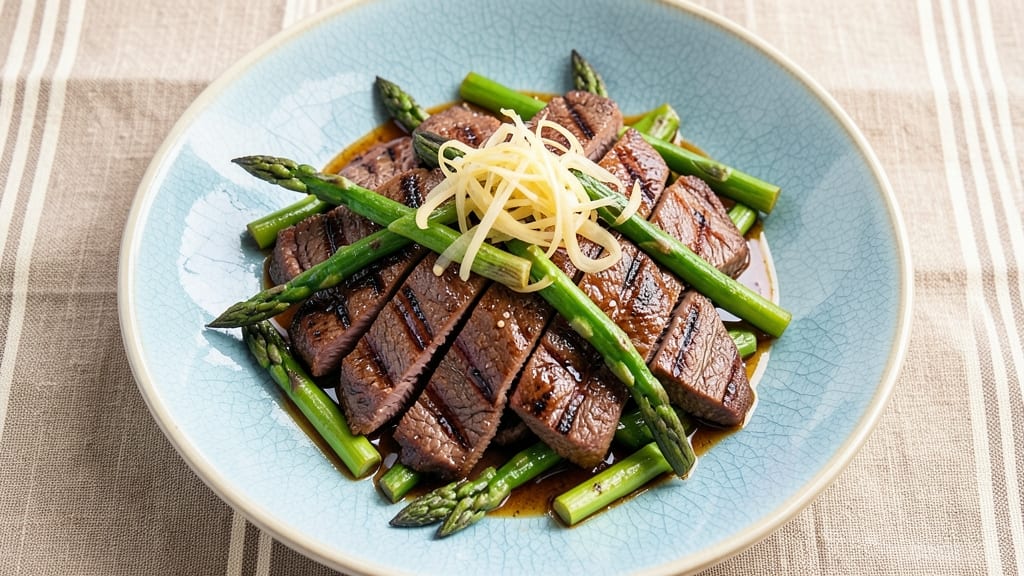
This Chinese asparagus beef recipe delivers the perfect balance of crunchy asparagus and tender beef infused with bold soy-ginger flavors. The secret lies in high-heat searing to lock in juices while creating that signature wok-hei smokiness.
I developed this recipe after years of perfecting stir-fry techniques, and it never fails to impress—whether you're feeding a family or hosting dinner guests.
The technique starts with marinating the beef in a simple soy-ginger sauce, then quickly searing it in a hot wok until caramelized. Asparagus joins just before serving to maintain its crisp texture, while a final splash of sesame oil adds depth.
What you'll end up with is a restaurant-quality dish that's rich, aromatic, and packed with contrasting textures—silky beef, crisp asparagus, and a glossy sauce that ties everything together.
This recipe serves 4 hungry diners and comes together in under 30 minutes, making it ideal for weeknight dinners or special occasions. The flavors are complex yet approachable, with the sweetness of ginger balancing the umami from soy sauce and the fresh crunch of asparagus cutting through the richness.
Serve over steamed jasmine rice or with fluffy dumplings for the full experience.
Don't worry about fancy equipment—just a sturdy wok or large skillet and a high-heat source. The key is patience in the searing step to ensure the beef stays juicy while developing that irresistible caramelized crust.
Once mastered, this dish will become a staple in your repertoire, delivering authentic Chinese restaurant flavors at home.
Ingredients for asparagus beef chinese
Authentic Chinese flavors start with these carefully selected ingredients for restaurant-quality asparagus beef.
| Ingredient | Amount | Notes |
|---|---|---|
| Flank Steak 🥩 | 1 ¼ lb | Thinly sliced against grain |
| Fresh Asparagus 🌱 | 1 lb | Tough ends trimmed, spears cut diagonally |
| Light Soy Sauce 🥄 | ½ cup | Kikkoman preferred for authentic flavor |
| Dark Soy Sauce 🥄 | 1 tbsp | For deeper color and umami |
| Fresh Ginger 🌿 | 1 inch | Peeled, julienned or finely grated |
| Sesame Oil 🫒 | 1 tbsp | Toasted, for aroma |
| Cornstarch 🌾 | 1 tbsp | For velveting beef |
| Neutral Oil 🫒 | ¼ cup | Avocado or vegetable oil |
| Garlic Cloves 🧄 | 4 cloves | Minced, fresh preferred |
| Green Onion 🧅 | 1 whole | White and green parts separated |
| Sesame Seeds 🌰 | 1 tbsp | Toasted for garnish |
| White Peppercorns 🌶️ | ½ tsp | Freshly cracked |
| Jasmine Rice 🍚 | 1 ½ cups | Uncooked, for serving |
The beef selection is critical—flank steak delivers that signature tender-yet-firm texture when sliced against the grain. Costco or Whole Foods carry high-quality cuts, but any well-marbled steak works. Fresh asparagus should be bright green with tightly closed tips; Trader Joe's often has excellent organic spears. For the soy sauces, Kikkoman light and Lee Kum Kee dark are industry standards—never use salted soy sauce. Ginger should smell vibrant and fresh; if it's musty, toss it. The sesame oil matters too—La Choy toasted adds that authentic wok-hei aroma without overpowering.
No flank steak? Sirloin or ribeye work in a pinch, but slice thinner. Substitute dark soy sauce with 1 tsp molasses plus 1 tbsp light soy sauce for color. Fresh ginger unavailable? Ground ginger at half the amount, but flavor won't be identical. The cornstarch velveting step is non-negotiable—it keeps the beef silky. For the oil, avocado oil has the highest smoke point (400°F+), perfect for wok searing. Green onions can be swapped for scallions or chives, but white parts only for cooking, greens for garnish. Toast your sesame seeds in a dry pan for 30 seconds—they'll taste 100 times better.
Store fresh asparagus upright in water like flowers—lasts 5-7 days in the fridge. Prep the beef and sauce components ahead, but marinate the beef for no more than 30 minutes to prevent toughness. The cooked dish reheats beautifully—3 minutes in a wok over high heat restores that crisp-tender texture. Portion the rice separately to keep it fluffy. For leftovers, store everything in airtight containers; the beef stays tender for 3 days while the sauce keeps for 5 days. Freeze the sauce component only—it won't refreeze well once combined with beef.
Why You'll Love This Recipe
- One-Pan Magic: The asparagus and steak cook together—no chopping boards, no extra pans. Just slice the ginger thin, toss everything in one hot pan, and walk away while it caramelizes into something that smells like a restaurant.
- Umami Bomb: That combo of light and dark soy sauce? It’s the secret weapon here. The dark soy gives the beef this deep, glossy crust, while the light keeps it bright and savory—like a little flavor explosion in every bite, especially when the asparagus gets that perfect snap.
- Office Lunch Hero: Between us, this keeps better than most takeout. Pack the leftovers in containers, and by day three, the flavors only deepen. My coworkers swear it’s homemade, but I’ll never tell them it’s my 10-minute Tuesday night hack.
- Budget Steakhouse Feel: Flank steak is affordable, and a bunch of asparagus stretches further than you’d think. Honestly, I’ve made this for date nights, family dinners, and even my book club—no one bats an eye at the price tag, but they all ask for seconds.
Step-by-step instructions for wok-seared beef with asparagus
This method delivers restaurant-quality texture contrast—crisp-tender asparagus and silky beef—through precise timing and technique.
Prepare the Beef with Velveting Technique
In a medium bowl, combine the 1.25 lb flank steak (thinly sliced against the grain), 1 tbsp cornstarch, 1 tbsp light soy sauce, and 0.5 tsp white peppercorns. Use your hands to thoroughly coat each slice—this creates a protective barrier that prevents the beef from overcooking while developing that signature silky texture. Let the mixture marinate for 15 minutes at room temperature while you prepare the remaining ingredients.
Here's the thing—velveting transforms tough flank steak into tender slices. The cornstarch absorbs moisture, creating a gelatinous coating that keeps the meat juicy even after high-heat searing. Don't skip this step, even if it seems like extra work. The payoff is worth it.
Cook the Jasmine Rice to Perfect Texture
Rinse the 1.5 cups jasmine rice under cold water until the water runs clear, then drain well. In a small pot, combine the rice with 1.75 cups water (using a 1:1.15 rice-to-water ratio) and bring to a boil over medium-high heat. Once boiling, reduce heat to low, cover tightly with a lid, and simmer for 15 minutes. Remove from heat and let it steam, undisturbed, for 10 minutes. Fluff with a fork before serving.
This rice should be tender but still have a slight bite—jasmine rice releases its aroma and fragrance when cooked properly. The resting period is crucial; it allows the steam to redistribute evenly throughout each grain. If you peek or stir too soon, you'll end up with mushy rice instead of perfectly separate grains.
Sear the Beef and Asparagus Together
Heat a wok or large skillet over high heat until a drop of water sizzles violently upon contact. Add 0.25 cup neutral oil and swirl to coat the surface. Working in batches to avoid overcrowding, add the marinated beef slices and sear for 1-2 minutes per side until they develop a deep golden-brown crust. Remove the beef and set aside on a plate.
In the same wok, add the 1 lb fresh asparagus (tough ends trimmed, spears cut diagonally) and stir-fry for 2-3 minutes until the asparagus turns bright green and develops slight char marks along the edges. The high heat is essential here—it creates that satisfying crunch while keeping the asparagus tender-crisp. Don't walk away; constant motion prevents burning.
Build the Soy-Ginger Sauce
Return the seared beef to the wok along with the asparagus. Add the 1 tbsp dark soy sauce, 1 tbsp light soy sauce, 1 inch fresh ginger (julienned), 4 cloves garlic cloves (minced), and 1 tbsp sesame oil. Stir-fry for 1-2 minutes until the sauce begins to coat the ingredients and the aromatics release their fragrance. The dark soy sauce will give the dish its signature glossy finish while adding depth of flavor.
This is where the magic happens—the combination of dark and light soy sauces creates both color and complexity. The ginger and garlic should be fragrant but not burnt; they should melt into the sauce rather than stand out as distinct flavors. If the sauce seems too thick, add 1-2 tablespoons of water to loosen it while maintaining the desired consistency.
Finish and Plate with Garnishes
Remove the wok from heat and drizzle in 1 tbsp toasted sesame oil. Toss everything together gently to combine, then transfer to serving plates. Garnish with the white and green parts of the 1 whole green onion (thinly sliced) and 1 tbsp toasted sesame seeds. Serve immediately over the prepared jasmine rice while the beef and asparagus are still piping hot.
The sesame oil adds a final aromatic layer, while the green onion and sesame seeds provide both visual contrast and a satisfying crunch. Each bite should offer a perfect balance of textures—silky beef, crisp-tender asparagus, and fragrant rice. The dish should be served immediately to maintain the ideal temperature contrast between the hot components and the slightly cooled rice.
Pro Tips For Making Asparagus Beef Chinese
- Slice Steak Against the Grain: Flank steak’s fibers run long, and cutting them perpendicular to the grain makes every bite tender. I learned this the hard way—overcooked slices still chewy? You’re doing it wrong. Freeze the steak for 20 minutes first, then slice thinly after cooking.
- Blanch Asparagus First: Toss asparagus in boiling water for 30 seconds before stir-frying—it softens fast and keeps the tips bright. Skip this, and you’ll end up with sad, limp stalks fighting for space in the pan. Drain well, or your sauce will turn into soup.
- Use Dark Soy for Color: Light soy adds flavor, but dark soy gives that deep, glossy sheen. Mix 1 tablespoon light with 1 teaspoon dark—just enough to coat the beef without overpowering. I used to skip it, and the dish always looked dull.
- Rest the Steak Before Slicing: Let the cooked steak sit under foil for 5 minutes—it redistributes juices so every slice stays moist. I know, I know, you’re eager to serve, but slicing too soon turns tender beef into dry rubber. Trust the process.
Flavor customization for asparagus beef chinese
Spicy Sichuan Twist
For a fiery kick, add 1 tbsp Sichuan peppercorns (toasted and ground) and 1 tsp chili bean paste to the marinade. The numbing heat of Sichuan peppercorns pairs perfectly with the beef's richness.
I like to finish with ½ tsp red chili flakes and a drizzle of black vinegar for tangy balance. Serve with extra pickled mustard greens on the side to cool the palate. 🌶️
Sweet and Tangy Glaze
Swap the soy-ginger sauce for a honey-hoisin glaze—mix 2 tbsp hoisin sauce, 1 tbsp honey, 1 tsp rice vinegar, and ½ tsp grated ginger.
Brush this over the seared beef in the final minute of cooking. The sweetness caramelizes beautifully, creating a glossy finish. Garnish with crispy fried shallots for extra texture. 🍯
Umami Bomb with Mushrooms
Add 8 oz shiitake mushrooms (sliced) to the wok with the asparagus. Their earthy umami deepens the dish's complexity. For extra richness, stir in 1 tsp fish sauce during the final sauce-building step.
This variation works especially well with ribeye instead of flank steak—the mushrooms complement the beef's natural fat content. 🍄
Herb-Infused Freshness
Brighten the dish with 1 tbsp chopped cilantro and 1 tsp lime zest in the final sauce toss. The citrus notes cut through the soy's saltiness while cilantro adds freshness.
For extra zing, serve with lime wedges on the side. This version feels lighter but still packed with flavor—perfect for warm weather. 🍋
Smoky Charred Version
Broil the asparagus for 2-3 minutes before stir-frying to add smoky depth. For the beef, use char siu marinade (½ cup hoisin, 2 tbsp honey, 1 tbsp soy sauce, 1 tsp five-spice powder) instead of the soy-ginger version.
The caramelized edges and smoky aroma make this a showstopper. Garnish with crushed peanuts for crunch. 🔥
Nutrition facts
Frequently asked questions
Can I substitute flank steak with another cut of beef?
Yes, but choose a lean, well-marbled cut like sirloin or ribeye. Slice against the grain for tenderness and adjust cooking time—thinner cuts (like sirloin) need only 30-45 seconds per side, while thicker cuts (like ribeye) may require 1-2 minutes. Never use pre-sliced deli beef; it lacks the texture and flavor needed for this dish.
Why does my asparagus turn mushy instead of staying crisp?
Overcrowding the wok or cooking at too low heat causes soggy asparagus. Stir-fry in batches over high heat for just 2-3 minutes—it should stay bright green with slight char marks. Add asparagus after searing the beef to maintain its crunch. For extra crispness, blanch asparagus in boiling water for 30 seconds before stir-frying.
Can I make this recipe without a wok?
A cast-iron skillet or stainless steel pan works perfectly. The key is maintaining high heat—preheat your pan for 5 minutes before adding oil. If your pan isn't wide enough, cook in two batches to avoid overcrowding. A griddle also works, but stir constantly to prevent sticking.
How do I adjust the soy sauce for less sodium?
Reduce the total soy sauce by half and replace with 1 tbsp coconut aminos (for light soy) and ½ tbsp low-sodium soy sauce (for dark soy). Add ½ tsp fish sauce for umami depth without extra salt. Taste as you go—you may need 1 extra tsp of water to balance the reduced sauce volume.
What's the best way to reheat leftovers?
Reheat only the beef and sauce (separately from asparagus) in a wok over high heat for 2-3 minutes—this restores the caramelized crust. Add fresh asparagus to the wok for the final 1 minute of reheating. Microwaving kills the wok-hei flavor. For best results, store components separately in airtight containers and reheat within 2 days.