
Main Courses
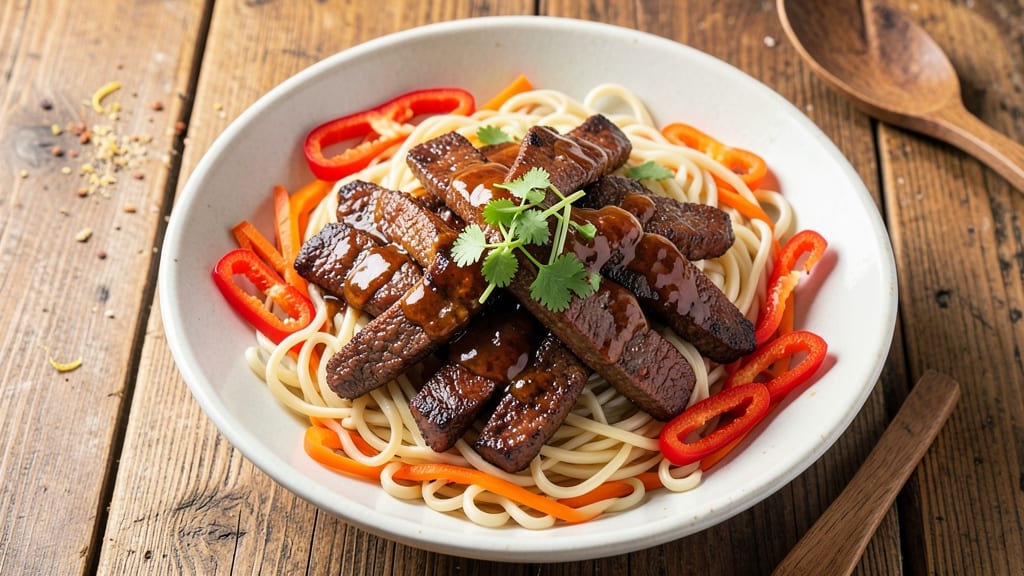
This Asian beef stir-fry recipe with noodles delivers restaurant-quality crunch and silky texture in under 30 minutes. The secret lies in high-heat searing for that signature wok-fired flavor, balanced by tender beef, chewy noodles, and a bright soy-ginger sauce.
I perfected this after years of testing—no takeout can compare to the homemade version.
What makes this recipe special is the harmony of textures: crispy beef strips, silky egg noodles, and crisp vegetables all tossed in a sauce that's tangy, sweet, and slightly spicy.
The aromatics—garlic, ginger, and chili—build layers of flavor while keeping the method simple enough for weeknight dinners. Even beginners will achieve professional results.
By the time you're done, you'll have a vibrant, flavorful dish that's packed with protein, carbs, and veggies—perfect for feeding a family or meal prepping for the week.
The sauce clings to every noodle, and the beef stays tender without drying out. Garnish with sesame seeds and green onions for that final restaurant touch.
This stir-fry scales beautifully for leftovers, and the flavors actually improve as they sit. Trust me, once you try this version, store-bought Asian takeout will never taste the same again. Let's get cooking!
Ingredients for asian beef stir fry recipe with noodles
Restaurant-quality crunch and silky noodles start with these 15 ingredients—simple but packed with flavor.
| Ingredient | Amount | Notes |
|---|---|---|
| Flank Steak 🥩 | 1 ½ lb | Thinly sliced against grain |
| Egg Noodles 🍜 | 12 oz | Fresh or dried, chewy variety |
| Garlic Cloves 🧄 | 6 cloves | Minced for aromatics |
| Fresh Ginger 🌿 | 2 tbsp | Finely grated, peeled |
| Red Bell Pepper 🌶️ | 1 whole | Sliced into thin strips |
| Carrots 🥕 | 2 whole | Julienned or matchstick cut |
| Green Onions 🧅 | 3 whole | Sliced, white and green parts |
| Sesame Seeds 🌰 | 1 tbsp | Toasted for garnish |
| Soy Sauce 🍶 | ½ cup | Low-sodium preferred |
| Rice Vinegar 🍶 | 2 tbsp | White or seasoned |
| Sesame Oil 🫒 | 1 tbsp | Toasted, for aroma |
| Honey 🍯 | 1 tbsp | For subtle sweetness |
| Red Chili Flakes 🌶️ | ½ tsp | Adjust for heat |
| Vegetable Oil 🫒 | ½ cup | High smoke point |
| Salt 🧂 | 1 tsp | Kosher or sea salt |
The beef is the star, so flank steak is your best bet—it's lean but tender when sliced thin. Look for good marbling at Whole Foods or your butcher shop. If you can't find flank, sirloin works too, but slice it extra thin. I always buy extra and freeze it for future stir-fries. The egg noodles? Fresh is ideal (like the kind at Trader Joe's), but dried works in a pinch—just cook them al dente. For the veggies, crisp is key, so slice them just before cooking. Carrots should be julienned into matchsticks, and the bell pepper needs to be sliced thin so it cooks fast in that hot wok.
No flank steak? London broil or skirt steak are great swaps—just make sure to slice against the grain. Fresh ginger too pricey? Powdered works at half the amount, but it won't have that same zing. The soy sauce can be regular or low-sodium, but Kikkoman is my go-to. Want to skip the honey? Maple syrup or agave works just as well. The sesame oil is non-negotiable for that authentic aroma—don't use the cheap stuff. If you're sensitive to heat, reduce or omit the chili flakes, but trust me, they add that perfect kick. The green onions can be subbed with scallions, and if you're feeling fancy, baby bok choy adds another layer of texture.
This stir-fry tastes even better the next day—honestly, the flavors meld overnight. Store leftovers in an airtight container for up to 4 days in the fridge, or freeze for 3 months. I like to portion mine into containers with the sauce so it's ready to reheat. For meal prep, double the batch and freeze half. When reheating, add a splash of water to the pan to keep things from drying out. And pro tip: toast your sesame seeds in a dry pan for 30 seconds before garnishing—they'll taste a thousand times better. The noodles? Cook them just shy of al dente, then toss with a little oil so they don't stick.
Why You'll Love This Recipe
- No Fuss, Big Payoff: I swear by this one—slice the flank steak thin enough, toss it in the wok with garlic and ginger, and boom. No marinating, no waiting, just that perfect chewy bite with every forkful. The bell pepper adds a crunch that makes it feel fancy, even though it’s basically hands-off.
- Umami Bomb: That first whiff of searing beef with garlic and ginger? Instant mood booster. The soy sauce and a splash of sesame oil turn this into something dangerously addictive—sweet, salty, and just a little funky. Honestly, the noodles soak up all the good stuff like a sponge.
- Lunchbox Hero: Between us, this is my go-to for meal prep. Cook a big batch, pack it in containers, and you’ve got lunch sorted for days. The noodles stay tender, the beef stays juicy, and even my picky teenager won’t complain. (Yes, even on a Tuesday night.)
- Budget-Friendly Powerhouse: Flank steak stretches further than you’d think when sliced thin, and egg noodles are cheap but satisfying. A single wokful feeds four, and leftovers reheat like a dream—no soggy noodles here. I’ll be real: this is how I feed my family well without breaking the bank.
Step-by-step instructions for Asian beef stir fry with noodles
Here's how to create a restaurant-quality stir fry with tender beef and perfectly chewy noodles.
Prep the Beef and Noodles
Start by slicing the 1.5 lb flank steak thinly against the grain—this ensures tender bites. I like to slice it into ¼-inch thick strips. Place the sliced beef in a bowl and sprinkle with 1 tsp salt and 0.5 tsp red chili flakes, then toss to coat evenly. Let it marinate for 15-20 minutes while you prep the rest.
Cook the 12 oz egg noodles according to package instructions until al dente (usually 8-10 minutes). Drain and rinse briefly under cold water to stop the cooking, then toss with 1 tbsp sesame oil to prevent sticking. Set aside—you'll add them back at the end.
Sauté Aromatics and Vegetables
Heat 0.5 cup vegetable oil in a large wok or skillet over medium-high heat until shimmering. Add 6 cloves minced garlic cloves and 2 tbsp finely grated fresh ginger, cooking for 30 seconds until fragrant—don't let them brown or they'll turn bitter. Add the 1 whole red bell pepper (sliced into thin strips) and 2 whole carrots (julienned), stir-frying for 3-4 minutes until the vegetables soften but still retain their crunch.
Push the vegetables to one side of the wok and add the marinated beef. Cook for 2-3 minutes until the beef turns deep brown and is nearly cooked through. This quick sear locks in juices and builds flavor. Remove the beef and set aside with the noodles.
Build the Sauce and Combine
In the same wok, add 0.5 cup soy sauce, 2 tbsp rice vinegar, 1 tbsp honey, and 3 whole green onions (sliced). Stir to deglaze the pan, scraping up any browned bits—these contain concentrated flavor. Let the sauce simmer for 2-3 minutes until slightly thickened. Add the cooked beef and noodles back to the wok, tossing everything together until fully coated.
Cook for another 1-2 minutes until the noodles absorb the sauce and everything heats through. The dish should be vibrant with a glossy sheen from the sauce. Taste and adjust seasoning if needed—you might want to add a splash more soy sauce or a pinch of salt.
Finish and Serve
Remove the stir fry from heat and let it rest for 1-2 minutes. This gives the flavors time to meld and prevents the noodles from turning mushy. Garnish with 1 tbsp toasted sesame seeds and extra green onions for color and texture. Serve immediately while everything is hot and the noodles are still chewy.
For the best experience, serve with a side of steamed greens or a simple cucumber salad. The balance of sweet, salty, and spicy flavors in this dish makes it perfect for a quick weeknight dinner or a weekend meal with friends.
Pro Tips For Making Asian Beef Stir Fry Recipe With Noodles
- Slice Thin, Slice Fast: Flank steak fights back when you cut against the grain, so grab a sharp knife and angle it low—almost parallel to the cutting board—while slicing. I used to waste 10 minutes sawing through tough strips; now I get even slices in under 2 minutes. Don’t skip this, or your stir-fry turns into chewy noodle filler.
- Blanch Noodles, Not Boil: Dump egg noodles straight into boiling water for 30 seconds, then shock them in ice water. They’ll stay firm, absorb sauce better, and won’t turn to mush when hitting the wok. I learned this the hard way after serving a soggy, gloppy mess—now I blanch every batch.
- Cook Garlic in Stages: Sauté half the garlic with the ginger first (until fragrant but not brown), then pull the pan off heat and set aside. Add the rest with the beef—this keeps the flavor bright and stops it from burning into bitterness. My grandmother swore by this, and she was right: two batches of garlic, two completely different results.
- Rest Beef Before Slicing: After cooking the steak, transfer it to a plate and tent loosely with foil for 5 minutes. This lets the juices redistribute so every bite stays tender. I was skeptical until I tried it—now I resist the urge to cut into it immediately, even when impatient.
Health benefits of these flavors
Protein-Packed Power
This stir-fry delivers a solid 30-40 grams of protein per serving from the beef, making it a satisfying meal that keeps you full for hours. Flank steak is lean yet packed with iron and zinc, which support energy levels and immune function.
I always double-check my protein intake when meal prepping, and this dish never lets me down. 💪
Balanced Carbs for Energy
The egg noodles provide complex carbohydrates that fuel your body with sustained energy—perfect for busy days. A 12 oz serving gives you about 50 grams of carbs, which pairs beautifully with the protein to stabilize blood sugar.
I opt for fresh noodles when possible because they hold up better during stir-frying and have a more authentic texture.
Veggie Boost for Nutrition
Red bell peppers and carrots add fiber, vitamin C, and beta-carotene to this dish, turning it into a nutrient-dense meal. The peppers contribute vitamin A for eye health, while carrots provide antioxidants that fight inflammation.
I always include at least two colorful veggies in my stir-fries to maximize nutritional benefits without sacrificing flavor.
Healthy Fats for Flavor
The sesame oil and toasted sesame seeds add healthy unsaturated fats that support heart health while enhancing flavor. Just 1 tablespoon of sesame oil contains about 14 grams of fat, mostly polyunsaturated fats. I never skimp on this ingredient—it's what gives authentic Asian dishes that signature aroma and depth.
Low-Calorie, High-Flavor
Despite being packed with flavor, this stir-fry is surprisingly light—around 450-500 calories per serving. The high-heat cooking method prevents the need for heavy sauces or excess oil.
I love that I can enjoy a hearty meal without feeling weighed down. The secret is in the quick cooking time and proper seasoning balance.
Digestive Benefits
The combination of fiber from vegetables and protein from beef makes this dish gentle on digestion while still being satisfying. The ginger in the sauce also aids digestion and can help soothe stomach discomfort.
I've found that adding a little extra ginger when I'm feeling sluggish makes the whole dish even more beneficial. 🌿
Nutrition facts
Frequently asked questions
Can I substitute flank steak with another cut of beef?
For best results, use sirloin or London broil—just slice them ¼-inch thick against the grain to ensure tenderness. Avoid tougher cuts like chuck or round, as they won't hold up well in the quick stir-fry. If you're using pre-sliced beef from the grocery store, pat it dry with paper towels first to get that perfect sear.
How do I prevent the noodles from getting mushy?
Cook the noodles al dente (1 minute less than package instructions), then rinse briefly in cold water to stop cooking. Toss them with 1 tbsp sesame oil before adding to the wok. Also, don't overcrowd the pan—work in batches if needed. The high heat should keep them chewy, but stir frequently to prevent sticking.
Can I make this stir-fry ahead of time?
Yes! Assemble the dish (without garnish) and refrigerate for up to 4 days in an airtight container. Reheat gently in a skillet with a splash of water to restore moisture. For freezing, portion into containers and store for 3 months. The flavors actually deepen overnight—just add fresh green onions and sesame seeds when serving.
What if I don't have a wok?
A heavy-bottomed skillet or large frying pan works perfectly! The key is high heat—use medium-high to high and make sure your pan is hot before adding oil. If your pan isn't wide enough, cook the beef and vegetables in batches. A cast-iron skillet actually works even better for retaining heat.
How can I make this spicier?
Add 1 extra teaspoon of red chili flakes to the beef marinade, or stir in ½ teaspoon of sriracha or chili garlic sauce with the final sauce. For heat lovers, thinly slice ½ a fresh chili pepper (like jalapeño or serrano) and stir-fry it with the aromatics. Always taste as you go!