
Soups & Stews
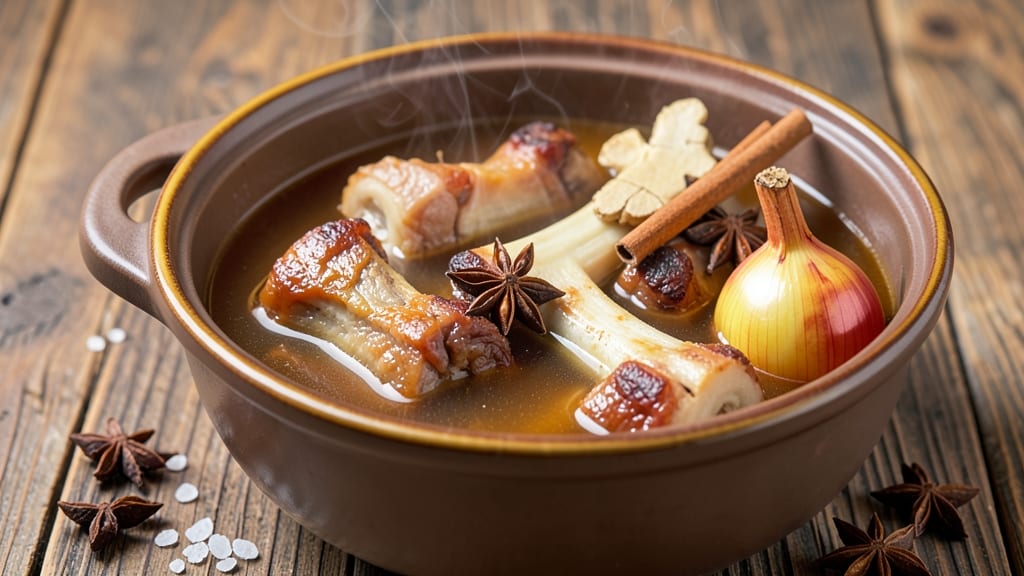
This Asian beef bone broth recipe transforms tough beef bones into a deeply flavorful foundation for soups, stews, and braised dishes. The secret lies in slow-simmering bones with aromatic spices—ginger, star anise, and soy sauce—extracting rich umami and collagen over hours.
Unlike quick broths, this method builds layers of complexity that elevate any dish it touches.
What sets this recipe apart is the balance of traditional techniques and Asian-inspired flavors. You’ll start with a cold-water soak to remove impurities, then simmer bones for 12-16 hours with aromatics that infuse the broth with warmth and depth.
The result? A velvety, golden liquid packed with gelatinous richness that thickens as it cools—a hallmark of true bone broth.
This broth isn’t just functional; it’s a flavor multiplier. Use it as a base for pho, braise meats, or deglaze pans. The slow cooking process breaks down collagen into gelatin, creating a silky texture that coats every ingredient.
Best of all, it freezes beautifully, so you’ll always have a pantry staple ready for quick meals.
Ready to master the art of bone broth? The process is straightforward, but the payoff—restaurant-quality depth in every sip—is unmatched. Let’s get started with the step-by-step guide.
Ingredients for asian beef bone broth
Twelve ingredients, twelve hours of simmering—transforming humble bones into liquid gold for Asian-inspired dishes.
| Ingredient | Amount | Notes |
|---|---|---|
| Beef Bones (Kneecaps and Marrow Bones) 🦴 | 4 lb | Raw, uncooked, organic preferred |
| Cold Water 💧 | 12 cups | For initial soak |
| Yellow Onion 🧅 | 1 whole | Quartered, skin on |
| Fresh Ginger 🌿 | ½ inch | Thinly sliced, peeled |
| Star Anise Pods 🌟 | 4 whole | For aromatic depth |
| Cinnamon Sticks 🌿 | 2 whole | For warmth |
| Soy Sauce 🍶 | ½ cup | Dark soy preferred |
| Apple Cider Vinegar 🍎 | 2 tbsp | For acid balance |
| Sea Salt 🧂 | 1 ½ tsp | Diamond Crystal preferred |
| Black Peppercorns 🌶️ | 1 tsp | Whole, lightly crushed |
| Garlic Cloves 🧄 | 6 cloves | Smashed, skin on |
| Green Onions 🧅 | 2 whole | For garnish, optional |
The bones are the foundation, so prioritize quality. Organic, grass-fed bones from local butchers or specialty grocers yield richer gelatin and deeper flavor. Kneecaps and marrow bones are ideal—they release collagen and marrow fat, creating a velvety texture. If you can't find them, beef shank bones work as a substitute, though they produce slightly less gelatin. Avoid bones with meat still attached, as they can make the broth cloudy. For the best results, store bones in the freezer until ready to use, which helps preserve their collagen content.
Star anise and cinnamon are non-negotiable for that signature Asian warmth, but if you're missing one, a pinch of ground cloves or cardamom can bridge the gap. Dark soy sauce is essential for its deep, molasses-like richness—light soy sauce won't cut it. Apple cider vinegar might seem unusual, but it's key for tenderizing the bones and balancing the broth's acidity. For the ginger, fresh is non-negotiable: dried ginger lacks the bright, citrusy notes that complement the umami. If you're short on time, jarred minced ginger works in a pinch, but fresh is always superior. The soy sauce can be reduced by half if you prefer a lighter broth, though the depth of flavor will diminish slightly.
This broth is best made in a large stockpot or Dutch oven, but a slow cooker works too—just monitor the water level closely. The gelatinous richness develops over time, so never rush the simmer. Once cooled, it thickens further in the fridge, forming a gel-like layer on top. Store it in glass jars or airtight containers in the refrigerator for up to 5 days, or freeze for up to 6 months. For long-term storage, portion into ice cube trays and transfer to freezer bags—perfect for adding to soups or braises later. The broth gains complexity with age, so don't hesitate to make a double batch.
Why You'll Love This Recipe
- No-Chop Start: I swear by this—just toss in whole onions and ginger slices. No peeling, no dicing, no mess. The broth still turns out rich and aromatic, like my mom’s secret.
- Umami Bomb: That marrow bone? Pure flavor gold. The slow simmer pulls out a depth you won’t find in store-bought, especially when the star anise and ginger marry with the beef’s natural richness. It’s the kind of taste that makes you slow down.
- Weeknight Magic: Freeze leftovers in ice cube trays—perfect for quick ramen, stir-fry upgrades, or even a fast soup. I keep a stash in my freezer because nothing beats throwing together a meal when I’m wiped out.
- Budget Goldmine: Kneecaps and marrow bones are cheaper than you’d think, and they yield so much broth. Honestly, it’s my go-to for stretching meals without sacrificing flavor—especially when I’m feeding a crowd on a tight budget.
Step-by-step instructions for Asian beef bone broth
Transform simple ingredients into a deeply flavorful broth through precise technique and patience.
Prepare and Soak the Beef Bones
Rinse the 4 lb beef bones (kneecaps and marrow bones) thoroughly under cold water to remove any impurities. Place them in a large stockpot and cover completely with the 12 cups cold water. This initial soak helps extract initial impurities and begins the extraction of collagen from the bones.
Add the whole yellow onion (quartered, skin on), 0.5 inch fresh ginger (thinly sliced), 4 whole star anise pods, 2 whole cinnamon sticks, 6 cloves garlic (smashed, skin on), and 1 tsp black peppercorns (lightly crushed) to the pot. Bring to a gentle boil over medium-high heat, then immediately reduce to a simmer. Skim off any foam or impurities that rise to the surface during the first 15 minutes of simmering—this ensures a clear, clean broth.
Simmer Low and Slow for Maximum Flavor
After the initial skimming, reduce the heat to maintain a barely simmering state—you should see only the slightest bubbles breaking the surface. This gentle simmer is critical; it allows the collagen to break down gradually over time, creating a rich, gelatinous texture. Cover the pot loosely with a lid and let it cook undisturbed for 4 hours.
During this time, the bones will release their marrow and the liquid will develop a deep, amber hue. The aroma will shift from sharp to rich and umami, signaling that the broth is developing its complex flavor profile. Avoid stirring or moving the pot, as this can disrupt the delicate extraction process.
Add Acid and Soy for Depth
After 4 hours, remove the lid and stir in the 0.5 cup soy sauce and 2 tbsp apple cider vinegar. These ingredients play a dual role: the vinegar helps tenderize the bones and extract additional collagen, while the soy sauce adds a deep, savory umami note that's characteristic of Asian broths. Return the pot to a gentle simmer and continue cooking for another 4 hours, or until the broth has reduced by about one-third and the bones can be easily separated from the meat.
Taste the broth periodically—it should be deeply flavorful with a balance of sweetness from the bones, warmth from the spices, and a touch of tang from the vinegar. If the broth needs more salt, add the 1.5 tsp sea salt gradually, tasting as you go. The final seasoning should be rich but not overpowering.
Strain and Finish
Once the broth has reached the desired depth of flavor and the bones are tender, remove the pot from heat. Using a fine-mesh strainer or cheesecloth, carefully strain the broth into a clean container, discarding the solids. The broth should be opaque with a gel-like consistency, indicating a high collagen content. If you prefer a smoother texture, you can pass the broth through a fine sieve for a second time.
Let the broth cool to room temperature, then transfer it to airtight containers. It will continue to thicken as it cools, developing a beautiful, glossy sheen. Store in the refrigerator for up to 5 days or freeze for up to 3 months. The 2 whole green onions can be added as a garnish when serving, though they are optional.
Pro Tips For Making Asian Beef Bone Broth
- CHAR THE BONES FIRST: Blister those kneecaps and marrow bones in a dry pot for 10-15 minutes before adding liquid—this cracks the collagen and deepens the flavor. I learned this the hard way after making broth that tasted more like watered-down beef than rich, umami gold.
- PEEL AND SLICE GINGER THIN: Use a mandoline or sharp knife to slice ginger paper-thin (1/16-inch) so it infuses without turning bitter. Thick chunks just sit there like sad, underused garnishes—no one wants that in their broth.
- SKIP THE BOILING RAGE: Once the broth starts simmering, turn the heat down until bubbles are tiny and lazy—no rolling, no splashing. I used to let mine boil like a nervous teenager, and it’d turn cloudy and weak by the end.
- ADD STAR ANISE LATE: Toss in the star anise pods only in the last 30-45 minutes of cooking, or they’ll overpower everything with licorice-like bitterness. Trust me, you don’t want your broth tasting like a Christmas spice cabinet exploded in it.
Creative variations of this dish
Vietnamese Pho-Inspired
Transform your broth into a pho base by adding 1 cinnamon stick, 3-inch piece of ginger, and 4 cloves garlic during the initial simmer. After 8 hours, strain and reduce the broth by half for a concentrated flavor.
Finish with 1 tbsp fish sauce and 1 tsp sugar per quart—this creates the signature balance of umami and sweetness that defines pho. Serve with rice noodles and thinly sliced raw beef or chicken. 🌶️
Japanese Curry Broth
For a Japanese-inspired twist, add 1 tbsp curry powder (like Japanese curry roux from S&B Golden Curry) and 1-inch piece of galangal during the final 2 hours of simmering. The galangal adds a citrusy depth, while the curry powder creates a warm, aromatic finish.
Strain and use this broth as a base for katsu curry or donburi rice bowls. The rich umami pairs perfectly with tenderized beef or pork. 🍛
Korean Kimchi Broth
Infuse your broth with kimchi flavor by adding ½ cup chopped kimchi and 1 tbsp gochujang during the last 30 minutes of simmering. The fermented spice brings tangy heat that cuts through the richness.
Strain out the kimchi solids and use this broth for kimchi jjigae (stew) or as a marinade for grilled meats. The broth’s collagen-rich texture makes it ideal for braising tough cuts like pork belly. 🌶️
Thai Tom Kha-Inspired
Create a Thai-inspired broth by adding 1 stalk lemongrass (bruised), 4 kaffir lime leaves, and 1 tbsp palm sugar during the final 1 hour of simmering. The citrusy, floral notes of lemongrass and lime leaves elevate the umami base.
Strain and finish with 1 tbsp lime juice and 1 tsp chili flakes—this broth pairs perfectly with coconut milk for a tom kha gai soup or as a glaze for grilled chicken. ✨
Spicy Sichuan Style
For a Sichuan kick, add 1 tbsp Sichuan peppercorns (lightly toasted), 1 tbsp doubanjiang (chili bean paste), and 1 tsp chili oil during the last 30 minutes of simmering. The numbing heat of Sichuan peppercorns and the smoky depth of doubanjiang create a bold, complex flavor.
Strain and use this broth for spicy braised beef or as a dipping sauce for dumplings. The broth’s gelatinous texture makes it ideal for absorbing the fiery spices. 🔥
Miso-Infused Broth
Add a Japanese touch by stirring in 2 tbsp white miso paste during the final 10 minutes of simmering. The miso dissolves into the broth, adding a fermented depth that enhances the umami. Strain and use this broth for miso ramen or as a marinade for grilled fish.
The miso also extends the broth’s shelf life, making it perfect for meal prep. The result is a silky, savory liquid that’s rich enough to stand alone or elevate any dish. 💛
Nutrition facts
Frequently asked questions
Why does this broth need such a long simmer time?
The 12-16 hour simmer is essential for extracting maximum collagen and gelatin from the bones, which creates that signature velvety texture. Shortcuts like pressure cooking or boiling won't develop the same depth of flavor or rich mouthfeel that comes from slow, gentle extraction over hours.
Can I use chicken bones instead of beef?
While chicken bones work for a lighter broth, they won't develop the same rich, gelatinous texture as beef. For an Asian-inspired flavor, beef bones are ideal—they contain more collagen and fat, creating that luxurious mouthcoat. If you must use chicken, add 1 extra hour of simmering and include 1 extra star anise pod for depth.
What if I don't have star anise or cinnamon?
No problem! Substitute with ½ tsp ground cloves or ¼ tsp ground cardamom for warmth, and add 1 tsp five-spice powder during the final hour for that classic Asian aroma. The broth will still be flavorful, just with slightly different spice notes.
How do I know when the broth is done?
The broth is ready when it's deep amber, has a gelatinous consistency when chilled, and the bones separate easily from the meat. Taste it—it should be rich, slightly sweet, and deeply umami. If the broth hasn't reduced enough, simmer uncovered for 1-2 more hours to concentrate the flavor.
Can I make this broth in a slow cooker?
Follow the same steps but use the low setting for 14-16 hours. The slow cooker maintains a gentle simmer, which is perfect for collagen extraction. Just monitor the water level—add hot water as needed to keep the bones submerged, but never cold water, as it can shock the broth.