
Soups & Stews
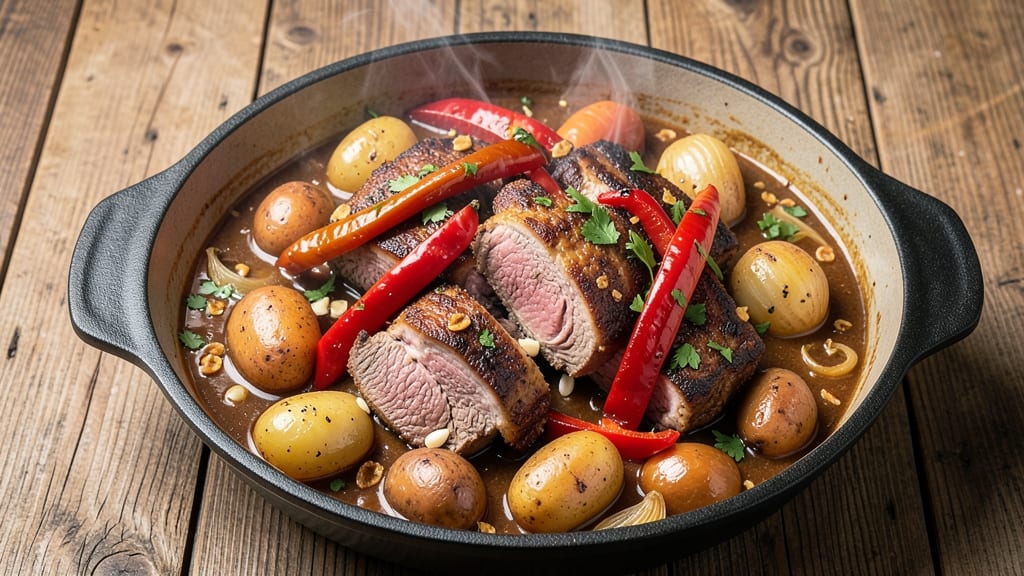
The rich, slow-braised flavors of this Argentinian beef stew bring the heart of Buenos Aires to your kitchen table. This traditional estofado transforms tough cuts of beef into melt-in-your-mouth tenderness, infused with red wine, aromatic herbs, and deep umami.
What sets this recipe apart is the balance of textures—tender beef, caramelized onions, and perfectly cooked potatoes—all simmered to perfection in a robust, flavorful broth.
At the core of this recipe is the technique: slow cooking transforms simple ingredients into something extraordinary. You'll start with a deep sear of beef cuts like chuck or flank, locking in flavor before letting it braise for hours in a blend of red wine, beef broth, and tomatoes.
The result is a stew so rich and satisfying, it becomes the centerpiece of any meal. This isn't just comfort food—it's a celebration of Argentinean tradition, where every bite tells a story.
By the time you serve this stew, your kitchen will smell like a bustling parrilla, and your guests will be drawn to the table by the aroma alone. The beef will be fork-tender, the vegetables perfectly softened, and the sauce thickened just enough to coat every spoonful.
Serve it with crusty bread to soak up every last drop or pair it with a bold Malbec wine for the full Argentinean experience.
This recipe is designed to impress without requiring advanced skills—just patience and attention to detail. The slow-cooking process does the heavy lifting, ensuring deep, complex flavors that develop over time. Whether you're feeding a family or hosting a dinner party, this Argentinian beef stew will leave everyone asking for seconds.
Ingredients for argentinian beef stew
Sixteen ingredients transform into a rich, aromatic Argentinian beef stew that smells like home.
| Ingredient | Amount | Notes |
|---|---|---|
| Beef Chuck Roast 🥩 | 3 lb | Cut into 1.5-inch cubes, trimmed of fat |
| Yellow Onions 🧅 | 3 whole | Thinly sliced, about 4 cups total |
| Garlic Cloves 🧄 | 6 cloves | Minced, about 2 tbsp total |
| Red Bell Pepper 🌶️ | 1 whole | Diced, about 1 cup total |
| Russet Potatoes 🥔 | 2 lb | Cut into 1-inch chunks |
| Carrots 🥕 | 4 whole | Peeled, cut into 2-inch pieces |
| Tomato Paste 🍅 | ½ cup | High-quality, no sugar added |
| Red Wine 🍷 | 1 ½ cups | Bold dry variety like Malbec or Cabernet |
| Beef Broth 💧 | 3 cups | Homemade or high-quality low-sodium |
| Olive Oil 🫒 | ¼ cup | Extra-virgin for searing |
| Fresh Thyme 🌿 | ¼ cup | Leaves only, stems removed |
| Fresh Rosemary 🌿 | ¼ cup | Needles only, chopped |
| Bay Leaves 🍃 | 2 whole | Dried, standard size |
| Salt 🧂 | 1 ½ tsp | Diamond Crystal kosher salt |
| Ground Black Pepper 🌶️ | 1 tsp | Freshly ground preferred |
| Worcestershire Sauce 🍶 | 1 tbsp | Vegan version if needed |
The beef is everything here—chuck roast is ideal for its fat content and texture, but flank steak works in a pinch. Grab the beef from Whole Foods or your local butcher if they have a good selection; look for marbling and ask for it to be cut into even cubes. The onions are non-negotiable too—yellow onions caramelize best, and you'll want to slice them thinly for maximum flavor development. For the wine, any bold, dry red will do—Malbec or Cabernet Sauvignon are classic choices, but whatever's open in your fridge works. The key is to use something you'd actually drink, not cooking wine.
No red wine? Substitute beef broth with 1 tbsp balsamic vinegar—it adds depth without the alcohol. Fresh thyme and rosemary are ideal, but if you're out, dried at one-third the amount gets you close. The tomato paste can be tricky—avoid the sugar-added versions if you can. For the Worcestershire, check the label; some contain anchovies, so Lee & Perrins vegan version is a safe bet if needed. The beef broth matters too—homemade or high-quality low-sodium keeps the flavor balanced. And if you're short on time, pre-sliced onions from the grocery store work just fine, though they won't caramelize as beautifully.
This stew tastes even better the next day, so make extra—it keeps for 4-5 days in the fridge or 3 months frozen. For reheating, add a splash of water or broth to prevent drying out. I like to portion it into containers ahead of time so lunches are sorted for the week. The potatoes and carrots can be prepped a day ahead and stored in the fridge, saving you time on cooking day. And if you're serving with bread, toast it fresh—the crust soaks up the sauce perfectly.
Why You'll Love This Recipe
- Foolproof Prep: The beef chuck roast forgives everything—no need to sear like a pro. Toss in the onions, garlic, and bell pepper raw if you’re in a rush; they’ll soften right into rich, caramelized goodness while the beef melts into tender shreds.
- Deep, Earthy Richness: That first bite of beef—fall-apart tender with a crust—paired with the slow-cooked potatoes and sweet bell pepper? It’s the kind of flavor that makes you close your eyes. The garlic and onions build layers, but it’s the beef’s natural depth that steals the show.
- Weeknight to Holiday: I’ve served this to tired coworkers, skeptical in-laws, and my own kids (who now ask for it). It’s hearty enough for a Sunday dinner but just as welcome on a Tuesday when you’re too wiped to think. Add crusty bread, and suddenly it’s a party.
- Leftovers That Beg for More: Between us, the second day is often better—beef even more tender, flavors melded. I’ll make a double batch, freeze half, and thank myself later when I’m reheating a steaming bowl on a cold night. Budget-friendly? Absolutely. But mostly, it’s just reliable.
Step-by-step instructions for Argentinian beef stew
This slow-braised masterpiece transforms tough beef into melt-in-your-mouth perfection.
Sear the Beef for Maximum Flavor
Heat the olive oil in a large Dutch oven over medium-high heat until shimmering. Working in batches to avoid crowding, add the beef chuck roast cubes and sear for 2-3 minutes per side until deeply browned. This step is crucial—it develops that rich, caramelized crust that forms the stew's flavor foundation.
As you sear, I like to press down gently on the beef with a spoon to ensure even browning. Remove the beef and set it aside on a plate. The residual fat in the pot will become the base for your sauce, so don't wipe it out. If needed, add a splash more olive oil to maintain the pan's heat.
Build the Aromatic Base
In the same Dutch oven, add the sliced yellow onions and cook for 5 minutes until softened and beginning to caramelize. Add the minced garlic cloves and diced red bell pepper, cooking for another 3 minutes until fragrant. The onions should be golden in spots—this adds sweetness to balance the stew's richness.
Stir in the tomato paste and cook for 2 minutes, allowing it to darken slightly. This creates a deep, umami-rich base that will carry through the entire cooking process. Pour in the red wine and scrape up any browned bits from the bottom of the pot—a technique called deglazing that captures all that concentrated flavor.
Simmer the Vegetables and Season
Add the peeled carrots and cubed russet potatoes to the pot. Pour in the beef broth and bring everything to a gentle simmer. The liquid should just barely bubble at the edges—this ensures the vegetables cook evenly without breaking down.
Stir in the Worcestershire sauce, fresh thyme, fresh rosemary, bay leaves, salt, and ground black pepper. Return the seared beef to the pot, making sure it's fully submerged in the liquid. Here's the thing—this recipe relies on the slow braising process to transform tough beef into tender, fork-tender pieces, so don't rush this step.
Braise Until Tender and Flavorful
Cover the Dutch oven with a tight-fitting lid and transfer to a preheated 325°F oven. Braise for 3 hours, then carefully remove the lid and skim off any excess fat that has risen to the surface. This helps prevent a greasy stew and allows the flavors to concentrate.
Return the stew to the oven and continue cooking uncovered for another 30-45 minutes until the liquid has reduced slightly and the vegetables are tender when pierced with a fork. The beef should be so tender it practically falls apart with a gentle touch. If the stew seems too thick, add a splash of water or broth to reach your desired consistency.
Rest and Serve with Confidence
Let the stew rest for 15-20 minutes before serving. This resting period allows the juices to redistribute throughout the beef and vegetables, ensuring each bite is moist and flavorful. Taste and adjust the seasoning if needed—you might want to add a pinch more salt or a crack of black pepper to enhance the flavors.
Serve the stew hot, ladling generous portions over crusty bread or alongside a simple green salad. The rich, umami depth comes from the slow-braised beef, while the vegetables add texture and freshness. Each spoonful delivers layers of flavor that build with every bite—this is comfort food at its finest.
Pro Tips For Making Argentinian Beef Stew
- SEAR THE CHUCK ROAST FIRST: This isn’t just about browning—it’s about building flavor. After patting the beef dry, hit it with high heat for 3-4 minutes per side until it develops a deep crust. I used to skip this and wondered why my stew tasted more like broth than beef. That crust? It’s where the meaty depth lives.
- CHOP POTATOES UNEVENLY: Cut them in chunks ranging from 1.5 to 3 inches—some small, some large. The smaller ones soften faster, while the bigger ones hold their shape longer. I learned this the hard way when my first batch turned to mush. Uneven sizes mean every bite has texture, not just a sad, uniform mush.
- ADD POTATOES LATE: Hold off on tossing them in until the beef has cooked for at least 2 hours. You want them to soak up the rich, meaty juices at the end, not turn to glue in a watery stew. I was lazy and added them early—big mistake. The difference in taste? Night and day.
- USE THE BELL PEPPER’S SKIN: Leave the red bell pepper’s skin on for color and a subtle crunch. If you’re worried about texture, blanch it for 30 seconds first, then dice. I was skeptical until I tried it—it adds a visual pop and a little bite that balances the creamy potatoes. (Yes, even if you’re impatient like me.)
Wine and beer pairings for this argentinian beef stew
Malbec Wine Pairing
This Argentinian beef stew practically begs for a bold Malbec—the signature wine of Mendoza. I always reach for a 2018 Trapiche Malbec from Argentina, with its rich dark fruit flavors and velvety tannins that complement the stew's deep umami.
The wine's acidity cuts through the richness while its blackberry and plum notes harmonize beautifully with the beef. Serve it slightly chilled (60-65°F) to enhance its aromatic qualities. 🍷
Cabernet Sauvignon Alternative
If you can't find Malbec, a full-bodied Cabernet Sauvignon works wonderfully—especially one from Argentina's Uco Valley. Look for a Toro Negro or Salentein with its dark chocolate and blackcurrant flavors.
The wine's structure holds up to the stew's intensity, while its herbal notes echo the rosemary and thyme in the dish. Decant it for 30 minutes before serving to soften its tannins.
Crisp White Contrast
For a lighter option, try a Torrontés—Argentina's signature white wine. Its floral aromas and citrus notes provide a refreshing contrast to the hearty stew. I love Catena Zapata Torrontés for its vibrant acidity and peach undertones.
Serve it well-chilled (45-50°F) to balance the meal's richness, especially if you're serving it with crusty bread.
Beer Pairings
A dark lager like Negra Modelo or Stella Artois (yes, the Belgian-style version) works surprisingly well. The malt sweetness complements the caramelized onions and beef, while the effervescence cleanses your palate between bites.
For a craft option, try a Belgian Dubbel—its caramel and raisin notes mirror the stew's depth. Serve the beer at 50°F for optimal flavor. 🍺
Non-Alcoholic Options
Don't drink alcohol? No problem. A sparkling grape juice like Martinelli's Sparkling mimics wine's acidity, while a ginger beer (like Feather's) enhances the stew's spice notes. For something more substantial, try a hibiscus iced tea—its tartness balances the dish's richness.
I often make a quick version by steeping 2 tbsp dried hibiscus in 4 cups hot water for 10 minutes, then chilling it.
Nutrition facts
Frequently asked questions
What's the best cut of beef for this Argentinian stew?
Use chuck roast for the best results—it's flavorful and becomes incredibly tender when slow-cooked. Flank steak works too, but it's leaner and may dry out faster. For extra richness, ask your butcher to trim the fat cap but leave some marbling intact.
Can I make this stew in a slow cooker instead of the oven?
After searing the beef and building the base, transfer everything to a 6-quart slow cooker and cook on low for 8 hours or high for 5 hours. The texture will be slightly different but still delicious. Just add ½ cup extra broth since slow cookers evaporate more liquid.
How do I prevent the stew from getting watery?
Skimming excess fat after the initial 3-hour braise helps thicken the sauce naturally. If it's still too thin, remove the lid and simmer uncovered for 10-15 minutes to reduce. For extra thickness, mix 1 tbsp cornstarch with 2 tbsp cold water and stir it in at the end.
What if I don't have red wine?
No problem! Replace it with beef broth plus 1 tbsp balsamic vinegar for depth. For a non-alcoholic version, use grape juice (like Concord) or apple cider vinegar (1 tbsp). The acidity helps tenderize the beef and balance flavors.
How long can I store leftovers?
This stew tastes even better the next day! Store it in an airtight container in the fridge for 4-5 days or freeze for 3 months. To reheat, warm gently on the stove with a splash of broth or water—never microwave directly from frozen.