
Main Courses
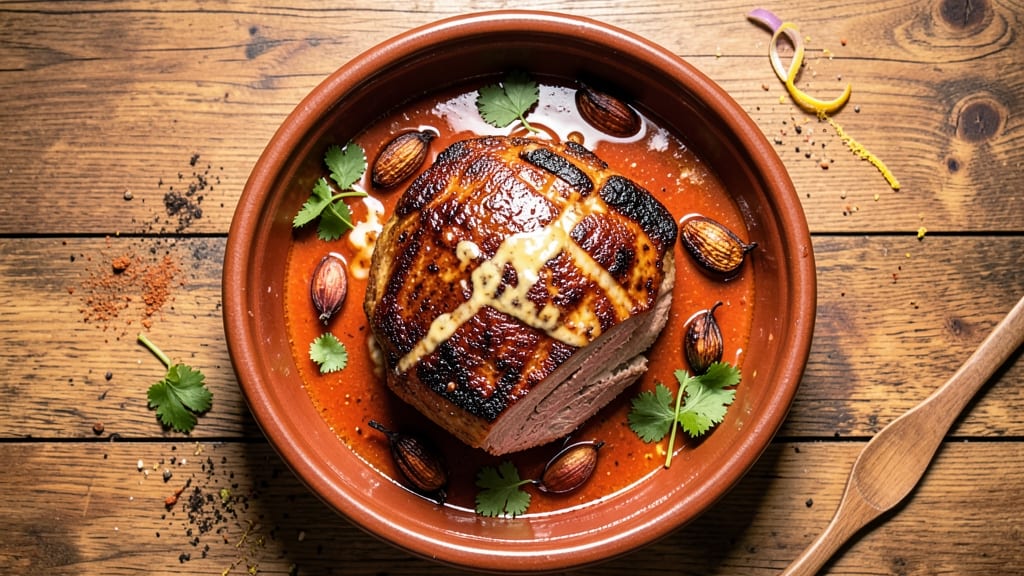
The Anglo-Indian beef roast bridges two culinary worlds—rich, spiced Indian flavors meeting British slow-roasting techniques. This recipe transforms tough cuts into melt-in-your-mouth tenderness, braised in a tangy tomato-tamarind sauce that balances sweet, sour, and smoky notes.
The British colonial influence shines through in its hearty, comforting presentation, perfect for family gatherings or special occasions.
What sets this dish apart is the marinade—a blend of garam masala, vinegar, and yogurt—that tenderizes the beef while building deep flavor. After a slow roast, the meat develops a caramelized crust and stays juicy inside, paired with traditional accompaniments like mint chutney or raita to cut through the richness.
The tamarind adds a unique tang that elevates this beyond standard beef roasts.
Modern kitchens can easily adapt this recipe, using a Dutch oven or slow cooker for hands-off preparation. The result is a dish that feels luxurious yet approachable—ideal for those who love bold flavors with a touch of history.
Each bite delivers layers of spice and depth, making it a standout centerpiece for any meal.
Serve with crusty bread, basmati rice, or roasted vegetables to complete the experience. The sauce alone is worth the effort, rich enough to spoon directly over the meat. Here’s how to create this Anglo-Indian masterpiece at home.
Ingredients for anglo indian beef roast
Sixteen ingredients blend British slow-roasting with bold Indian spices for this Anglo-Indian masterpiece.
| Ingredient | Amount | Notes |
|---|---|---|
| Beef Chuck Roast 🥩 | 3 lb | Tough cut for braising, trimmed of excess fat |
| Plain Yogurt 🥛 | 1 cup | Full-fat for creaminess, unsweetened |
| Tamarind Paste 🍈 | ½ cup | Concentrated, adjust for tang preference |
| Tomato Paste 🍅 | ½ cup | San Marzano preferred for depth |
| Garam Masala 🌶️ | 2 tbsp | Freshly ground for optimal aroma |
| White Vinegar 🍶 | ¼ cup | Distilled or apple cider vinegar |
| Garlic Cloves 🧄 | 8 cloves | Minced for even distribution |
| Onion 🧅 | 1 whole | Yellow or red, finely chopped |
| Fresh Ginger 🌿 | 2 tbsp | Grated, aromatic and zesty |
| Olive Oil 🫒 | ¼ cup | Extra-virgin for richness |
| Salt 🧂 | 1 ½ tsp | Diamond Crystal kosher salt |
| Ground Black Pepper 🌶️ | 1 tsp | Freshly cracked for intensity |
| Bay Leaves 🌿 | 2 whole | Dried, aromatic leaves |
| Fresh Cilantro 🌿 | ¼ cup | Chopped, for garnish |
| Fresh Mint Leaves 🌿 | ¼ cup | Chopped, for garnish |
The beef chuck roast is non-negotiable—its collagen-rich composition transforms into melt-in-your-mouth tenderness during the slow braise. Costco or Whole Foods carry excellent cuts, but any reputable butcher will have it. Look for good marbling and vibrant color; avoid any with a sour smell. Trim excess fat before marinating to ensure even cooking. For a quicker option, pre-cut chuck roast from the supermarket meat counter saves time without sacrificing quality. The tamarind paste is the flavor anchor—Mamee brand is widely available in Indian grocery stores or online, offering concentrated tang without added sugar.
No tamarind paste? Substitute with 0.25 cup lemon juice plus 1 tbsp brown sugar, though the depth won't be identical. Fresh ginger loses potency quickly, so freeze grated ginger in ice cube trays for future use. The garam masala should be freshly ground—pre-ground blends lose their complexity within months. For a smokier profile, add 1 tsp smoked paprika to the marinade. The yogurt acts as a tenderizer, so full-fat Greek yogurt works best if plain yogurt isn't available. Alliums (onion, garlic) can be swapped for 1 tbsp each of onion powder and garlic powder, though fresh is preferred for aromatic depth.
Marinated beef can be refrigerated for up to 24 hours before roasting, enhancing flavor development. The braising liquid reduces beautifully—freeze portions in ice cube trays for future use in stews or gravies. Leftovers keep for 5-6 days in the fridge, though the meat continues to tenderize over time. For meal prep, portion the roast into individual servings with sauce and reheat gently in the oven. The sauce alone makes an excellent condiment for sandwiches or bowls, lasting 3 months when frozen in airtight containers.
Why You'll Love This Recipe
- Foolproof Marinade: I swear by that yogurt-tamarind mix—just slather it on the beef, let it sit overnight (or even 2 hours if you’re in a rush), and the meat falls apart when you cook it. No fancy techniques, just that tangy-sweet balance doing all the work.
- Taste Like a Memory: Between us, there’s nothing like the deep, smoky garam masala paired with that tamarind’s sharp bite cutting through the richness. The tomato paste adds this cheffy depth—like a slow-cooked curry but with half the effort.
- Leftovers That Beg for More: This roast tastes better the next day, honestly. I make a double batch on Sundays, slice it thin for sandwiches, or toss it into toast with pickles—my kids even ask for it at lunch. (Yes, even on a Tuesday night.)
- Budget-Friendly Feast: A beef chuck roast stretches for days, and the spices? I buy them in bulk and they last forever. You’re getting restaurant-quality flavor without the markup—plus, the yogurt and tamarind are pantry staples I already had.
Step-by-step instructions for Anglo-Indian beef roast
Master this fusion technique where tender beef meets vibrant tamarind and garam masala for restaurant-quality results.
Prepare the Beef and Yogurt Marinade
Pat the 3 lb Beef Chuck Roast completely dry with paper towels—this ensures maximum browning later. In a large bowl, whisk together the 1 cup Plain Yogurt, 2 tbsp Garam Masala, 1.5 tsp Salt, and 1 tsp Ground Black Pepper. Rub this marinade all over the beef, coating it evenly. Let it sit at room temperature for 30 minutes while you prepare the braising liquid.
Here's the thing—yogurt tenderizes the meat while the garam masala infuses deep, aromatic layers. Don't skip the room temperature step; cold meat won't absorb the marinade properly. This initial preparation creates the foundation for the rich, complex flavors that define Anglo-Indian cuisine.
Build the Tamarind-Tomato Braising Base
Heat the 0.25 cup Olive Oil in a large Dutch oven over medium heat. Add the 1 whole Onion (finely chopped) and 2 tbsp Fresh Ginger (grated), cooking for 5 minutes until softened and fragrant. Add the 8 cloves Garlic Cloves (minced) and cook for another 30 seconds until golden.
Stir in the 0.5 cup Tomato Paste and cook for 2 minutes to deepen its flavor. Add the 0.5 cup Tamarind Paste and 0.25 cup White Vinegar, scraping up any browned bits from the bottom. This mixture should thicken slightly and develop a rich, tangy aroma—the hallmark of proper tamarind integration. The vinegar cuts through the richness while the tamarind adds that signature Indian tang.
Braise the Beef to Perfection
Carefully place the marinated beef into the Dutch oven, along with 2 whole Bay Leaves. Pour in enough water to come about halfway up the meat—approximately 2 cups. Bring to a simmer over medium-high heat, then reduce to low heat, cover tightly, and transfer to a 325°F oven.
Braise for 3 hours, turning the beef occasionally to ensure even cooking. You'll know it's ready when the meat is fork-tender and pulls away from the bone easily. The sauce should be thick and glossy, with a deep red hue from the tomato and tamarind. If the liquid reduces too quickly, add ½ cup hot water to maintain moisture—this prevents the beef from drying out.
Finish and Garnish for Presentation
Remove the beef from the oven and let it rest for 15 minutes before slicing. Skim any excess fat from the braising liquid, then return the pot to medium heat. Stir in the remaining 2 tbsp Garam Masala and simmer for 2 minutes to intensify the flavors. The sauce should coat the back of a spoon with a velvety texture.
Slice the beef against the grain into ¼-inch thick pieces and arrange on a platter. Ladle the braising sauce over the top and garnish with 0.25 cup Fresh Cilantro and 0.25 cup Fresh Mint Leaves. The contrast of cool mint and bright cilantro against the rich beef creates a visual and flavorful finish that's quintessentially Anglo-Indian.
Pro Tips For Making Anglo Indian Beef Roast
- SEAR THE ROAST FIRST: I learned this the hard way—skipping the sear means your beef will taste like it was simmered in plain broth. Get that chuck roast screaming hot in a dry pan for 3-4 minutes per side before adding any yogurt or marinade. The crust locks in flavor and keeps it from turning mushy later.
- WHISK THE YOGURT: Thick, lumpy yogurt in the sauce? Not ideal. Before mixing it with tamarind and tomato paste, whisk the yogurt until smooth—especially if it’s thick or has separated. A quick pass with a fork or whisk ensures a silky, cohesive sauce that won’t clump when it hits the heat.
- CONTROL THE TAMARIND: Tamarind paste is potent—use it sparingly at first, then adjust. Start with 1 tablespoon, taste, and add more if needed. Too much turns your dish bitter; too little leaves it flat. If you’re unsure, dilute it with a splash of water before mixing into the yogurt.
- LOW AND SLOW WINS: This isn’t a race. After searing, simmer the roast covered at 300°F (150°C) until it hits 195°F (90°C) internally—yes, it’ll take 3-4 hours. The slow cook keeps the meat tender and lets the garam masala infuse deeply. Skipping this step means tough, dry beef.
Health benefits of these flavors
Protein Powerhouse
This Anglo-Indian beef roast delivers a whopping 40 grams of complete protein per serving—perfect for muscle repair and satiety. The beef chuck roast transforms into tender, melt-in-your-mouth bites thanks to the yogurt and tamarind marinade, which also helps break down tough muscle fibers.
Unlike leaner cuts, chuck roast retains moisture during slow cooking, making every bite both satisfying and nutritious. 💪
Rich in Iron
Beef is one of nature's best sources of heme iron, which your body absorbs far more efficiently than plant-based iron. A 3-ounce serving of this roast provides 30% of your daily iron needs, supporting energy levels and preventing fatigue.
The garam masala and tamarind also enhance iron absorption, making this dish a powerhouse for anyone needing an iron boost.
Fiber and Probiotics
The yogurt marinade contributes live probiotic cultures, supporting gut health and digestion. While the beef provides protein, the yogurt's tangy acidity helps balance the rich flavors while promoting a healthy microbiome.
Plus, the tamarind paste adds 3 grams of fiber per ½ cup, aiding digestion and keeping you full longer. It's a win-win for both flavor and nutrition!
Antioxidant Boost
Garam masala isn't just for flavor—it's packed with antioxidant-rich spices like cumin, coriander, and cardamom. These compounds help combat inflammation and oxidative stress in your body. The tamarind paste also contains polyphenols, which have been linked to improved heart health and blood sugar regulation.
Every bite is like a little antioxidant boost for your system. ✨
Low-Calorie, High-Flavor
Despite its rich taste, this dish is surprisingly moderate in calories—about 350 calories per serving when prepared with lean beef. The tamarind and vinegar create a tangy depth that makes the dish feel indulgent without the heavy calorie load.
It's a great option for those watching their weight but still craving bold, satisfying flavors. The secret lies in the balance of spices and acidity, which keep portions feeling generous.
Heart-Healthy Fats
The olive oil used in the braising process provides heart-healthy monounsaturated fats, while the beef's natural fats are broken down during slow cooking into flavorful, tender meat. Unlike fried dishes, this method minimizes unhealthy fats while maximizing flavor.
The combination of lean protein and healthy fats makes this roast a smart choice for heart health. 💛
Nutrition facts
Frequently asked questions
Can I substitute beef chuck roast with another cut?
Yes, but choose wisely! Beef chuck roast is ideal for its collagen content, but brisket or short ribs work well too. Avoid lean cuts like sirloin—they won't become tender during braising. For quicker cooking, use beef short ribs (reduced braising time to 2 hours) or chuck steak (cut into chunks and braise for 1.5 hours).
How do I adjust the recipe for a slow cooker?
Transfer the marinated beef to the slow cooker along with all braising ingredients. Cook on low for 8 hours or high for 5 hours, then finish by skimming fat and reducing the sauce on the stovetop. The slow cooker method is perfect for hands-off preparation—just add water halfway through if needed to prevent drying.
What are the best sides to serve with this dish?
Traditional Anglo-Indian pairings include mint chutney (to cut the richness), cucumber raita (cooling yogurt dip), or steamed basmati rice. For a British touch, serve with crusty soda bread or buttered potatoes. Roasted vegetables like cauliflower or carrots also complement the spiced beef beautifully.
Can I make this recipe ahead of time?
The beef tastes even better the next day as flavors meld. Cook and refrigerate the roast (with sauce) for up to 3 days. Reheat gently in the oven at 300°F for 20 minutes, covered with foil. The sauce can also be reheated separately and thickened with a cornstarch slurry if needed. Freeze portions for up to 3 months.
Why does my beef turn out tough?
Tough beef usually means insufficient braising time or incorrect cut. Always use a chuck roast (or similar tough cut) and braise for the full 3 hours. Ensure the meat is submerged in liquid (add water if needed) and don't skip the 15-minute rest before slicing. Overcooking is another culprit—remove the beef when it reaches 203°F internal temp (it'll rise to 210°F while resting).