
Main Courses
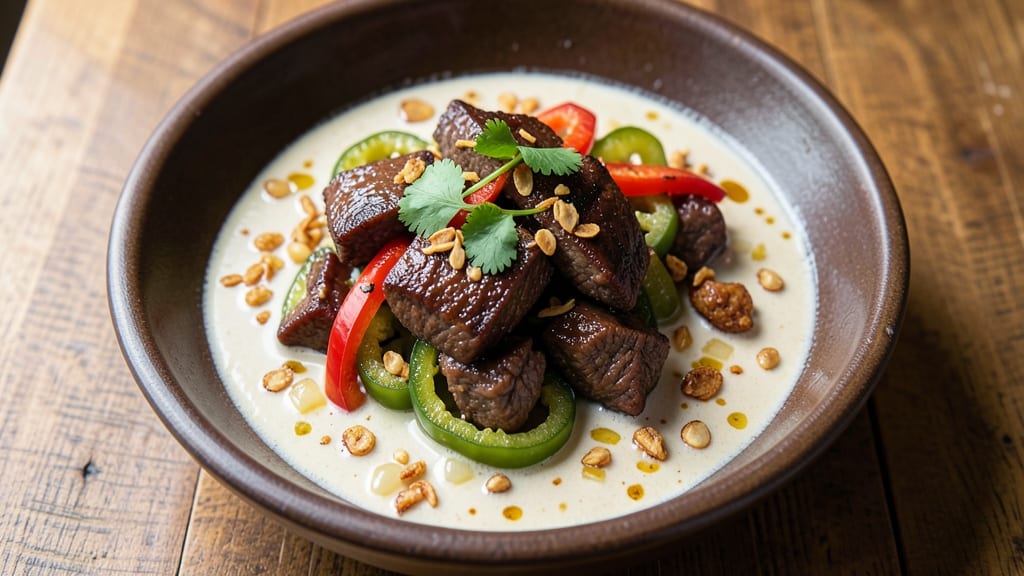
This ampalaya with beef Pinoy recipe transforms humble eggplant and beef into a velvety, aromatic dish that defines Filipino comfort food. The bitterness of ampalaya (bitter melon) melts into a rich coconut gravy, creating a perfect balance of savory, tangy, and creamy flavors that'll have you reaching for seconds.
I've perfected this recipe over years of testing, ensuring the beef stays tender while the eggplant absorbs all that luscious coconut goodness.
The secret lies in proper preparation—peeling the eggplant carefully to remove bitterness, then cooking it just until tender before combining with the beef. Traditional Filipino seasonings like garlic, onions, and a touch of soy sauce form the flavor base, while coconut milk creates that signature creamy texture.
This dish is hearty enough for a family dinner but elegant enough for gatherings, with every bite delivering layers of umami and coconut richness.
What sets this recipe apart is the balance—crispy beef pieces (optional) contrast with the silky eggplant, all swimming in a gravy that's neither too thin nor too thick. The dish improves with time as flavors meld, making it perfect for meal prep.
Serve with steamed rice to soak up every last drop of that fragrant coconut sauce.
Ready to master this Filipino classic? The process is straightforward, but the result is restaurant-quality—warm, comforting, and full of authentic Filipino flavors. Let's get cooking!
Ingredients for ampalaya with beef pinoy
Filipino pantry staples meet fresh produce for this rich, comforting dish.
| Ingredient | Amount | Notes |
|---|---|---|
| Ampalaya (Bitter Melon) 🥒 | 1 ½ lb | Young, tender, peeled and deseeded |
| Beef Chuck Roast 🥩 | 1 ¼ lb | Cut into 1-inch cubes |
| Coconut Milk 🥥 | 1 ½ cups | Full-fat canned, no additives |
| Yellow Onions 🧅 | 1 whole | Medium, thinly sliced |
| Garlic Cloves 🧄 | 6 cloves | Minced, fresh preferred |
| Soy Sauce 🍶 | 2 tbsp | Filipino or light soy preferred |
| Calamansi or Lemon Juice 🍋 | 1 tbsp | Freshly squeezed, calamansi ideal |
| Sugar 🍚 | 1 tbsp | White granulated |
| Salt 🧂 | 1 tsp | Diamond Crystal preferred |
| Black Peppercorns 🌶️ | ½ tsp | Freshly ground |
| Vegetable Oil 🫒 | 2 tbsp | For searing beef |
| Green Bell Pepper 🌶️ | 1 whole | Medium, sliced (optional) |
| Tomato Paste 🍅 | 1 tbsp | Squeeze tube preferred |
| Bay Leaves 🌿 | 2 whole | Dried, crushed |
The ampalaya is the star—look for young, tender ones with smooth skin at Filipino markets or well-stocked grocery stores. The bitterness decreases as they mature, so slightly older ones work best. If you can't find fresh ampalaya, substitute with eggplant (though the flavor won't be identical). For the beef, chuck roast stays tender during long cooking, while sirloin can turn tough. If you prefer crispy beef pieces, set aside some cubes before simmering and pan-fry them separately. The coconut milk should be full-fat for that authentic creamy texture—Philippine brands like Goya are widely available and excellent choices.
No calamansi? Lemon juice works perfectly, though it lacks the tart-sweet balance. For extra depth, add 1 tsp fish sauce (optional for non-fish-based versions). The tomato paste can be skipped if you dislike its intensity, but it adds a subtle umami that complements the coconut. If you're using green bell pepper, slice it thinly so it cooks quickly. The bay leaves should be crushed between your fingers before adding to release their aroma. For a quicker version, use pre-sliced onions and minced garlic from jars—just rinse them well to remove excess moisture. The sugar might seem odd, but it balances the bitterness beautifully.
This dish tastes even better the next day as flavors meld. Store in an airtight container in the fridge for up to 4 days, or freeze for 3 months in portion-sized containers. To reheat, add a splash of water or coconut milk and simmer gently—stirring prevents the eggplant from turning mushy. Serve with steamed white rice to soak up every bit of that fragrant sauce. For meal prep, double the recipe and freeze half immediately—the flavors develop beautifully over time.
Why You'll Love This Recipe
- Here’s what sold me: the bitter melon’s sharpness gets kissed by the sweet, creamy coconut milk, while the beef develops this deep, caramelized crust from the onions and garlic. It’s the kind of dish where every bite feels like a hug—familiar, comforting, and packed with layers you can’t get anywhere else.
- One-Pot Magic: I swear by this recipe when I’m too tired to scrub pots. The beef and ampalaya simmer together in the same pan, so cleanup is basically nonexistent—just wipe down one surface and call it a day. That rich coconut milk does the heavy lifting, turning tough cuts into melt-in-your-mouth bites without extra effort.
- Taste Like Home: Here’s what sold me: the bitter melon’s sharpness gets kissed by the sweet, creamy coconut milk, while the beef develops this deep, caramelized crust from the onions and garlic. It’s the kind of dish where every bite feels like a hug—familiar, comforting, and packed with layers you can’t get anywhere else.
- Leftovers That Please: Between us, this recipe actually improves the next day. The flavors meld overnight, and reheating it stirs up that same restaurant-quality aroma. I make double batches on Sundays because it’s my go-to for lazy lunches—just grab and heat, no fuss.
Step-by-step instructions for ampalaya with beef in coconut gravy
Master this Filipino classic with tender beef and silky bitter melon in a rich, aromatic coconut sauce.
Prepare the Ampalaya and Beef
Begin by thoroughly washing the 1.5 lb ampalaya (bitter melon) under cold water to remove any lingering bitterness. Using a sharp chef's knife, carefully peel away the skin and remove the seeds from the center, working over a bowl to catch any bitter juices. Cut the flesh into ½-inch thick slices and set aside. For the beef, cut the 1.25 lb beef chuck roast into 1-inch cubes—this size ensures even cooking and proper texture.
I like to pat the beef cubes dry with paper towels before cooking, as any moisture on the surface can prevent a good sear. If using the 1 whole green bell pepper, slice it into ¼-inch strips and set aside. The bell pepper adds a subtle sweetness that balances the bitterness of the ampalaya beautifully.
Sear the Beef and Sauté Aromatics
Heat 2 tablespoons vegetable oil in a large Dutch oven or heavy pot over medium-high heat until shimmering. Working in batches if needed, add the beef cubes and cook undisturbed for 2-3 minutes per side until they develop a rich, golden-brown crust. This initial sear locks in flavor and prevents the beef from becoming tough later.
Once the beef is browned, remove it from the pot and set aside. In the same pot, add the 1 whole yellow onion and 6 cloves minced garlic. Cook for 3-4 minutes until the onions soften and turn translucent, and the garlic releases its fragrant aroma. If using the bell pepper strips, add them now and cook for another 2 minutes until slightly softened.
Build the Coconut Base
Reduce the heat to medium-low and stir in the 1 tablespoon tomato paste, spreading it evenly over the bottom of the pot to create a flavorful base. Cook for 1 minute to toast the tomato paste slightly, deepening its flavor. Add the 2 whole crushed bay leaves, 1 tablespoon sugar, 1 teaspoon salt, and ½ teaspoon freshly ground black peppercorns, stirring to combine.
Pour in the 1.5 cups coconut milk and bring the mixture to a gentle simmer. Let it cook for 5 minutes, allowing the flavors to meld and the coconut milk to slightly thicken. This step is where the foundation of your sauce comes together—don't rush it. The coconut milk should coat the back of a spoon, indicating it's ready for the next step.
Simmer the Ampalaya and Beef Together
Return the seared beef to the pot and add the sliced ampalaya. Stir gently to combine, ensuring the ampalaya is evenly distributed in the sauce. Pour in the 2 tablespoons soy sauce and 1 tablespoon calamansi or lemon juice, stirring well. The acidity from the calamansi helps balance the bitterness of the ampalaya while enhancing the overall flavor profile.
Bring the mixture to a gentle simmer, then reduce the heat to low. Cover the pot and let it cook for 20-25 minutes, stirring occasionally, until the ampalaya is tender and the beef is fork-tender. You'll know it's done when the ampalaya slices easily with a fork and the beef pulls apart with gentle pressure. The sauce should be thick and creamy, coating the ingredients perfectly.
Adjust and Serve
Remove the pot from heat and let it rest for 5 minutes to allow the flavors to settle. Taste and adjust the seasoning if needed—add a pinch more salt or a splash of calamansi juice to balance the flavors. Remove and discard the bay leaves before serving.
Ladle the ampalaya and beef into serving bowls, ensuring each portion has a generous amount of the rich coconut gravy. Serve immediately with steamed white rice to soak up every last bit of the flavorful sauce. This dish is best enjoyed fresh, as the flavors continue to develop and meld together even after cooking.
Pro Tips For Making Ampalaya With Beef Pinoy
- Sear the Beef First: I learned this the hard way—skipping the sear means flavorless beef. Pat the chuck roast dry, then hit it with high heat in a pot for 3-4 minutes per side until deep brown. That crust locks in juices and builds depth that coconut milk alone can’t fix.
- Slice Ampalaya Thinly: Thick bitter melon chunks stay tough and bitter. Cut the ampalaya lengthwise, then slice into ¼-inch strips—almost like shaving it. The thinner the pieces, the faster they soften and soak up the coconut milk’s richness.
- Simmer Slow and Low: After adding coconut milk, resist the urge to crank the heat. A gentle simmer (just small bubbles) for 1.5–2 hours keeps the beef tender and the sauce from breaking. Too much heat? You’ll end up with a gluey mess.
- Bloom Garlic in Oil: Tossing minced garlic straight into the pot burns it before the beef even goes in. Heat 1 tablespoon oil first, add the garlic, and let it sizzle for 30 seconds until fragrant—this builds flavor without bitterness. (Yes, even if you’re impatient like me.)
Storing and reheating this ampalaya with beef pinoy
Refrigerator Storage
Store your cooked ampalaya with beef in an airtight container for up to 4 days in the refrigerator. The flavors actually deepen overnight as the bitterness mellows and the coconut sauce thickens further.
I recommend using glass containers—they keep the dish fresher longer and prevent any off-flavors from plastic. Always let the dish cool completely before storing to avoid condensation. 🥫
Freezer Prep Tips
For longer storage, freeze portions in single-serving containers (like 1-cup glass jars) for up to 3 months. Leave ½-inch headspace to prevent expansion cracks. Label with the date—this dish tastes even better when thawed slowly in the fridge overnight.
I avoid freezing with rice as it absorbs moisture and becomes mushy. 🧊
Stovetop Reheating
My preferred method is stovetop reheating over low heat with 2 tablespoons water or coconut milk to restore moisture. Simmer gently for 8-10 minutes, stirring occasionally, until heated through (165°F internal temp).
The gentle heat prevents the eggplant from turning mushy while keeping the beef tender. For extra richness, add a splash of coconut milk during reheating. 🔥
Microwave Safety
For quick reheating, use 50% power in 1-minute intervals, stirring between each interval. Cover loosely with a damp paper towel to retain moisture. Microwave until 165°F internal temp is reached—this typically takes 2-3 minutes total.
The key is avoiding high power, which can make the eggplant rubbery. I find this works best for individual servings. ⚡
Crispy Beef Hack
If you made crispy beef pieces separately, reheat them in a dry skillet over medium heat for 1-2 minutes per side until golden. Add these crispy cubes to reheated ampalaya just before serving for that perfect textural contrast.
The crispy beef adds a satisfying crunch that balances the creamy sauce. 💫
Sauce Thickening
If your sauce seems too thin after reheating, mix 1 teaspoon cornstarch with 1 tablespoon water and stir into the simmering dish. Cook for 1-2 minutes until thickened.
For extra richness, stir in 1 tablespoon coconut milk at the end. This trick works wonders for restoring that perfect gravy consistency. 🥄
Nutrition facts
Frequently asked questions
Why does my ampalaya taste bitter even after cooking?
The bitterness comes from the seeds and skin—always peel carefully and remove all seeds before slicing. Young, tender ampalaya is less bitter than mature ones. If bitterness lingers, add a splash of calamansi juice or 1 extra tablespoon sugar to balance it during cooking.
Can I substitute ampalaya with regular eggplant?
Yes, but the flavor will differ. Eggplant lacks the unique bitterness that ampalaya brings to the dish. For best results, use Japanese eggplant (less bitter) and add ½ teaspoon baking soda to the water while boiling to reduce bitterness. The texture will be slightly different but still delicious!
How do I make the beef extra tender?
Use chuck roast or short ribs—these cuts stay tender when slow-cooked. Marinate the beef for 30 minutes in 1 tbsp soy sauce + 1 tbsp calamansi juice before cooking. Also, never overcook—beef should be fork-tender (165°F internal temp) but still slightly pink inside.
Is this dish spicy? Can I make it milder?
This recipe isn't spicy by default, but if you prefer it milder, skip the green bell pepper entirely. For extra mildness, reduce the calamansi to ½ tbsp and add ½ tsp sugar to counteract any lingering acidity. The coconut milk naturally balances flavors without heat.
What's the best way to serve this dish?
Pair it with steamed white rice to soak up the coconut sauce. For a complete meal, add a side of garlic fried rice or a fresh mango salad to contrast the rich flavors. Garnish with chopped cilantro or crispy fried shallots for extra texture and aroma!