
Main Courses
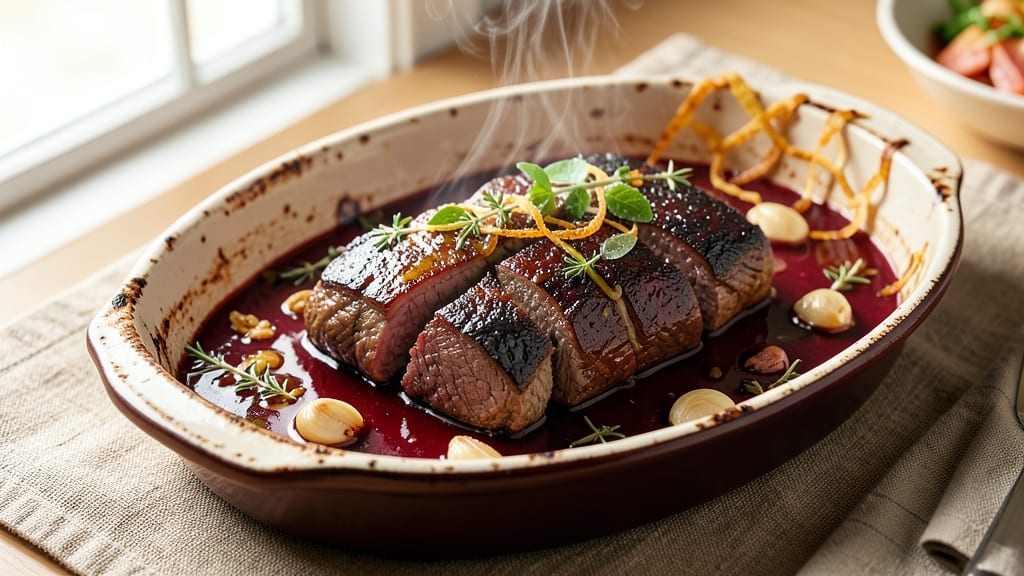
America's Test Kitchen beef burgundy delivers restaurant-quality depth with tender beef and velvety sauce—no dryness in sight. The secret lies in precise searing and slow braising, transforming tough cuts into melt-in-your-mouth perfection.
This refined method builds layers of flavor through careful timing and temperature control, ensuring every bite is rich yet balanced.
What sets this recipe apart is the sauce—reduced to ideal consistency with a touch of cornstarch for silky texture without gluten. The beef cooks low and slow in red wine, absorbing aromatics while developing deep, complex flavors.
No shortcuts here; every step is essential for that signature America's Test Kitchen reliability.
By the time you serve it, you'll have perfectly tender beef swimming in a glossy, wine-infused sauce that clings beautifully to each forkful. The result is a dish that feels luxurious yet approachable, perfect for special occasions or weeknight dinners when you crave restaurant-quality results at home.
This method scales effortlessly for crowds while maintaining individual portion perfection. The technique works equally well with chuck roast or short ribs, making it versatile for any beef preference. Let's get cooking with confidence—your taste buds will thank you.
Ingredients for america's test kitchen beef burgundy
Restaurant-quality depth starts with these carefully chosen ingredients—tender beef and aromatic wine transform into velvety perfection.
| Ingredient | Amount | Notes |
|---|---|---|
| Chuck Roast 🥩 | 2 ½ lb | Trimmed of excess fat, cut into 2-inch chunks |
| Dry Red Wine 🍷 | 2 cups | Bold Cabernet Sauvignon or Merlot, no sugar added |
| Beef Broth 💧 | 2 cups | Low-sodium preferred, homemade or high-quality store-bought |
| Shallots 🧅 | 2 whole | Minced finely, about 0.5 cup total |
| Garlic Cloves 🧄 | 4 cloves | Minced, about 1 tbsp total |
| Fresh Thyme 🌿 | 2 sprigs | Leaves only, about 1 tbsp packed |
| Fresh Rosemary 🌿 | 1 sprig | Leaves only, about 1 tsp chopped |
| Tomato Paste 🍅 | 1 tbsp | Squeeze tube or canned, unsweetened |
| Cornstarch 🌾 | 1 tsp | For sauce thickening, gluten-free |
| Cold Water 💧 | 1 tbsp | To dissolve cornstarch |
| Olive Oil 🫒 | 2 tbsp | Extra-virgin for searing |
| All-Purpose Flour 🌾 | 1 tbsp | For dredging beef chunks |
| Kosher Salt 🧂 | 1 ½ tsp | Diamond Crystal preferred, adjust to taste |
| Freshly Ground Black Pepper 🌶️ | ½ tsp | Cracked peppercorns preferred |
| Bay Leaves 🍃 | 2 whole | Removed before serving |
The chuck roast is non-negotiable here—its marbling ensures melt-in-your-mouth texture. Look for cuts with visible fat streaks at Whole Foods or your butcher counter, where they'll often trim it to your preference. Costco sells pre-cut chunks that save time, but avoid pre-seasoned packages. For the red wine, bold Cabernet Sauvignon or Merlot (none of that fruity Zinfandel) works best—Trader Joe's or Total Wine carry reliable options. Fresh thyme and rosemary? Farmers markets have the most vibrant stems, but grocery store bunches work if you use them within a week. The shallots and garlic? Organic markets often sell them pre-minced, but fresh is worth the 30 seconds it takes to chop them yourself.
No red wine? Dry vermouth works in a pinch, but beef broth with a splash of balsamic mimics the depth. Fresh herbs wilting? Dried thyme and rosemary at one-third the amount keep the flavor profile intact. The tomato paste can be skipped entirely if you prefer, but it adds that umami richness that makes this sauce sing. For the cornstarch, Bob's Red Mill is my go-to brand—it dissolves smoothly without clumping. The beef broth should be low-sodium (you'll add salt later), and if you're using store-bought, Swanson or Pacific Foods are reliable choices. Pre-minced garlic? Use half the amount—freshly minced garlic has more punch, but jarred works in a bind.
This dish tastes even better the next day as flavors meld—plan ahead. The cooked beef keeps 3-4 days in the fridge, submerged in its sauce, while the sauce alone lasts 5 days. For freezing, portion into airtight containers with a thin layer of olive oil on top to prevent drying. The sauce can be made ahead separately and reheated gently—just add a splash of water if it thickens too much. Leftovers reheat beautifully on the stove over medium-low heat, stirring occasionally. Store the herbs separately if prepping ahead, adding them back just before serving for maximum freshness.
Why You'll Love This Recipe
- One-Pot Magic: I swear by this recipe when I’m too wiped to scrub a million dishes—just sear the chuck roast, toss in the shallots and garlic, then let the wine and broth do all the work. No straining, no extra pans, just deep flavor with zero fuss.
- Wine-Infused Richness: That dry red wine isn’t just for show—it transforms the beef into something luxurious, with layers of earthy depth and a velvety finish. Honestly, it tastes like a fancy bistro dish, but I’m the one who made it in my own kitchen.
- Leftovers That Shine: Between us, this stew only gets better the next day. The flavors meld overnight, and reheating it? A 2-minute microwave or stovetop job. I always double the batch just so I can enjoy it twice—once fresh, once even richer.
- Budget-Friendly Feast: Chuck roast is my secret for stretching meals without sacrificing taste. A single cut feeds four, and the wine and broth add that restaurant-quality touch without breaking the bank. My college fund (and my family) thank me every time.
Step-by-step instructions for america's Test Kitchen beef burgundy
This method delivers restaurant-quality beef burgundy with tender beef and velvety sauce—no dryness in sight.
Sear the Chuck Roast for Deep Flavor
Pat the 2.5 lb chuck roast dry with paper towels—this ensures maximum browning. Heat 2 tbsp olive oil in a heavy Dutch oven over medium-high heat until shimmering. Working in batches if needed, sear the beef chunks for 2-3 minutes per side until deeply browned and caramelized. You're building flavor here, so don't rush this step.
As you sear, remove the beef and set aside. The browned bits (fond) in the pan will become the base of your sauce. If the pan gets too crowded, reduce heat to medium to prevent steaming. This initial sear creates that rich, meaty depth that defines a proper beef burgundy.
Sauté Aromatics and Deglaze with Wine
In the same Dutch oven, add 2 tbsp olive oil if needed and reduce heat to medium. Add the 2 whole minced shallots and 4 cloves minced garlic, cooking for 2-3 minutes until softened and fragrant. Be careful not to burn the garlic—it should smell sweet and nutty, not bitter.
Add 1 tbsp tomato paste and cook for 1 minute, stirring constantly. This helps build complexity in the sauce. Pour in the 2 cups dry red wine, scraping up all those browned bits from the bottom of the pan. Let it simmer for 5-6 minutes until reduced by about half. The alcohol will cook off, leaving behind concentrated wine flavor.
Simmer with Herbs and Broth
Return the seared beef to the pot. Add 2 cups beef broth, 2 sprigs fresh thyme leaves, 1 sprig fresh rosemary leaves, 1.5 tsp kosher salt, 0.5 tsp freshly ground black pepper, and 2 whole bay leaves. Bring to a gentle simmer, then reduce heat to low. Cover partially and cook for 1.5 hours, stirring occasionally.
After 1.5 hours, check the beef—it should be tender enough to pierce easily with a fork. If not, continue cooking for another 30-45 minutes. The key here is patience; slow cooking breaks down the tough chuck roast into melt-in-your-mouth bites. The sauce should be thick and glossy, coating the beef beautifully.
Thicken the Sauce to Perfection
Remove the beef and strain the cooking liquid through a fine-mesh sieve into a clean saucepan, pressing on the solids to extract maximum flavor. Return the sauce to medium heat and whisk in the 1 tsp cornstarch mixed with 1 tbsp cold water. Simmer for 3-5 minutes until the sauce thickens to a velvety consistency—it should coat the back of a spoon.
Taste and adjust seasoning if needed. The sauce should be rich, slightly tangy from the wine, and well-balanced with herbs. If it's too acidic, a pinch of sugar can help balance the flavors. Return the beef to the sauce and let it warm through for 2-3 minutes before serving.
Serve with Confidence
Remove and discard the 2 whole bay leaves before serving. This beef burgundy serves 4 generously, making it perfect for a cozy dinner. The beef should be fork-tender with a deep, meaty flavor, and the sauce should cling beautifully to each bite. Serve over mashed potatoes, egg noodles, or crusty bread to soak up every last drop of that luxurious sauce.
Pro Tips For Making America'S Test Kitchen Beef Burgundy
- Sear the Roast First: The recipe calls for browning the chuck roast, but I used to skip it—big mistake. Get that meat deep golden on all sides in a hot Dutch oven with 1 tablespoon oil before adding wine. The crust locks in flavor and keeps the meat from drying out later.
- Use Cold Wine, Not Room Temp: Pour that dry red wine straight from the fridge into the pot after searing. Cold wine deglazes better and doesn’t evaporate too fast, giving you time to scrape up those browned bits properly. (Yes, even if you’re impatient like me.)
- Don’t Rush the Shallots: Finely dice those shallots—smaller than you’d think—and cook them low and slow until they’re translucent but not browned. Burnt shallots turn bitter, and this dish relies on their sweetness to balance the wine’s acidity.
- Deglaze with a Splash of Broth: After searing, hit the pot with just enough beef broth (about ½ cup) to loosen the fond before adding the wine. This prevents a dry, wine-heavy sauce and gives the burgundy depth right from the start. (Your future self will notice the difference.)
Storing and reheating your leftovers
Fridge Storage Essentials
Transfer your cooked beef burgundy to an airtight glass container (I love Pyrex with snap-on lids) while still warm—this prevents condensation from forming. Let it cool completely before refrigerating to maintain texture.
The beef and sauce combination stays fresh for 3-4 days when stored at 40°F or below, with flavors actually deepening overnight as the wine and herbs meld. 🥣
Freezer Prep Tips
For longer storage, portion into quart-sized freezer bags (leave 1-inch headspace for expansion) or glass containers with tight-sealing lids. Freeze for up to 3 months—the sauce may thicken slightly, so add 1-2 tbsp water when reheating.
I recommend freezing the beef and sauce separately if you plan to reheat frequently, as the sauce thickens more predictably alone. ❄️
Stovetop Reheating
My preferred method is stovetop reheating over medium-low heat for 10-15 minutes, stirring occasionally. The slow heat prevents the sauce from breaking or the beef from drying out.
If the sauce thickens too much, add 1-2 tbsp beef broth to restore its velvety consistency. Taste and adjust seasoning—leftovers often need a pinch more salt after reheating. 🔥
Microwave Shortcuts
For quick meals, use the microwave on 50% power in 2-minute intervals, stirring between each interval. Cover loosely with a microwave-safe lid to retain moisture. The beef should reach 165°F internal temperature—use a meat thermometer for accuracy.
Add a splash of water if the sauce looks dry, then stir well before serving. This method works best for single servings. ⚡
Sauce-Only Make-Ahead
Make the sauce ahead separately by simmering all ingredients except the beef, then cooling completely. Store in an airtight container for up to 5 days in the fridge. When ready to serve, reheat the sauce alone over medium heat until warmed through, then add the thawed beef to coat.
This keeps the beef's texture perfect while giving you flexibility. 💫
Herb Freshness Hacks
Add fresh herbs (thyme, rosemary) back to the dish just before serving to preserve their vibrant flavors. If using dried herbs, add them during the initial simmer—1/3 the amount of fresh works well.
For extra aroma, lightly crush the dried herbs between your fingers before adding to the pot. This simple trick makes a noticeable difference in flavor intensity. 🌿
Nutrition facts
Frequently asked questions about america's Test Kitchen beef burgundy
Can I substitute chuck roast with another beef cut?
Yes, but choose wisely! Short ribs or beef chuck roast work beautifully, but avoid lean cuts like sirloin—they'll dry out during the long braise. For best results, stick with 2-inch chunks of chuck roast or bone-in short ribs (about 2.5 lbs total). The fat and connective tissue are essential for that melt-in-your-mouth texture and rich flavor.
What red wine should I use if I don't have Cabernet Sauvignon?
Look for bold, dry reds like Merlot, Malbec, or Syrah—all work well. Avoid sweet wines or those with high tannins (like Cabernet Franc), as they can make the sauce bitter. A dry Pinot Noir also works in a pinch, though it has a lighter body. The key is 2 cups of a wine with good acidity to balance the beef's richness.
Why did my sauce turn out too thin?
This usually happens from one of three issues: overcooking the wine (reduce it only until it's half its original volume), not straining solids (press on the herbs/veggies to extract flavor), or skipping the cornstarch. For a quick fix, mix 1 tsp cornstarch + 1 tbsp water and whisk it into the simmering sauce until thickened. If the sauce is too thin even after that, reduce it uncovered for 5-10 minutes on medium heat.
Can I make this recipe in a slow cooker?
Sear the beef first as directed, then transfer everything to a 6-quart slow cooker. Cook on LOW for 6-7 hours or HIGH for 4-5 hours. After cooking, strain the sauce and thicken it on the stovetop as written. The slow cooker method is perfect for hands-off prep, but the beef may be slightly less caramelized than with stovetop braising.
How do I serve beef burgundy for a crowd?
Double the recipe and use a large Dutch oven or stockpot (up to 8 servings). Keep the beef and sauce warm in a slow cooker on WARM setting while you serve. For easy plating, use a slotted spoon to transfer beef to plates, then ladle the sauce over the top. Serve with buttered egg noodles or crusty bread for soaking up every last drop.