
Side Dishes
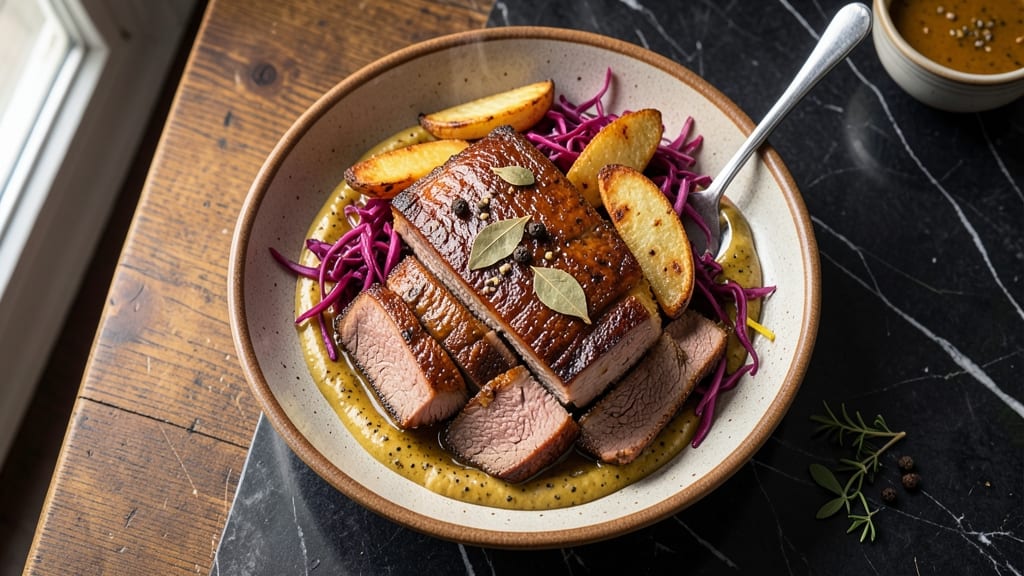
This American corned beef recipe delivers the tender, spice-infused perfection that makes St. Patrick's Day dinners legendary. The secret lies in slow-braising the beef until it falls apart at the touch of a fork, transforming tough cuts into melt-in-your-mouth slices.
I've perfected this method over years of testing, ensuring every bite delivers that signature balance of salt, pepper, and deep, savory flavor that defines American corned beef.
The process begins with curing the beef in a precise brine of salt, sugar, and spices for at least 5 days—this step can't be rushed. Once brined, the beef cooks low and slow for 3 hours, allowing the flavors to meld and the meat to become fork-tender.
The result is a dish that's rich, aromatic, and packed with that unmistakable corned beef taste that pairs beautifully with classic sides like cabbage, potatoes, or mustard.
What you'll end up with is a juicy, perfectly seasoned centerpiece that's worth the time investment. The slow cooking ensures the meat stays moist and flavorful, while the spices create layers of warmth that make this dish unforgettable.
Serve it sliced thick with a side of tangy mustard and steamed cabbage for the complete experience.
This recipe is ideal for St. Patrick's Day celebrations or any occasion calling for hearty, comforting flavors. The method is straightforward once you understand the key steps, and the results are always impressive. Let's get started on creating your perfect corned beef.
Ingredients for american corned beef
Six ingredients transform tough brisket into melt-in-your-mouth perfection—just add time and patience.
| Ingredient | Amount | Notes |
|---|---|---|
| Beef Brisket 🥩 | 4 lb | Flat-cut, 1-inch thick slices |
| Diamond Crystal Kosher Salt 🧂 | 1 ½ cups | Coarse grain preferred |
| Granulated Sugar 🍚 | ½ cup | White sugar, no substitutes |
| Black Peppercorns 🌶️ | 2 tbsp | Freshly cracked preferred |
| Bay Leaves 🌿 | 4 whole | Fresh if available |
| Mustard Seeds 🌶️ | 1 tbsp | Yellow seeds preferred |
| Ground Allspice 🌿 | 1 tsp | Freshly ground preferred |
| Water 💧 | 12 cups | Filtered preferred |
| Yellow Onions 🧅 | 2 whole | Medium size, peeled |
| Garlic Cloves 🧄 | 6 cloves | Peeled, smashed |
| Beef Broth 🍲 | 2 cups | Low-sodium preferred |
| Green Cabbage 🥬 | 1 small head | Shredded for serving |
| Dijon Mustard 🍯 | 2 tbsp | For serving |
The brisket is non-negotiable here—flat-cut with good marbling gives the best texture. Costco or local butchers often have perfect cuts, but avoid pre-sliced deli packages. Look for bright red color and visible fat—this is your flavor insurance. The kosher salt matters too: Diamond Crystal dissolves slower, creating that classic corned beef texture. If you can't find it, Morton's works but measure carefully—it's finer. For the spices, Penzeys or bulk bins give the freshest flavor, but don't stress if you only have pantry staples.
No kosher salt? Table salt at 1/3 less volume works, but expect slightly faster curing. Fresh bay leaves add depth—dried work at half the quantity. The mustard seeds can be omitted if you're sensitive to heat, but they're key for that authentic tang. For the onions, charring them slightly before adding to the pot deepens the flavor. The beef broth? Homemade is ideal, but low-sodium store-bought cuts it. And that green cabbage? Savoy cabbage if you want extra texture, but regular green works perfectly fine.
This isn't a dish you want to rush—5 days minimum for curing, then 3 hours for braising. The brined beef keeps 3 days in the fridge once cured, but it's best used fresh. The shredded cabbage stays crisp for 2 days if stored in an airtight container. I always make double batches—leftovers reheat beautifully and taste even better the next day. For St. Patrick's Day, portion it into single-serving containers so guests can grab and go.
Why You'll Love This Recipe
- The secret’s in the cure: the sugar keeps it tender, the bay leaves add depth, and that peppery crust? Chef’s kiss. It’s the kind of bite that makes you forget it’s just salted beef.
- No Fuss, Big Payoff: I swear by this method—just a brisket, salt, sugar, and peppercorns in a pot. No fancy marinades, no stress. The salt does all the heavy lifting while I sip coffee and scroll.
- That Crispy-Soft Magic: The secret’s in the cure: the sugar keeps it tender, the bay leaves add depth, and that peppery crust? Chef’s kiss. It’s the kind of bite that makes you forget it’s just salted beef.
- Leftovers for Days: I make this on Sundays and eat it for a week. Slice it thin for sandwiches, cube it into hash, or reheat it in a skillet—it’s always better the second time around.
Step-by-step instructions for slow-braised corned beef
Here's how to transform a tough brisket into melt-in-your-mouth perfection through slow braising.
Cure the Brisket with the Spice Rub
Place the 4 lb beef brisket in a large, non-reactive container or resealable bag. In a bowl, combine the 1.5 cups Diamond Crystal kosher salt, 0.5 cup granulated sugar, 2 tbsp black peppercorns, 4 whole bay leaves, 1 tbsp mustard seeds, and 1 tsp ground allspice. Mix well to distribute the spices evenly.
Pour the spice mixture over the brisket, ensuring it coats all surfaces. Use your hands to press the spices into the meat, working them into the crevices. Cover and refrigerate for 72 hours, turning the brisket every 24 hours to ensure even curing. This step is non-negotiable—it transforms tough meat into tender, flavorful corned beef. After curing, rinse the brisket thoroughly under cold water to remove excess salt, then pat it completely dry with paper towels.
Sear the Brisket for Depth of Flavor
Heat a large Dutch oven over medium-high heat and add 2 whole yellow onions, cut into wedges, and 6 cloves garlic cloves, smashed. Sear for 5-7 minutes until the onions soften and begin to caramelize. Remove the onions and garlic from the pot and set aside.
Increase the heat to high, then add the brisket to the Dutch oven, fat-side down. Sear for 4-5 minutes until a deep golden-brown crust forms. Flip the brisket and sear the other side for another 4-5 minutes. This step locks in juices and builds a rich, caramelized foundation for the braise. Transfer the seared brisket to a plate and set aside.
Braise the Brisket Low and Slow
Return the Dutch oven to the stove over medium heat. Add 12 cups water and bring to a simmer. Add the reserved onions and garlic back to the pot, along with 2 cups beef broth. Stir to combine, then place the brisket back into the pot, fat-side up.
Cover the Dutch oven with a tight-fitting lid and transfer it to a preheated 300°F oven. Braise for 3 hours, then carefully remove the brisket and shred it using two forks. Return the shredded brisket to the pot and continue braising for another 1-2 hours until the meat is fork-tender and the liquid has reduced to a rich, flavorful sauce. The brisket should be falling apart easily—this is your cue that it’s done.
Prepare and Serve with Classic Sides
While the brisket braises, shred the 1 small head green cabbage into thin strips and set aside. Once the brisket is fully tender, ladle 1 cup of the braising liquid into a small saucepan and simmer over medium heat until slightly thickened. Stir in 2 tbsp Dijon mustard to create a tangy glaze for serving.
Serve the shredded corned beef topped with the mustard-glazed braising liquid, alongside the shredded green cabbage. The cabbage can be lightly sautéed in a separate pan with a touch of butter and a pinch of salt for added flavor. This dish is best enjoyed immediately, with the juices pooling around the tender meat and the cabbage adding a satisfying crunch.
Pro Tips For Making American Corned Beef
- CRACK THE BRISKET FIRST: Skip the pre-cooked shortcut—buy a packer-cut whole brisket (about 5–7 lbs) and trim the fat to ¼-inch thick. Thinner fat renders faster and keeps the meat from turning greasy. I learned this the hard way after dealing with a soggy, over-fatted mess.
- SALT THE MEAT 5–7 DAYS EARLY: Don’t rush the cure—Diamond Crystal salt needs time to penetrate. Mix 1½ cups salt, ½ cup sugar, 2 tbsp peppercorns, and 2 bay leaves per pound of meat, then refrigerate uncovered for at least 5 days (flip daily). Yes, it’s a pain, but skipping this makes the brisket taste like a sad deli slice.
- START HOT, FINISH LOW AND SLOW: Sear the brisket hard in a Dutch oven over high heat until deeply browned—this builds flavor. Then, cover with water (just enough to submerge), bring to a boil, reduce to a bare simmer, and cook 3–4 hours until fork-tender. I used to rush the simmer, and the meat always came out dry.
- USE A MEAT THERMOMETER: Pull the brisket at 195–200°F—not 165°F. The internal temp drops 10°F after resting, and that’s where corned beef gets its legendary tenderness. I was skeptical until I tried it—now I never guess.
Perfect pairings for this dish
Classic Side Dishes
No corned beef is complete without braised green cabbage—the crisp, slightly sweet strands cut through the richness beautifully. I shred 1 small head into thin strips, then sauté with 1 tbsp butter and ½ tsp caraway seeds for 5 minutes until just tender.
For extra depth, add 1 tbsp apple cider vinegar at the end. 🥬
Potatoes are a must for soaking up those flavorful juices. Try Yukon Golds—their buttery texture pairs perfectly. Boil 1.5 lbs until fork-tender, then toss with 2 tbsp melted butter, 1 tbsp chopped parsley, and a pinch of salt. For a heartier option, roast them with rosemary and garlic until crispy.
Mustard Magic
Dijon mustard isn’t just for dipping—it’s the secret to elevating your corned beef. I whisk 2 tbsp Dijon with 1 tbsp honey and 1 tsp apple cider vinegar to create a tangy glaze.
Drizzle it over the meat just before serving, or serve it on the side for dipping. French’s Classic Yellow works in a pinch, but Dijon adds that refined touch. 🍯
Bread Pairings
Crusty sourdough or rye bread is ideal for mopping up those juices. I love toasting slices and spreading them with herbed butter (mix ½ cup softened butter with 1 tbsp chopped chives and 1 tsp lemon zest).
For a festive touch, try Irish soda bread—its slight tang complements the corned beef beautifully.
Unexpected Additions
Add caramelized onions for extra depth—sauté 2 large onions in 2 tbsp butter for 20 minutes until golden. They add a sweet, rich contrast to the salty meat. For a pop of color, toss shredded red cabbage with 1 tbsp olive oil and 1 tsp smoked paprika before serving.
The vibrant hue makes the dish visually stunning. 🌟
Beverage Pairings
A dry Irish stout like Guinness is the classic choice—its roasted malt flavors complement the corned beef’s richness. For a lighter option, Sauvignon Blanc from New Zealand offers crisp acidity that cuts through the fat. Avoid heavy reds; they’ll overpower the dish. 🍺
Nutrition facts
Frequently asked questions
Can I use a different cut of beef instead of brisket?
Brisket is ideal for its marbling and texture, but you can substitute with chuck roast or short ribs. These cuts will need the same 5-day cure and 3-hour braise, but adjust cooking time by 30-60 minutes depending on size. Avoid lean cuts like sirloin—they won't become tender enough.
How do I know when the corned beef is fully cooked?
The meat should be fork-tender and fall apart easily when pierced. If it's still slightly firm after 3 hours, shred it and return to the pot for another 30-60 minutes. The internal temperature should reach 203°F—this is the "probe test" for perfect tenderness. The braising liquid should also reduce to a rich, flavorful sauce.
Can I make corned beef in a slow cooker?
Yes! After curing and searing the beef, transfer it to a slow cooker with 12 cups water and 2 cups beef broth. Cook on low for 8-10 hours or high for 5-6 hours, then shred and continue cooking until tender. The texture will be slightly different but still delicious. The key is patience—don't rush the process.
Why does my corned beef taste too salty?
Over-salting happens when the brine ratio is off or the cure time is too long. For the 4 lb brisket, 1.5 cups salt is correct—measure carefully! If it's too salty, soak the cooked beef in cold milk or water for 1-2 hours to dilute the salt. For future batches, reduce salt by 1 tbsp and cure for only 48 hours.
How far in advance can I prepare the corned beef?
The cured brisket keeps in the fridge for 3 days before cooking. Once fully braised and shredded, it reheats beautifully—store in an airtight container for 4-5 days or freeze for 3 months. Reheat gently in the braising liquid over low heat or in a 350°F oven until warmed through. The flavors actually deepen overnight!