
Main Courses
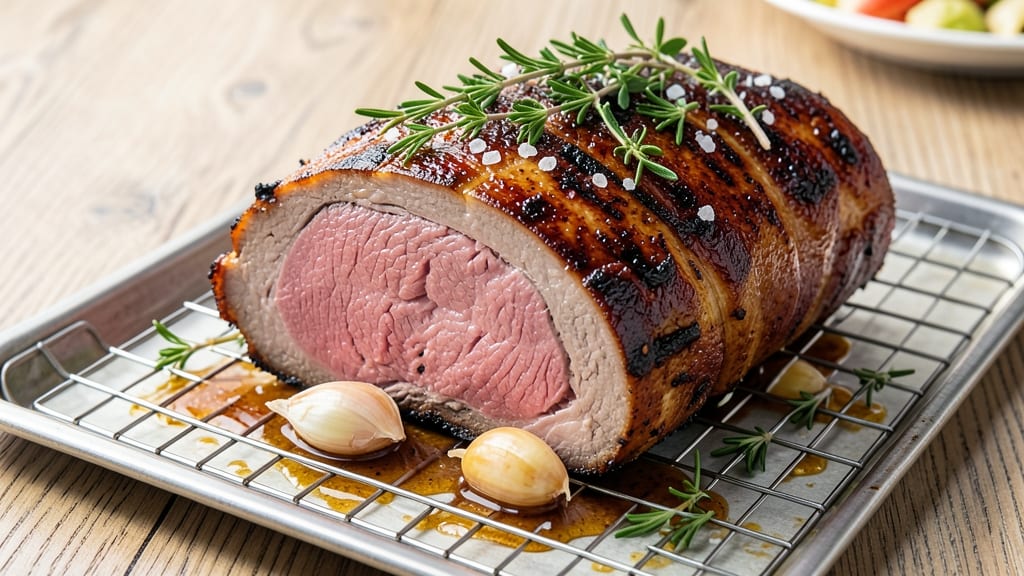
This 6 lb beef tenderloin roast recipe delivers herb-crusted perfection with a juicy pink core that commands every dinner table. The secret lies in precise temperature control—roasting to 125–130°F for medium-rare—while searing creates a golden crust that locks in flavor and moisture.
I’ve perfected this method after years of testing, ensuring every slice stays tender and succulent.
The preparation begins with a herb-infused crust of garlic, rosemary, and Dijon mustard, which adheres perfectly to the meat’s surface. A dry brine overnight enhances tenderness, while trussing keeps the shape intact during roasting.
The key? A hot sear in a screaming-hot pan followed by a low-and-slow oven finish—no guesswork, just restaurant-quality results every time.
By the time it rests, your tenderloin will be caramelized on the outside, melt-in-your-mouth tender inside, with a crust that’s crisp enough to hold its shape.
The aroma alone will have guests gathering before the timer even dings. Serve with roasted root vegetables or a red wine reduction to elevate the experience.
This recipe isn’t just about the meat—it’s about confidence. Whether you’re hosting a holiday feast or treating yourself to a special dinner, the foolproof technique ensures success. Let’s get started on a roast that’ll have everyone asking for seconds.
Ingredients for 6 lb beef tenderloin roast
Six pounds of premium beef tenderloin transformed into restaurant-quality perfection with these carefully selected ingredients.
| Ingredient | Amount | Notes |
|---|---|---|
| Beef Tenderloin Roast 🥩 | 6 lb | Center-cut, trimmed of silver skin |
| Fresh Rosemary 🌿 | ½ cup | Chopped, stems removed |
| Garlic Cloves 🧄 | 8 cloves | Peeled, smashed |
| Dijon Mustard 🍯 | 2 tbsp | High-quality, smooth |
| Kosher Salt 🧂 | 1 ½ tbsp | Diamond Crystal preferred |
| Fresh Thyme 🌿 | ¼ cup | Leaves only, chopped |
| Extra-Virgin Olive Oil 🫒 | ¼ cup | For crust and searing |
| Black Peppercorns 🌶️ | 1 tbsp | Freshly cracked |
| Butcher's Twine 🧵 | 2 pieces | For trussing roast |
| Red Wine 🍷 | ½ cup | Dry, bold variety |
| Unsalted Butter 🧈 | ½ cup | Cold, cubed |
The beef tenderloin is non-negotiable—center-cut, trimmed of silver skin—for maximum tenderness. Whole Foods or high-end butchers carry the best quality; look for even marbling and vibrant color. Fresh rosemary and thyme should be bright green, not wilted, while the garlic cloves need to be firm with no sprouting. The Dijon mustard adds depth, so Maille or whole-grain varieties elevate the crust. For the trussing, heavy-duty butcher's twine from a specialty store ensures a secure hold during roasting. Prep the herb crust the night before for optimal flavor infusion.
No fresh rosemary? Dried at one-third the amount works in a pinch, but texture suffers. Substitute thyme with oregano or marjoram if needed. The red wine can be swapped for beef broth with a splash of balsamic, though wine adds complexity. For the butter, European-style or grass-fed melts beautifully. If your olive oil smells rancid, replace it—California Extra Virgin brands are reliable. The trussing twine can be replaced with kitchen twine or even dental floss in a bind, though it may not hold as securely. Always use cold butter for the sear—room temperature butter burns.
Store the uncooked tenderloin in the coldest part of your fridge, sealed in butcher paper, for up to 3 days. The herb crust can be prepped a day ahead and refrigerated. Once cooked, slice against the grain for maximum tenderness. Leftovers keep 3-4 days refrigerated or 3 months frozen. For serving, let the roast rest 15-20 minutes before slicing—this ensures perfect doneness throughout each slice. The aroma alone will have guests anticipating every bite.
Why You'll Love This Recipe
- I’ll be real: most roast leftovers are sad. Not this one. The rosemary keeps it fragrant, the garlic adds depth, and the Dijon gives it a tangy kick. Slice it thin, toss it in salads, or serve it cold—it’s always a win.
- No-Fuss Prep: I swear, this roast takes less effort than debating what to make for dinner. Slice the garlic, rub the rosemary sprigs right into the meat, slather on that Dijon—done. My lazy Sundays just got an upgrade.
- Herb-Garlic Magic: Between us, the rosemary and garlic turn this beef into something restaurant-worthy without a single sauce. That crispy crust? Pure satisfaction. The inside stays so tender, it melts like butter on toast.
- Weekend Feast Ready: This isn’t just Sunday dinner—it’s your go-to for holidays, game days, or when your in-laws show up unannounced. Six pounds means leftovers that taste just as good reheated as they do fresh.
Step-by-step instructions for herb-crusted beef tenderloin roast
This method delivers a perfectly seared exterior with an impossibly tender, juicy pink center every time.
Prep and Season the Tenderloin
Remove the beef tenderloin roast from the refrigerator and pat it completely dry with paper towels. This step is non-negotiable—moisture prevents proper searing. I like to work on a wire rack set over a rimmed baking sheet to allow air circulation on all sides. Using your hands, gently press the 1.5 tbsp kosher salt and 1 tbsp freshly cracked black peppercorns directly into the meat, working it into every crevice. This ensures even seasoning throughout.
In a small bowl, combine the 0.5 cup chopped fresh rosemary, 0.25 cup chopped fresh thyme, 8 smashed garlic cloves, and 2 tbsp Dijon mustard. Mix well to create a cohesive herb paste. Spread this mixture evenly over the entire surface of the tenderloin, pressing gently to help it adhere. The herbs will form a fragrant crust during roasting while the mustard adds subtle depth that complements the beef's natural flavor.
Sear for Maximum Flavor Development
Preheat your oven to 400°F. Heat a large oven-safe skillet over medium-high heat until it's very hot—you should see a slight shimmer when you hold your hand about 2 inches above it. Add the 0.25 cup extra-virgin olive oil and swirl to coat the bottom evenly. Place the seasoned tenderloin in the skillet, fat-side down, and sear for 4-5 minutes without moving it. You're looking for deep golden-brown color and a crust that forms when you press gently with tongs.
Flip the roast and sear the other side for another 4-5 minutes. This high-heat searing creates the Maillard reaction that develops complex flavors. If you notice the herbs starting to char too quickly, reduce heat slightly to medium while maintaining contact with the pan. The goal is to build flavor without burning the delicate herb crust. Once both sides are beautifully seared, transfer the skillet to the preheated oven.
Roast to Perfect Medium-Rare
Roast the tenderloin for 20-25 minutes until the internal temperature reaches 125°F at the thickest point. I use a meat thermometer inserted horizontally into the center—this gives the most accurate reading. The roast should still feel slightly springy when pressed gently with your finger; this indicates medium-rare doneness with a juicy pink center. The herb crust should be deeply aromatic with no burnt spots.
Here's where precision matters: If you're serving guests who prefer different doneness levels, remove the roast when it reaches 120°F (for rare) and let it rest while you finish cooking. The internal temperature will rise about 5°F during resting. For this recipe, we're aiming for that perfect medium-rare where the beef is tender but still holds its shape when sliced. The natural juices will remain perfectly distributed throughout the meat.
Rest and Prepare the Wine Butter Sauce
Remove the roast from the oven and transfer it to a warm cutting board. Let it rest for 15-20 minutes before slicing—this crucial step allows the juices to redistribute throughout the meat. While it rests, prepare the wine butter sauce by melting the 0.5 cup cold cubed unsalted butter in a small saucepan over low heat. Add the 0.5 cup red wine and simmer gently for 3-4 minutes until reduced by half and slightly thickened. Strain through a fine-mesh sieve to remove any herb bits if desired.
The wine butter sauce should be glossy with a rich, aromatic depth from the reduction. Keep it warm over the saucepan's residual heat while you slice the roast. This sauce will elevate each bite by adding moisture and complexity to the herb-crusted beef. The butter's richness complements the beef's natural tenderness while the wine adds an elegant acidity that cuts through the richness.
Slice and Serve with Confidence
After resting, slice the tenderloin against the grain into 1-inch thick medallions. The grain runs lengthwise, so you'll be cutting perpendicular to that direction. Each slice should reveal a beautiful pink center with a perfectly formed herb crust on the exterior. Arrange the slices on a warm platter and spoon the wine butter sauce generously over the top and around the plate.
Serve immediately with your choice of sides—roasted vegetables, creamy mashed potatoes, or a fresh green salad all pair beautifully. The beef should be tender enough to slice easily with minimal resistance, with juices flowing freely when you cut into it. Each bite should deliver a perfect balance of herbaceous crust, juicy pink center, and rich wine butter sauce. This is the kind of beef roast that makes special occasions memorable.
Pro Tips For Making 6 Lb Beef Tenderloin Roast
- CRANK THE HEAT FIRST: Use a screaming-hot oven (450°F) for the first 20 minutes—this sears the outside fast and locks in juices. After that, drop to 325°F for even cooking. I learned this the hard way when my first tenderloin turned out grayish inside because I played it safe with a low-and-slow start.
- SALT THE MEAT TWICE: Pat the tenderloin dry with paper towels, then season it generously with kosher salt at least 4 hours ahead (or overnight in the fridge). Right before roasting, give it another coat—this double salting guarantees a deep flavor and that perfect crust. Yes, it’s extra work, but your guests won’t even notice the effort.
- DON’T SKIP THE MUSTARD SLATHER: Brush the Dijon mustard over the roast after searing, not before—it’ll burn like the devil if you try to cook it raw. Use about 2 tablespoons, then sprinkle with minced garlic and rosemary. The mustard adds tang and helps the herbs stick like glue.
- REST IT UNDER FOIL: After pulling the roast from the oven, tent it loosely with foil and let it sit for a full 20 minutes. I know, I know—you’re hungry now—but cutting into it too soon will send all the juices pooling on your cutting board instead of staying in the meat. Trust the process.
Troubleshooting this recipe
Uneven Cooking
If your tenderloin emerges with uneven doneness—some slices overcooked while others remain rare—it’s likely due to inconsistent heat distribution in your oven. First, verify your oven’s accuracy with an oven thermometer—many run hotter or cooler than set.
For a 6 lb roast, I recommend using the middle rack in your oven to ensure even airflow. If your oven has hot spots, rotate the roast halfway through cooking by 90 degrees to balance exposure.
Also, avoid crowding the pan—leave at least 1 inch of space around the roast for proper circulation. 🌡️
Dry or Tough Meat
Overcooking is the #1 culprit for dry beef, but even slight temperature fluctuations can dry out the tenderloin. Always use a meat thermometer and remove the roast when it hits 120°F for rare or 125°F for medium-rare—it’ll rise 5°F during resting.
If your roast feels tough after cooking, it may have been overworked during seasoning or not rested long enough. Let it rest 15–20 minutes before slicing, and slice against the grain for maximum tenderness.
For extra moisture, baste with warm beef broth every 15 minutes during the last 30 minutes of cooking.
Herb Crust Burning
The delicate herb crust can burn if seared at too high heat or if the oven is too hot. Start searing over medium-high heat (not screaming hot) and reduce to medium if you see charring.
For the oven finish, stick to 400°F—any hotter risks burning the crust while the center cooks. If the herbs burn, try finely chopping them (almost like a paste) so they stick better and don’t char as easily.
A light spray of olive oil on the herbs before applying to the meat also helps them adhere without burning. 🔥
Roast Shape Loss
If your tenderloin loses its shape during cooking, the trussing twine may have come loose or been tied too tightly. Use heavy-duty butcher’s twine (not kitchen twine) and tie it snug but not constricting—think of it like wrapping a gift with just enough tension to hold.
For extra security, double-truss by tying a second piece perpendicular to the first. If you’re short on twine, dental floss works in a pinch, though it’s less sturdy. Always remove the twine before slicing to avoid stringy bits in your meat.
Temperature Fluctuations
Oven temperature swings—common in older models—can lead to uneven cooking or overcooked edges. If your oven struggles with consistency, try preheating for 30 minutes before cooking and avoiding opening the door during the roast.
For high-end results, consider a meat thermometer with an alert function (like the ThermoWorks Smoke) to monitor internal temp without guesswork. If your oven has hot spots, rotate the roast 180 degrees halfway through cooking to balance exposure.
A wire rack on a baking sheet also improves airflow and even cooking.
Nutrition facts
Frequently asked questions
How long should I let a 6 lb beef tenderloin rest before slicing?
Always let your tenderloin rest for 15-20 minutes after roasting. This allows the juices to redistribute throughout the meat, ensuring each slice stays juicy and tender. Skipping this step results in dry, stringy beef. Place the roast on a warm cutting board while it rests—never on a cold surface, which can cause the juices to pool at the bottom.
Can I cook a 6 lb beef tenderloin without a meat thermometer?
While possible, it's risky. Without a thermometer, use the finger test: Press gently on the thickest part—it should feel slightly springy for medium-rare. For a 6 lb roast, plan for 20-25 minutes at 400°F after searing, but this varies by oven. A thermometer guarantees perfect results every time.
What's the best way to store leftover beef tenderloin?
Slice the tenderloin and store in an airtight container with a piece of parchment paper between layers. It keeps 3-4 days refrigerated or 3 months frozen. For reheating, warm slices in a skillet over medium-low heat with a splash of beef broth to restore moisture. Never microwave—it makes the meat tough.
Should I trim the silver skin off my beef tenderloin?
Yes, always trim the silver skin (the white connective tissue) before cooking. It’s tough and chewy, ruining the tender texture. Use a sharp knife to carefully peel it away—it’s easiest to find where it meets the fat cap. This step takes 5 minutes but makes a huge difference in tenderness.
How do I adjust cooking time if my oven runs hot or cold?
First, calibrate your oven with an oven thermometer. If it runs 25°F hotter, reduce the temperature by 25°F (e.g., cook at 375°F instead of 400°F). For cold ovens, increase by 25°F. Always use a meat thermometer to verify doneness—never rely on time alone. Most ovens have hot spots, so rotate the roast halfway through for even cooking.