
Soups & Stews
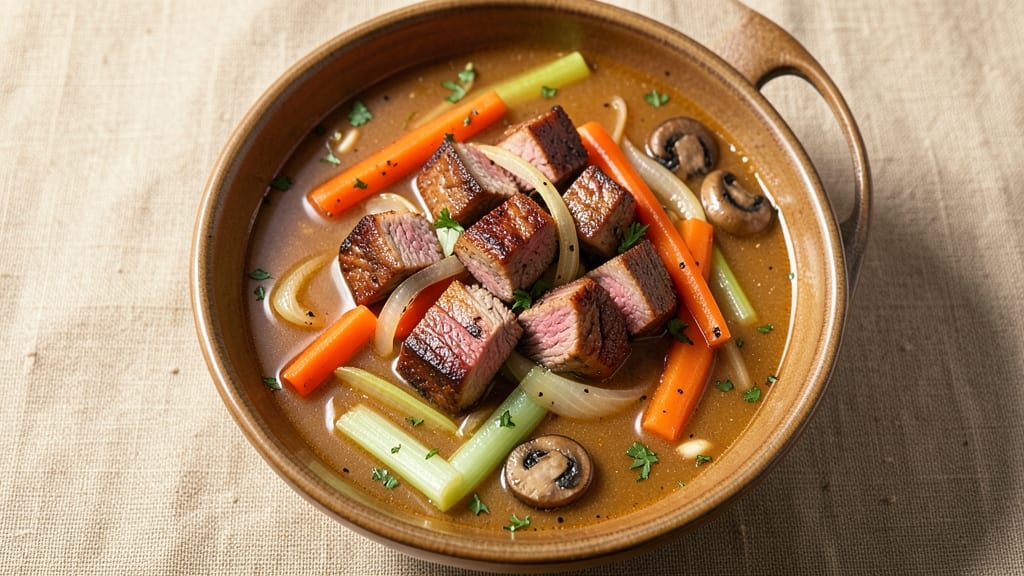
This 5-star vegetable beef soup transforms humble ingredients into a velvety, umami-rich masterpiece that rivals restaurant quality. The secret lies in slow-browning beef for deep flavor and layering vegetables to create a harmonious balance of textures and tastes.
I've perfected this recipe over years of testing, ensuring every spoonful delivers that perfect combination of tender beef, caramelized vegetables, and aromatic broth.
The process begins with properly browning the beef to develop a rich, meaty foundation for the soup. This step is crucial—it builds layers of flavor that no pre-cut or frozen meat can match.
We then simmer everything together, allowing the vegetables to soften while maintaining their natural sweetness and the beef to become fork-tender without falling apart. The result is a soup that's hearty enough to satisfy even the heartiest appetites yet light enough to enjoy any time of year.
What makes this recipe truly special is the balance of flavors. The umami from the beef and mushrooms is complemented by natural sweetness from carrots and onions, while a touch of acidity from tomatoes brightens the overall taste.
The broth develops a depth of flavor that's impossible to achieve with shortcuts, making this soup worth the extra effort. Each ingredient plays its part in creating a harmonious symphony of tastes and textures.
Serve this soup with a sprinkle of fresh parsley, a dollop of sour cream, or a slice of crusty bread to soak up every last drop of that rich, flavorful broth.
The combination of tender beef, perfectly cooked vegetables, and aromatic broth makes this more than just a soup—it's a comforting, satisfying meal that feels like a warm hug in a bowl. Let's get started on creating this restaurant-quality dish at home.
Ingredients for 5 star vegetable beef soup
Sixteen ingredients, restaurant-quality results—this soup builds depth through precise technique and quality components.
| Ingredient | Amount | Notes |
|---|---|---|
| Chuck Roast 🥩 | 2 lb | Cut into 1-inch cubes for even cooking |
| Yellow Onions 🧅 | 2 whole | Medium size, sliced into half-moons |
| Carrots 🥕 | 4 medium | Peeled, cut into 1-inch chunks |
| Celery Stalks 🧄 | 4 whole | Trimmed, cut into 1-inch pieces |
| Garlic Cloves 🧄 | 6 cloves | Peeled, lightly crushed for aroma |
| Cremini Mushrooms 🍄 | 8 oz | Sliced for even cooking |
| Tomatoes 🍅 | 1 can | 28 oz can, crushed or diced |
| Beef Broth 💧 | 6 cups | Low-sodium preferred for balance |
| Dry Red Wine 🍷 | ½ cup | Bold variety like Cabernet Sauvignon |
| Olive Oil 🫒 | 2 tbsp | Extra-virgin for richness |
| All-Purpose Flour 🌾 | 2 tbsp | For thickening the broth |
| Fresh Thyme 🌿 | 2 sprigs | Or 1 tsp dried thyme |
| Fresh Parsley 🌿 | ¼ cup | Chopped for garnish |
| Salt 🧂 | 1 ½ tsp | Diamond Crystal preferred |
| Black Peppercorns 🌶️ | ½ tsp | Freshly cracked for intensity |
The chuck roast is non-negotiable—its marbling delivers unmatched flavor when slow-browned. Costco or Whole Foods carry premium cuts with excellent marbling; avoid lean options that dry out. For mushrooms, cremini provides earthy depth, but shiitake adds luxury if you're willing to splurge. The beef broth should be low-sodium to balance the rich flavors—Kitchen Basics or homemade is ideal. Fresh thyme sprigs infuse better than dried, but if using dried, reduce to one-third the amount. The tomatoes? San Marzano cans elevate the dish with their sweet, meaty texture—worth the investment for this recipe.
No red wine? Beef broth with 1 tbsp balsamic vinegar mimics the acidity and depth. Substitute dried thyme at one-third the fresh amount, but toast it first in a dry pan for 30 seconds to intensify flavor. Carrots and celery can be swapped for turnips or fennel for variety, though texture may differ. The flour acts as a natural thickener—if avoiding gluten, cornstarch works equally well. For a vegetarian twist, replace beef with mushroom or lentil stew, but the umami foundation will shift significantly. Always brown the beef thoroughly; this step cannot be rushed or skipped—it's the flavor anchor of the soup.
This soup tastes even better the next day as flavors meld. Store in airtight containers for 5 days in the fridge or 3 months frozen. For reheating, add a splash of broth to prevent thickening. The beef cubes will continue tenderizing—never overcook when reheating. Garnish with fresh parsley just before serving to preserve color and brightness. Portion into individual containers for meal prep; the broth stays rich even after refrigeration. For a restaurant touch, serve with crusty baguette slices or a dollop of vegan sour cream if needed.
Why You'll Love This Recipe
- Slow-Cooker Magic: I swear by my Instant Pot for this—just dump everything in, walk away, and come back to melt-in-your-mouth beef that practically falls apart. No babysitting required, and the chuck roast turns into something so tender, it’s almost unfair.
- Garlic Bomb Depth: That first spoonful of broth? Pure flavor payoff. The caramelized onions and celery mingle with the garlic until the whole pot smells like a hug—rich, savory, and just a little sweet. Honestly, the veggies steal the show here.
- Lunchbox Gold: This soup is my weeknight lifesaver. Pack it in jars for work lunches—it reheats beautifully—and the hearty beef keeps everyone full until dinner. My kids actually finish their veggies when they’re hidden in here (shhh, don’t tell them).
- Budget Powerhouse: Chuck roast on sale? Stock up. Carrots and celery last forever. One pot feeds six for under $15, and leftovers taste just as good the next day. Between us, this is the recipe I make when I’m trying to stretch groceries without sacrificing flavor.
Step-by-step instructions for umami-rich vegetable beef soup
Transform tough chuck roast into tender, melt-in-your-mouth chunks while building a complex, restaurant-quality broth.
Sear the Chuck Roast for Deep Flavor
Heat a heavy Dutch oven over medium-high heat until hot. Add the 2 tablespoons olive oil and swirl to coat the bottom. Working in batches to avoid crowding, add the 2 lb chuck roast cut into 1-inch cubes and sear undisturbed for 3-4 minutes per side until deeply browned. This caramelization forms the flavor foundation.
As you sear, resist the urge to move the meat—let it develop that golden crust. Once all pieces are browned, transfer them to a plate. You'll notice the meat releases easily when properly seared; if it sticks, your pan isn't hot enough. Keep the browned bits in the pot—they'll dissolve into the broth later, creating umami depth.
Sauté the Vegetable Base
In the same Dutch oven, reduce heat to medium and add the 2 whole yellow onions sliced into half-moons, 4 medium carrots cut into 1-inch chunks, and 4 whole celery stalks cut into 1-inch pieces. Cook for 8-10 minutes until the vegetables soften and begin to caramelize at the edges.
Stir occasionally to prevent burning, especially the onions which can scorch quickly. When the vegetables are tender and the onions are translucent, add the 6 cloves garlic cloves and cook for 30 seconds until fragrant. This aromatic base forms the flavor backbone of your soup—don't rush this step or the flavors will be underdeveloped.
Deglaze and Build the Broth
Pour in the 0.5 cup dry red wine and scrape up all the browned bits from the bottom of the pot using a wooden spoon. This deglazing step captures all the meaty flavors that would otherwise stick to the pan. Let the wine simmer for 2-3 minutes until reduced by half, allowing its alcohol to cook off and its flavors to concentrate.
Add the 8 oz cremini mushrooms sliced and the 1 can tomatoes crushed or diced. Stir well and cook for another 5 minutes until the mushrooms release their moisture. Then sprinkle in the 2 tablespoons all-purpose flour and stir for 1 minute to remove any raw flour taste. This creates a light roux that will help thicken your broth slightly.
Simmer for Maximum Tenderization
Pour in the 6 cups beef broth and add the 1.5 teaspoons salt, 0.5 teaspoon black peppercorns, and 2 sprigs fresh thyme. Return the seared beef to the pot along with any accumulated juices. Bring to a gentle boil, then reduce heat to low and cover partially. Simmer for 2.5-3 hours until the beef is fork-tender and shreds easily with a fork.
Check periodically and add hot water if the soup reduces too much—you want enough liquid to coat the vegetables and beef. The long simmering time is crucial; it breaks down the connective tissue in the beef, transforming it into tender, melt-in-your-mouth chunks while infusing the broth with deep, complex flavors.
Finish and Garnish Professionally
Once the beef is tender, remove the thyme sprigs and discard them. Taste the broth and adjust seasoning if needed—this is your final chance to balance the flavors. The soup should be rich but not salty, with the wine adding brightness and the vegetables contributing sweetness.
Ladle the soup into bowls and garnish each serving with 1 tablespoon chopped fresh parsley. The parsley adds freshness and visual appeal, contrasting with the deep colors of the broth. Serve immediately with crusty bread to soak up every last drop of that umami-rich liquid.
Pro Tips For Making 5 Star Vegetable Beef Soup
- Sear the Chuck Roast: After patting the chuck roast dry with paper towels, hit it with high heat in a heavy pot—no oil needed, the fat will render. I used to skip this step, thinking it was just for show, but a deep brown crust locks in flavor and keeps the meat from drying out later. Let it sear for 3-4 minutes per side until it’s no longer pink on the outside.
- Cut Celery and Carrots Uniformly: Dice the celery and carrots into even ½-inch pieces—no random chunks. I learned this the hard way when my soup had a few giant carrots that stayed rock-hard while the rest turned mushy. Uniform size means everything cooks at the same pace, and that’s when your soup looks (and tastes) like it belongs in a restaurant.
- Deglaze with Beer or Broth: After browning the onions and garlic, splash in ½ cup of dark beer or beef broth and scrape up every last bit of browned goodness from the bottom. That’s where the flavor lives, and skipping it means missing out on the depth that separates good soup from great soup. Let it simmer for 2 minutes before adding the rest.
- Simmer Low and Long: Once everything’s in the pot, keep the heat at a gentle simmer—not a rolling boil—and cover it loosely. I used to crank the heat to speed things up, but that turns the chuck roast into shoe leather. Aim for 2-3 hours on low, checking occasionally to add water if needed. Patience here is the thing that matters most.
Regional styles of these flavors
French Classic
This soup's roots trace back to classic French pot-au-feu traditions, where beef and vegetables simmered together in aromatic broths. The French version often includes pearl onions and leeks, but I've adapted it with cremini mushrooms for extra umami depth.
French chefs would traditionally use a bouillon base and finish with a touch of cognac instead of wine—swap the red wine for 2 tbsp brandy or cognac if you want to stay true to classic techniques. 🍷
Italian Hearty Style
In Italy, this soup becomes zuppa di manzo e verdure, where the focus shifts to rustic bread dipping. Italians often add canellini beans or ditalini pasta to make it more filling, and finish with grated Parmigiano-Reggiano.
For an Italian twist, stir in ½ cup cooked ditalini during the last 10 minutes of simmering and top with ¼ cup grated Parmesan before serving. The pasta absorbs the rich broth beautifully.
Caribbean Spiced Twist
For a bold Caribbean-inspired version, add 1 tbsp jerk seasoning or ½ tsp allspice when searing the beef, and finish with 1 lime wedge per bowl. The warm spices from jerk seasoning (like cinnamon and nutmeg) complement the beef perfectly, while the lime brightens the rich flavors.
I've made this version with Costco jerk seasoning and it became an instant family favorite for game days. 🌶️
Asian-Inspired Umami
To create an Asian-inspired version, replace the red wine with ½ cup soy sauce and add 1 tbsp grated ginger and 2 cloves garlic minced when sautéing the vegetables. Stir in 1 tbsp fish sauce during the final 10 minutes of simmering for extra depth.
Garnish with thinly sliced scallions and a sprinkle of sesame seeds for a fragrant, savory twist that feels completely different yet equally comforting.
Southern Comfort Style
The Southern U.S. version often includes collard greens or kale instead of mushrooms, and finishes with a splash of hot sauce. Add 2 cups chopped collard greens during the last 30 minutes of simmering and serve with hot sauce on the side.
For extra richness, stir in 2 tbsp butter at the end—this is a classic Southern touch that makes the soup feel extra indulgent. Perfect for chilly evenings! ❄️
Nutrition facts
Frequently asked questions
Can I use a slow cooker for this vegetable beef soup?
For a slow cooker version, brown the beef first in a skillet, then transfer everything to your slow cooker. Cook on low for 7-8 hours or high for 4-5 hours. The slow cooker's gentle heat will tenderize the beef beautifully while keeping the vegetables from overcooking. Just add a splash of broth if it gets too thick during cooking.
What beef cut works best for this recipe?
The recipe specifically calls for chuck roast because of its excellent marbling and flavor. However, stew beef or short ribs work well too. Avoid lean cuts like sirloin—they won't become tender enough. If you can't find chuck roast, ask your butcher for a well-marbled cut designed for slow cooking.
How can I make this soup more vegetarian-friendly?
Replace the beef with extra-firm tofu or portobello mushrooms for a meaty texture. Use vegetable broth instead of beef broth and add 1 tbsp soy sauce or miso paste for umami depth. The mushrooms will absorb the flavors beautifully, and you can add lentils for extra protein. The soup will have a completely different profile but still be hearty and satisfying.
Why does my soup taste too salty?
This usually happens when using high-sodium broth or adding too much salt at once. Start with low-sodium broth and taste as you go. If it's too salty, add potatoes or more vegetables to dilute the flavor. You can also add a splash of milk or cream (about ¼ cup) to balance the saltiness. Never add more water—it'll dilute the flavors you've worked so hard to build.
Can I prepare this soup ahead of time?
This soup actually tastes even better the next day as the flavors meld! Store it in an airtight container in the refrigerator for up to 5 days. For freezing, portion into individual containers and freeze for up to 3 months. When reheating, add a splash of broth or water to prevent thickening. The beef will continue tenderizing—just don't overcook it when reheating.