
Soups & Stews
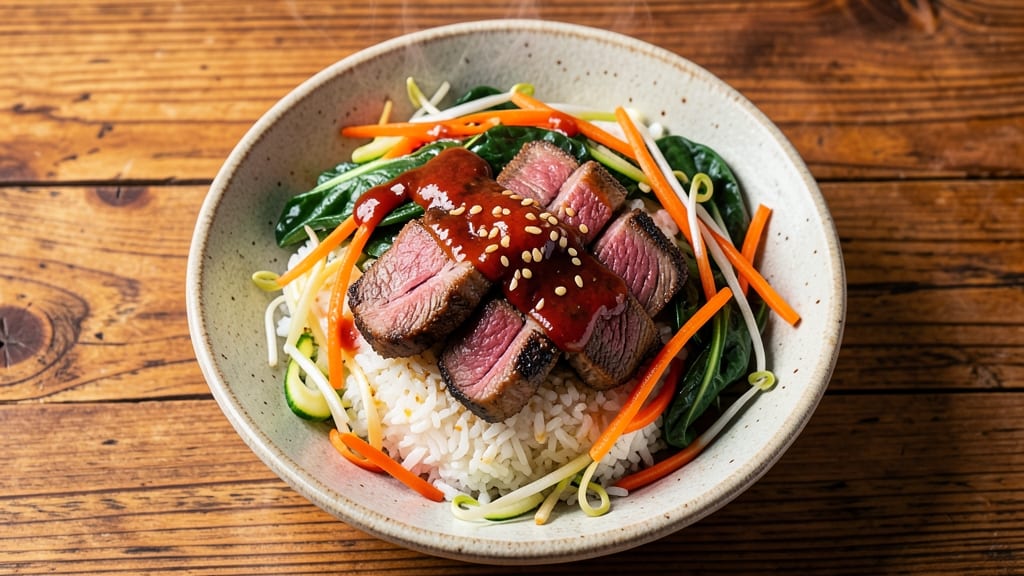
This beef bibimbap bowl recipe delivers the perfect balance of wok-seared crunch and silky soy-ginger harmony in every bite. 🔥 The secret lies in perfectly cooked rice, tender beef slices, and vibrant vegetables that come together in a symphony of textures and flavors.
I've refined this recipe over countless weeknight dinners, ensuring each component is cooked to perfection—no shortcuts, just restaurant-quality results at home.
The foundation starts with short-grain rice, which absorbs the flavors beautifully while maintaining its signature chewy texture. Thinly sliced beef gets marinated in a savory blend of soy sauce, sesame oil, and ginger before being wok-seared to achieve that signature caramelized crust.
Each vegetable—spinach, carrots, zucchini, and bean sprouts—is sautéed separately to preserve their individual textures, creating a vibrant medley of colors and flavors.
What sets this bibimbap apart is the gochujang sauce, a spicy-sweet-savory blend that ties everything together. The final touch? A runny fried egg on top, adding richness and a satisfying contrast to the crisp vegetables.
This isn't just a bowl—it's a complete, balanced meal that's as visually stunning as it is delicious.
Whether you're serving this as a weeknight dinner or a weekend feast, the assembly is simple yet impressive. Layer the rice, beef, and vegetables in a bowl, drizzle with the gochujang sauce, and top with the fried egg.
The result is a dish that's both comforting and exciting, with every bite offering a new texture and flavor to discover.
Ingredients for beef bibimbap bowl
Short-grain rice, wok-seared beef, and vibrant veggies—this bowl delivers restaurant-quality harmony in every bite.
| Ingredient | Amount | Notes |
|---|---|---|
| Short-Grain White Rice 🍚 | 1 ½ cups | Uncooked, jasmine or sushi rice preferred |
| Ribeye Steak 🥩 | 1 lb | Thinly sliced against grain |
| Fresh Spinach 🌿 | 4 cups | Baby spinach works best |
| Carrots 🥕 | 1 whole | Julienned or matchstick cut |
| Zucchini 🍆 | 1 whole | Thinly sliced lengthwise |
| Bean Sprouts 🌱 | 2 cups | Fresh, rinsed thoroughly |
| Large Eggs 🥚 | 2 whole | Fresh for runny yolks |
| Gochujang Sauce 🌶️ | ½ cup | Korean chili paste |
| Soy Sauce 🍶 | ¼ cup | Low-sodium preferred |
| Sesame Oil 🫒 | 1 tbsp | Toasted sesame preferred |
| Fresh Ginger 🧄 | 1 tbsp | Grated, fresh preferred |
| Garlic Cloves 🧄 | 4 cloves | Minced finely |
| Vegetable Oil 🫒 | 3 tbsp | High smoke point |
| Sesame Seeds 🌾 | 1 tbsp | Toasted for garnish |
| Green Onions 🧅 | 4 whole | Thinly sliced |
The beef is non-negotiable for texture. Ribeye stays tender when sliced thinly against the grain—flank steak works too. Look for the marbled kind at Whole Foods or your local butcher, but the pre-packaged kind at CostcoJasmine or sushi rice is ideal—it stays slightly sticky without being mushy. Rinse it well before cooking to remove excess starch.
No gochujang? Mix 2 tbsp sriracha with 1 tbsp honey for a quick swap. The sesame oil should smell nutty and toasty—avoid the cheap stuff that tastes like paint thinner. Fresh ginger is best, but if you're using powdered, double the amount. For the veggies, baby spinach and bean sprouts are non-negotiable—they stay crisp. Zucchini and carrots can be swapped for bell peppers or mushrooms if you're feeling adventurous. Just make sure everything's cut uniformly so it cooks evenly in the wok.
Rice keeps 3-4 days in the fridge, but it's best fresh. The beef marinade stays good for 2 days in the fridge—make extra for stir-fries. Veggies should be prepped right before assembly; they wilt fast. Store the gochujang sauce in a dark jar in the pantry—it lasts 6-12 months unopened. For frozen leftovers, portion the bowls into airtight containers and reheat the rice separately to avoid sogginess.
Why You'll Love This Recipe
- Here’s what sold me: ribeye doesn’t have to be fancy. Buy it on sale, slice it thin, and suddenly you’re feeding four for less than takeout. The short-grain rice stretches, the veggies bulk it up, and leftovers? Just as good reheated. My wallet and my family thank me.
- One-Pan Magic: I swear by this trick—just toss the spinach, shredded carrots, and julienned zucchini in a hot pan with a little oil, and they soften in minutes while the rice cooks. No chopping board chaos, no burning veggies. That ribeye? Sear it fast, slice it thin, and boom—done.
- Ribeye Crunch Factor: Between us, the steak is the star. Thinly sliced ribeye stays juicy but gets that perfect crispy edge when you sear it right. Add a quick soy-ginger glaze, and suddenly you’ve got restaurant-quality bites without the fuss. The spinach wilts into tender greens, and the carrots add just enough chew—it’s a flavor party in every bite.
- Lunchbox Reinvented: Honestly, this is my go-to for meal prep. Cook a big batch of rice, prep the veggies in advance, and assemble bowls all week. Pack one for work, and you’ve got a satisfying lunch that feels like a treat—not sad desk food. Even my picky teen grabs seconds.
Step-by-step instructions for beef bibimbap bowl
Let's turn these ingredients into a vibrant, flavor-packed bibimbap that balances textures and tastes perfectly.
🍳 Step 1: Cook the Short-Grain White Rice to Fluffy Perfection
Rinse the 1.5 cups short-grain white rice thoroughly under cold water until the water runs clear—this removes excess starch for fluffier grains. Drain well, then cook in a rice cooker or pot with 2 cups water (or follow your rice cooker's instructions). The rice should finish light and separate, not sticky. If using a pot, cover and simmer on low heat for 15 minutes after boiling, then let it steam off heat for 10 minutes. Fluff with a fork and keep warm—this forms the base of your bowl.
Here's the thing—bibimbap rice should be slightly cooler than piping hot when you assemble the bowl. If it's too hot, the fresh veggies will wilt immediately. Spread the cooked rice onto a large serving platter or individual bowls. I like to press it down gently with a spoon to create a slight well in the center for the other components.
🔥 Step 2: Wok-Sear the Ribeye Steak for Maximum Crunch
Heat 1 tablespoon vegetable oil in a wok or large skillet over high heat until shimmering. Add the 1 lb ribeye steak (sliced thinly against the grain) in a single layer—don't overcrowd or the steak will steam instead of sear. Let it cook undisturbed for 2-3 minutes until the edges develop a deep brown crust. Flip and cook another 1-2 minutes until just medium-rare (internal temp 130-135°F). Remove from heat and set aside.
The key here is high heat and quick cooking—you want that wok-seared texture that contrasts beautifully with the silky rice. Slice the steak against the grain into ¼-inch strips and arrange it in a fan shape on top of the rice. The heat from the steak will slightly warm the rice again, but not enough to cook the veggies prematurely.
👨🍳 Step 3: Quick-Pickled Vegetables for Bright, Crunchy Contrast
In a small bowl, whisk together 0.25 cup soy sauce, 0.5 cup gochujang sauce, 1 tablespoon sesame oil, and 1 tablespoon grated fresh ginger. Set aside. In the same wok (no need to clean), heat 1 tablespoon vegetable oil over medium-high heat. Add the 4 cups fresh spinach and stir-fry for 1 minute until just wilted but still vibrant green. Transfer to a bowl.
In the same wok, add 1 tablespoon vegetable oil and quickly stir-fry the 1 whole julienned carrot and 1 whole thinly sliced zucchini for 2-3 minutes until tender-crisp (they should still have a slight bite). Add the 2 cups bean sprouts and cook for 1 more minute. Divide the cooked vegetables evenly among the rice bowls, creating colorful sections for that classic bibimbap look.
🍳 Step 4: Fry the Eggs Sunny-Side Up for Runny Yolks
Heat 1 tablespoon vegetable oil in a small non-stick skillet over medium-low heat. Crack the 2 whole large eggs into the pan, cover, and cook for 2-3 minutes until the whites are just set but the yolks remain completely liquid. Slide each egg onto a plate, then gently place one on top of each bowl of rice. The residual heat from the rice will help keep the yolk warm when you're ready to mix everything together.
Here's where bibimbap gets fun—those runny yolks are the magic. They'll bind everything together when you mix, creating a creamy, flavorful sauce. If you're serving immediately, keep the eggs covered until serving to maintain that perfect yolk consistency.
🥘 Step 5: Assemble and Garnish for Maximum Flavor Impact
Drizzle each bowl with 1 tablespoon of the gochujang-soy sauce mixture, then sprinkle with 1 tablespoon toasted sesame seeds and 1 whole thinly sliced green onion. The sauce should coat the rice lightly without making it soggy. Now comes the best part—let everyone mix their own bowls! The heat from the rice will warm the sauce slightly, intensifying the flavors. Serve immediately with extra sauce on the side for those who like it spicier.
Real talk: the first bite should deliver that perfect harmony of textures—crispy steak, tender veggies, creamy egg, and fluffy rice—all tied together by the silky sauce. If the rice starts to dry out while waiting, tent the bowls loosely with foil to keep it warm and moist. This dish is all about balance, so don't be shy about adjusting the sauce to your spice preference!
Pro Tips For Making Beef Bibimbap Bowl
- SEAR THE RIBEYE FAST: Get your pan screaming hot—like, smoking hot—before adding the ribeye slices. I used to take it slow, and the steak would just steam instead of develop that caramelized crust. Two minutes max per side for medium-rare, then pull it out while it’s still fighting you. Overcooking turns it into shoe leather, and no one wants that in a bibimbap bowl.
- BLANCH SPINACH RIGHT AWAY: Toss fresh spinach into boiling water for exactly 30 seconds—no more, or it’ll turn to mush. Drain, shock in ice water for 10 seconds, then squeeze out all the water. Wet spinach steams instead of crisping up in the bowl. My first few tries looked sad until I realized this step isn’t optional.
- CUT VEGETABLES UNIFORM: Matchstick everything—carrots, zucchini, even the spinach stems if you’re using them. I learned this after serving a bowl where the zucchini was in thick chunks and the carrots were shredded. Uniform pieces cook at the same rate, so they stay crisp-tender when you assemble the bowl. Use a mandoline if you’re impatient—just don’t blame me if you slice a finger.
- REST THE STEAK UNDER FOIL: As soon as the ribeye hits your cutting board, tent it loosely with foil and let it sit for 5 minutes. Skipping this means juices pool on the plate instead of redistributing into the meat. Slice against the grain after resting, and your bibimbap will stay moist through every bite. (Yes, even if you’re the type who can’t wait two minutes.)
Creative variations of these flavors
Korean-Inspired Fusion
Swap the ribeye for bulgogi-marinated beef by mixing ¼ cup soy sauce, 2 tbsp brown sugar, 1 tbsp gochujang, 1 tbsp sesame oil, and 1 minced garlic clove with the beef.
Marinate for 30 minutes before cooking—this adds a sweet-spicy depth that pairs perfectly with the veggies. 🌶️
Seafood Twist
Replace the beef with shrimp or scallops for a lighter option. Toss 1 lb shrimp with 1 tbsp soy sauce, 1 tbsp sesame oil, and ½ tsp grated ginger before searing in the wok for 1-2 minutes per side.
Scallops should be seared for 2 minutes per side until caramelized. The seafood adds a delicate sweetness that contrasts beautifully with the spicy gochujang.
Vegetarian Vibe
Skip the beef entirely and use extra-firm tofu or mushrooms for a plant-based version. Press and slice 1 block firm tofu into thin strips, then pan-fry until golden. For mushrooms, sauté 8 oz shiitake or oyster mushrooms with 1 tbsp soy sauce and 1 tsp sesame oil until tender.
Add 1 tbsp gochujang to the sauce for a smoky kick.
Spicy Kimchi Boost
Add ½ cup chopped kimchi to the bean sprouts during the final minute of cooking. The tangy, fermented flavor cuts through the richness of the beef and egg, adding a probiotic punch.
For extra heat, stir in ½ tsp gochugaru (Korean chili flakes) with the kimchi. This variation keeps the dish authentic while adding a funky, umami depth.
Protein Swap: Chicken
Use chicken thigh instead of beef for a juicier, milder option. Marinate 1 lb boneless thighs in 2 tbsp soy sauce, 1 tbsp sesame oil, and 1 tbsp honey for 20 minutes.
Sear in the wok until golden and cooked through (165°F internal temp). The honey adds a subtle sweetness that balances the spicy sauce beautifully. ✨
Nutrition facts
Frequently asked questions
Can I make beef bibimbap ahead of time?
Prep components separately and store them in airtight containers for up to 2 days. Keep the rice, beef, and veggies refrigerated separately—they reheat best individually. When ready to serve, assemble fresh and fry the egg just before eating to maintain that perfect runny yolk. The sauce can be made 1 day ahead and stored in the fridge.
What if I don't have gochujang sauce?
Mix 2 tbsp sriracha with 1 tbsp honey and ½ tbsp soy sauce for a quick substitute. For a milder version, use 1 tbsp tomato paste plus ½ tsp smoked paprika. The key is balancing sweet, spicy, and umami—adjust to taste. The sauce should coat the rice lightly without overpowering the other flavors.
How do I get the perfect wok-seared beef texture?
Use a hot wok or skillet (high heat until oil shimmers) and slice the beef thinly against the grain. Cook in a single layer without overcrowding—this creates that signature caramelized crust. For extra flavor, marinate the beef for 15-30 minutes in 1 tbsp soy sauce, 1 tsp sesame oil, and ½ tsp grated ginger before searing.
Can I make this recipe gluten-free?
Yes! Use tamari or coconut aminos instead of soy sauce in the marinade and sauce. Check gochujang labels—some contain wheat. For extra flavor, add 1 tsp fish sauce or ½ tsp gluten-free oyster sauce to the sauce. The rice and veggies remain naturally gluten-free, so the dish stays safe for gluten-sensitive diners.
Why is my fried egg not runny?
Cook on medium-low heat and cover the pan to trap steam. Use fresh eggs (older eggs have firmer yolks) and cook for only 2-3 minutes. If it's too firm, the heat was too high—next time, reduce it slightly. For extra insurance, crack the egg onto a plate first, then slide it into the pan to prevent sudden heat shock.