
Soups & Stews
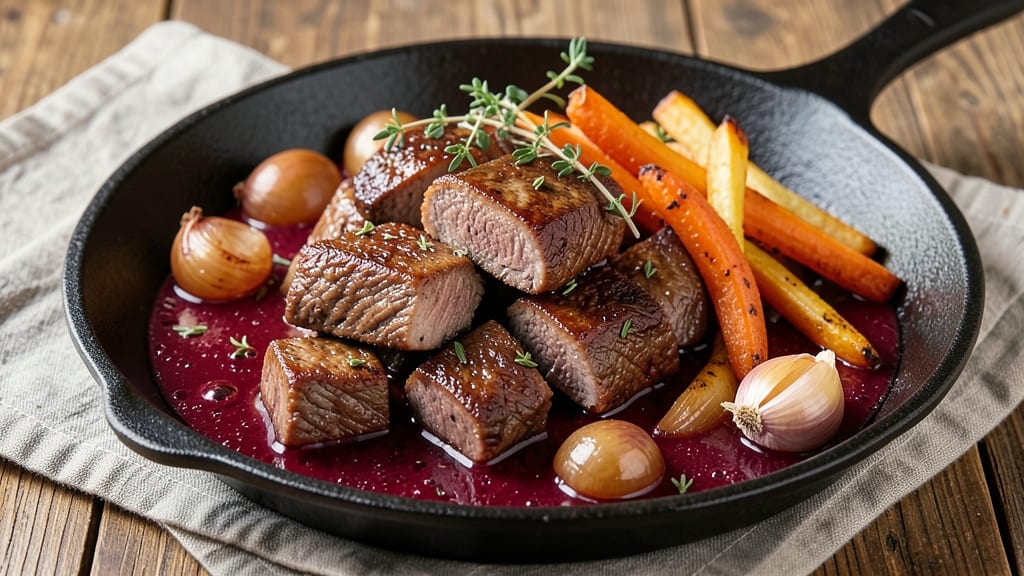
This Beef Beaujolais recipe transforms tough cuts of beef into melt-in-your-mouth tenderness through slow braising in rich Burgundy wine. The key lies in the wine reduction—a technique that intensifies the sauce's depth while keeping the beef fork-tender.
I developed this after years of experimenting with French-inspired braises, and it consistently delivers restaurant-quality results at home.
The process begins with searing beef to lock in juices, then simmering it in a fragrant blend of wine, aromatics, and herbs until the liquid reduces to a velvety consistency. The addition of silky egg noodles at the end creates a comforting, hearty dish perfect for chilly evenings.
What sets this apart is how the wine's acidity balances the beef's richness, creating a sauce that's both elegant and deeply satisfying.
By the time you serve this dish, you'll have perfectly tender beef swimming in a glossy, wine-infused sauce with al dente noodles that soak up every flavorful drop.
The aroma alone will have everyone gathering at the table, while the first bite delivers a harmonious blend of savory, umami, and subtle sweetness from the caramelized wine. This is the kind of meal that elevates ordinary weeknights into something special.
Pair it with crusty bread to mop up the sauce or serve alongside roasted vegetables for a complete, satisfying dinner. The technique is straightforward but requires patience—worth every minute for a dish this impressive. Let's get cooking!
Ingredients for beef beaujolais
Here's what you'll need to create restaurant-worthy Beef Beaujolais at home.
| Ingredient | Amount | Notes |
|---|---|---|
| Beef Chuck Roast 🥩 | 2 ½ lb | Pre-cut into 1.5-inch cubes |
| Dry Red Burgundy Wine 🍷 | 2 cups | Bold Cabernet Sauvignon works too |
| Yellow Onion 🧅 | 1 whole | Diced into 1/4-inch pieces |
| Carrot 🥕 | 2 whole | Cut into 1-inch chunks |
| Garlic Cloves 🧄 | 6 cloves | Minced, not powdered |
| Fresh Thyme 🌿 | 2 sprigs | Or 1 tbsp dried thyme |
| Fresh Rosemary 🌿 | 1 sprig | Woody stems removed |
| Beef Broth 💧 | 1 cup | Low-sodium preferred |
| Tomato Paste 🍅 | 2 tbsp | Squeeze tube works best |
| All-Purpose Flour 🌾 | 1 tbsp | For sauce thickening |
| Egg Noodles 🍝 | 12 oz | Fresh or dried, al dente |
| Unsalted Butter 🧈 | 2 tbsp | Cold, for finishing |
| Kosher Salt 🧂 | 1 ½ tsp | Diamond Crystal preferred |
| Freshly Ground Black Pepper 🌶️ | 1 tsp | Cracked peppercorns best |
| Olive Oil 🫒 | 2 tbsp | For searing beef |
The beef is non-negotiable—chuck roast delivers that melt-in-your-mouth texture. Trader Joe's and Costco carry it pre-cubed, which saves time, but if you're buying a whole roast, ask the butcher to cut it into 1.5-inch pieces. The wine? Any bold, dry red works here—Cab Sauv, Merlot, whatever's open. I usually grab a bottle I'd drink anyway, since we're using most of it. For the aromatics, fresh herbs make all the difference, but dried thyme in a pinch won't ruin the dish. The tomato paste might seem like overkill for just 2 tablespoons, but trust me on this—it deepens the wine's richness.
No Burgundy wine? Beef broth with a splash of balsamic vinegar works in a bind, though the sauce won't have that same velvety depth. Fresh thyme is ideal, but dried works at one-third the amount. The carrots can be baby carrots if that's what's in the fridge—no need to peel them. For the egg noodles, fresh is luxurious, but dried works just fine if you cook them al dente. The butter at the end? Use cold butter so it melts into the sauce beautifully. And if you're worried about the wine's alcohol flavor, don't be—the long simmer burns it all off.
This dish tastes even better the next day, so make it ahead if you can. The beef and sauce keep 4-5 days in the fridge, and you can freeze portions for 3 months. I like to portion it into containers so lunches are sorted for the week. For serving, a sprinkle of fresh parsley adds a pop of color. The sauce will thicken as it cools, so you might need to add a splash of broth when reheating. And if you have leftover wine? Save it for another batch—it's worth making again.
Why You'll Love This Recipe
- One-Pot Magic: That’s right—just one pot, minimal chopping, and zero cleanup stress. The onions caramelize while you slice the beef, and the wine deglazes everything in one go. Honestly, I’ve made this on nights when I’d rather be scrolling than cooking.
- Wine-Infused Richness: The Beaujolais wine doesn’t just flavor the sauce—it transforms the beef into something tender and deeply savory. That first bite? The garlic and caramelized onions melt into the meat, and the wine’s bright acidity cuts through the richness. It’s the kind of dish that makes you close your eyes and sigh.
- Leftovers for Days: This recipe practically begs to be made in bulk. The beef stays juicy for at least four days in the fridge, and reheating it? Just a splash of water or broth to loosen the sauce. I’ve turned it into sandwiches, tacos, and even a pot pie—it’s that versatile.
- Budget-Friendly Feast: A chuck roast is cheap, and a bottle of Beaujolais won’t break the bank. You’re getting restaurant-quality flavor without the price tag. Between us, this is my go-to for feeding a crowd without stressing over grocery bills. Plus, the carrots add sweetness and bulk for next to nothing.
Step-by-step instructions for Burgundy wine braise with silky egg noodles
Here's how to transform tough beef into melt-in-your-mouth tenderness using wine's magic.
Sear the Beef Chuck for Maximum Flavor
Heat a heavy Dutch oven over medium-high heat until it's smoking hot. Add the 2 tablespoons olive oil and swirl to coat the bottom evenly. Working in batches (you'll need to do this twice), add the 2.5 lb beef chuck roast cut into 1.5-inch cubes, spreading them in a single layer without overcrowding.
Let the beef sear undisturbed for 3-4 minutes until deep golden brown crusts form on all sides. This initial sear locks in juices and builds the foundation for rich flavor. Once browned on one side, flip and repeat until all surfaces are beautifully caramelized. Transfer the seared beef to a plate and set aside.
Develop the Wine and Aromatic Base
In the same Dutch oven, reduce heat to medium and add the diced yellow onion and cut carrot chunks. Cook for 5 minutes until the onions soften and begin to caramelize slightly, releasing their sweetness. Add the 6 minced garlic cloves and cook for another 30 seconds until fragrant.
Pour in the 2 cups dry red Burgundy wine and scrape up all the browned bits from the bottom of the pan with a wooden spoon. This deglazing captures all those flavorful fond deposits that would otherwise stick to your pot. Let the wine simmer for 5-6 minutes until reduced by about half and slightly syrupy in consistency.
Build the Rich Braising Sauce
Stir in the 2 tablespoons tomato paste and cook for 1 minute until it darkens slightly and loses its raw taste. Sprinkle the 1 tablespoon all-purpose flour over the mixture and stir vigorously for 2 minutes to cook off the raw flour flavor and create a smooth paste that will thicken your sauce.
Return the seared beef to the pot along with the 2 sprigs fresh thyme, 1 sprig fresh rosemary (woody stems removed), 1.5 teaspoons kosher salt, and 1 teaspoon freshly ground black pepper. Pour in the 1 cup beef broth and bring everything to a gentle simmer. The liquid should come about halfway up the beef cubes.
Braise Until Fork-Tender
Cover the Dutch oven tightly with a lid and transfer to a preheated 325°F oven. Braise for 2.5-3 hours until the beef is fork-tender and easily pulls apart with two forks. The sauce should be thick and glossy, coating the beef beautifully. If the sauce reduces too much before the beef is tender, add 2-3 tablespoons hot water or broth to maintain the proper consistency.
About 30 minutes before the beef is done, cook the 12 oz egg noodles in salted boiling water until al dente according to package directions. Drain and set aside, reserving ½ cup pasta water for potential sauce adjustments later.
Finish and Serve
Remove the beef from the braising liquid and transfer it to a clean platter. Skim off any excess fat from the sauce surface, then stir in the 2 tablespoons cold unsalted butter until melted and incorporated. If the sauce is too thick, whisk in 1-2 tablespoons reserved pasta water to reach your desired consistency.
Taste and adjust seasoning with additional salt or pepper if needed. Serve the braised beef over the silky egg noodles, spooning generous amounts of the rich wine sauce over the top. Each bite should deliver tender beef, aromatic herbs, and that perfect balance of wine acidity and savory depth. Garnish with fresh parsley if you like, but the dish is already elegant as-is.
Pro Tips For Making Beef Beaujolais
- SEAR THE ROAST FIRST: High heat. Seriously, crank it up until the chuck roast develops a deep brown crust—this locks in flavor and keeps the meat juicy. I used to skip this step when I was in a hurry, and the wine sauce always tasted flat afterward.
- USE COLD WINE: Chill that Burgundy first—yes, even if you’re eager to start. Cold wine adds acidity and depth without overpowering the beef. I learned this the hard way after a batch tasted harsh and alcoholic.
- DON’T SKIP THE VEGETABLES: Onion, carrot, and garlic aren’t just filler—they sweeten as they cook and thicken the sauce naturally. Roughly chop them so they break down faster, but don’t overcrowd the pan or they’ll steam instead of caramelize.
- REST THE MEAT LONGER: Give that chuck roast a solid 5-10 minutes under foil after pulling it from the oven. The juices redistribute, and the slices stay tender—no one wants a dry, stringy Beaujolais. (I know, I know, but trust the process.)
Flavor customization for this dish
Herb Variations
Swap out the thyme and rosemary for fresh bay leaves and tarragon to create a more French-inspired profile. I find 1 bay leaf and 1 tbsp chopped tarragon (added with the beef) brings an anise-like depth that pairs beautifully with the wine.
For a heartier flavor, add ½ tsp smoked paprika to the braising liquid—it enhances the wine's richness without overpowering. 🌿
Spice Level Boost
If you love heat, add ½ tsp crushed red pepper flakes when you deglaze with wine, or stir in 1 tsp hot sauce (like Cholula) at the end.
For a smoky kick, replace half the beef broth with 1 cup chicken broth and add ½ tsp chipotle powder to the sauce. The wine's acidity balances the heat perfectly.
Sweet-Savory Balance
For a touch of sweetness, add 1 tbsp brown sugar when you deglaze the pan with wine. This caramelizes slightly during cooking, creating a subtle contrast to the wine's acidity. Alternatively, stir in ½ cup apple cider with the beef broth—it adds fruity notes that complement the wine beautifully. 🍎
Umami Depth
Boost the sauce's umami by adding 1 tbsp soy sauce or 1 tsp fish sauce when you return the beef to the pot. For a vegetarian-friendly twist, stir in 1 tbsp mushroom powder (or finely chopped mushrooms) with the tomato paste.
The wine's acidity cuts through the earthy flavors, creating a more complex profile.
Regional Wine Swaps
No Burgundy wine? Use Pinot Noir for a lighter, fruitier profile or Zinfandel for bold, jammy notes. For a budget-friendly option, Cabernet Sauvignon works—just reduce it longer to concentrate the flavors. If you're feeling adventurous, try Port wine (½ cup) with the beef broth for a richer, dessert-like sauce. 🍷
Vegetable Add-Ins
For extra texture, add 1 cup sliced mushrooms or ½ cup pearl onions with the carrots. I love roasted fingerling potatoes (halved) added during the last 45 minutes of braising—they soak up the sauce beautifully.
For a lighter touch, stir in 1 cup baby spinach** at the end to wilt slightly and brighten the dish.
Nutrition facts
Frequently asked questions
Can I substitute Burgundy wine with something else?
Use Pinot Noir for a lighter profile or Zinfandel for bolder flavors. Even Cabernet Sauvignon works if reduced longer. For a non-alcoholic version, substitute with beef broth + 1 tbsp balsamic vinegar and reduce it by half. The key is using 2 cups total of liquid for the braise.
How do I know when the beef is perfectly tender?
The beef is done when it easily separates with two forks and pulls apart like pulled pork. 2.5-3 hours at 325°F is standard, but check at 2 hours if using smaller cuts. If it's still tough, return it to the oven for another 30 minutes with a splash of broth.
What's the best way to reheat leftovers?
Gently reheat in the oven at 300°F for 20-30 minutes with a splash of broth to maintain moisture. Avoid microwaving as it can make the sauce watery. For noodles, add them separately at the end to prevent sogginess. The sauce may thicken when cold—thin with pasta water if needed.
Can I make this dish ahead of time?
Yes! Prepare the braised beef up to 2 days ahead and refrigerate. Reheat gently with broth, then add fresh noodles when serving. The flavors actually improve overnight as the wine melds. For freezing, portion the beef and sauce (without noodles) for up to 3 months—just thaw overnight in the fridge before reheating.
Why did my sauce turn out too thin?
This usually happens if the wine didn't reduce enough or the beef released too much liquid. Next time, simmer the wine longer before adding beef, and skim excess fat from the sauce. If needed, mix 1 tbsp cornstarch with 1 tbsp cold water and stir it in at the end to thicken. The sauce should coat the back of a spoon.