
Soups & Stews
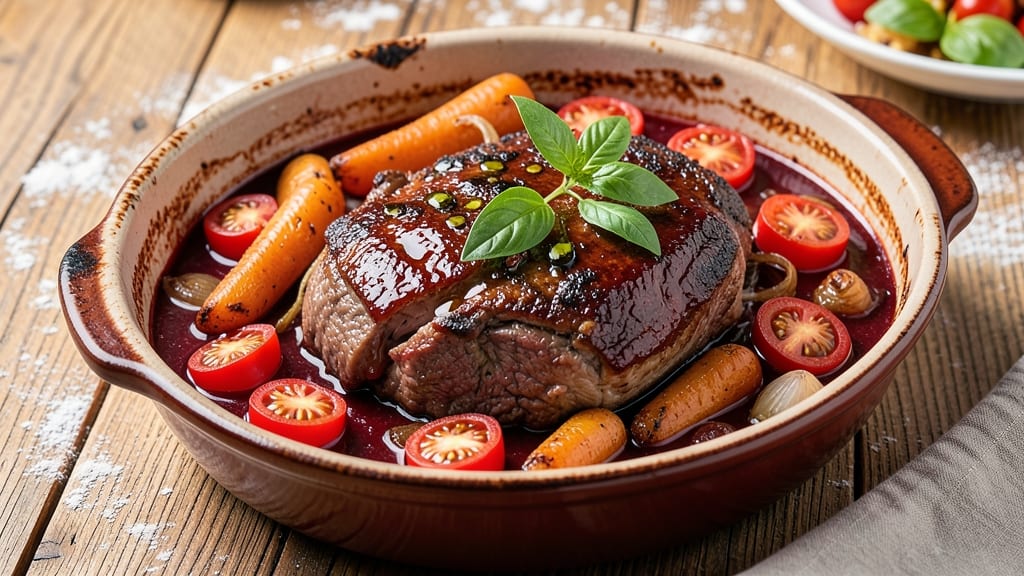
This beef and tomato slow cooker recipe transforms tough cuts into fork-tender threads bathed in a rich, velvety red wine braise. The secret lies in low-and-slow cooking that melts collagen into flavor while tomatoes break down into a luscious, slightly sweet sauce.
I developed this after years of testing—it’s the one my family requests when we need a meal that feels special without hours of effort.
What makes this recipe work is the balance of acidity from wine and tomatoes with sweetness from carrots and onions, creating depth that builds as it simmers. The beef absorbs the flavors perfectly, resulting in a dish that’s hearty enough for a weeknight dinner but elegant enough for company.
No fancy techniques are required—just a slow cooker and 6 hours of hands-off time.
By the time you serve it, you’ll have perfectly tender beef that falls apart at the touch, surrounded by tender vegetables and a sauce so rich it coats every bite. The aroma alone will have everyone gathered at the table, and the first taste delivers that restaurant-quality depth you crave.
This is comfort food at its finest—warm, satisfying, and impossible to resist.
Pair it with crusty bread to soak up every last drop of that deep red wine sauce, or serve alongside mashed potatoes for a complete meal.
The leftovers reheat beautifully, making this the ultimate make-ahead solution for busy nights. Let’s get cooking—your slow cooker is about to become your new best friend.
Ingredients for beef and tomato slow cooker
Good red wine, tender beef, and slow-cooked tomatoes make this dinner feel special.
| Ingredient | Amount | Notes |
|---|---|---|
| Chuck Roast 🥩 | 2 lb | Tough cut for tender results |
| Red Wine 🍷 | 1 cup | Bold dry variety preferred |
| Tomato Paste 🍅 | ½ cup | Smooth, no-sugar-added |
| Yellow Onion 🧅 | 1 whole | Diced, medium size |
| Carrots 🥕 | 4 whole | Medium size, peeled |
| Garlic Cloves 🧄 | 4 cloves | Minced for depth |
| Beef Broth 💧 | 1 cup | Low-sodium preferred |
| Olive Oil 🫒 | 1 tbsp | Extra-virgin for richness |
| Fresh Thyme 🌿 | 2 sprigs | Or 1 tsp dried |
| Bay Leaves 🍃 | 2 whole | Remove before serving |
| Salt 🧂 | 1 ½ tsp | Kosher or sea salt |
| Black Pepper 🌶️ | ½ tsp | Freshly ground |
| Worcestershire Sauce 🍶 | 1 tbsp | Vegan if needed |
The chuck roast is your secret weapon—Costco or Trader Joe's usually have it pre-cut for convenience. Look for good marbling; that's what turns tough meat into tender threads. I grab a Cabernet Sauvignon from the store's wine section when I'm in a hurry, but anything bold and dry works. The tomato paste? Squeeze tubes from Trader Joe's are perfect—they last forever and you won't waste any. For the carrots, medium-sized ones work best; they cook just right without turning to mush.
No red wine? Substitute beef broth with a splash of balsamic vinegar—it mimics that deep, slightly sweet flavor. Fresh thyme is ideal, but dried thyme at one-third the amount works in a pinch. The Worcestershire sauce adds that umami kick—if you're avoiding it, soy sauce or a splash of fish sauce (if not vegetarian) does the trick. For the onions, no need to peel them perfectly; just chop off the ends and slice through the skin. The garlic can be minced ahead of time and stored in the fridge for up to 5 days.
This reheats beautifully—better the next day once all the flavors meld together. Store leftovers in the fridge for up to 5 days or freeze for 3 months. I like to portion mine into individual containers so I can grab a meal for lunch without reheating the whole pot. The sauce thickens as it cools, so add a splash of water or broth when reheating if it's too stiff. Trust me, you'll want leftovers.
Why You'll Love This Recipe
- Deep, Rich Bite: That chuck roast? It melts in your mouth after hours of slow cooking, but the real magic’s in the sauce—tomato paste caramelizes into a glossy, slightly sweet glaze, while the red wine adds this earthy depth that makes it taste like a fancy restaurant dish.
- Leftovers That Don’t Suck: Between us, most slow-cooker leftovers are sad. Not this. The beef stays tender, the sauce thickens just enough to coat every bite, and it reheats perfectly—so I make a double batch and feed the family for days without getting tired of it.
- Budget Win for Big Nights: A chuck roast is cheap, but it feels like a splurge when it’s transformed into a hearty, saucy dish that feeds six. Plus, I stretch it with carrots and onions, so it’s basically a free meal upgrade—no one ever guesses it’s not from a takeout menu.
Step-by-step instructions for beef and tomato slow cooker braise
This method transforms tough chuck roast into melt-in-your-mouth beef with rich wine and tomato flavors.
Sear the Chuck Roast for Maximum Flavor
Heat a large Dutch oven over medium-high heat and add the 1 tablespoon olive oil. Once shimmering, place the 2 lb chuck roast in the pot, searing on all sides until deeply browned—about 4-5 minutes per side. This step creates a flavorful crust that infuses into the braise.
While the roast sears, cut the 1 whole yellow onion into ½-inch chunks and peel the 4 whole carrots, cutting them into 1-inch pieces. The onions will soften during searing, adding sweetness to the braise. Remove the roast and set it aside on a plate.
Build the Braising Base with Aromatics
In the same pot, add the diced onion and carrot pieces, cooking for 5-6 minutes until softened and lightly caramelized. Stir in the 4 cloves minced garlic cloves and cook for 30 seconds until fragrant—this prevents bitter garlic flavors.
Reduce heat to medium and stir in the 0.5 cup tomato paste, spreading it evenly across the bottom of the pot. This creates a rich, thick base for the braise. Cook for 1 minute to toast the tomato paste slightly, deepening its flavor.
Deglaze and Combine All Ingredients
Pour in the 1 cup red wine, scraping up any browned bits from the bottom of the pot with a wooden spoon. This deglazing step captures all the meaty flavors that would otherwise burn. Let it simmer for 2-3 minutes until reduced by half.
Return the chuck roast to the pot. Add the 1 cup beef broth, 1.5 teaspoons salt, 0.5 teaspoon black pepper, 1 tablespoon Worcestershire sauce, 2 sprigs fresh thyme, and 2 whole bay leaves. Stir gently to combine all ingredients.
Slow Cook to Perfect Tenderness
Transfer the entire pot to a slow cooker and cook on low heat for 8 hours or high heat for 5-6 hours, until the beef is fork-tender and easily pulls apart. The slow cooking process breaks down the tough muscle fibers, transforming the chuck roast into succulent, shreddable beef.
About 30 minutes before serving, remove the 2 whole bay leaves and discard them. The thyme sprigs can remain in the braise. Taste and adjust seasoning if needed—this is your chance to balance flavors before serving.
Shred and Serve Over Freshly Cooked Pasta
Using two forks, carefully shred the beef directly in the slow cooker, separating it into tender strands. The beef should pull apart easily with minimal resistance. Mix the beef with the braising liquid to coat each strand in the rich, flavorful sauce.
Serve immediately over freshly cooked spaghetti or crusty bread, allowing each bite to deliver layers of wine-infused beef, caramelized vegetables, and aromatic herbs. The sauce should be thick enough to cling to the pasta or bread without being overly watery.
Pro Tips For Making Beef And Tomato Slow Cooker
- SEAR THE ROAST FIRST: Chuck roast needs a quick, hard sear in a hot pan—cast iron or stainless steel—before it goes into the slow cooker. I learned this the hard way: skipping the sear means bland, gray meat. Pat it dry first, then hit it with oil and salt, and let it brown for 3-4 minutes per side until deeply colored. That crust locks in flavor and keeps the meat from turning mushy later.
- USE WINE REDUCTION: Pour the red wine in, then simmer it down on the stovetop for 5-7 minutes before dumping it into the slow cooker. The alcohol burns off, and you’re left with concentrated flavor—no more boozy aftertaste. If you’re lazy, at least reduce it halfway; if you’re feeling fancy, add a pinch of sugar to balance the acidity while it cooks.
- CHOP CARROTS UNIFORM: Big, uneven carrots turn to mush while small, even pieces stay crisp. Cut them into 1-inch chunks—no need to peel, just scrub and slice. This keeps them tender but still bite-sized, so they don’t disappear into the sauce like sad, forgotten soldiers.
- SALT THE TOMATO PASTE: Tomato paste is basically unsalted—add ½ teaspoon of salt right to the paste before mixing it with the wine and onions. I used to forget, and the whole dish would taste flat. A little salt here makes a real difference, especially since you’re not adding extra salt later. Trust me, your taste buds will notice.
Make-ahead tips for this recipe
Prep Ahead for Busy Days
I always prep the aromatics the night before—chop the 1 whole yellow onion and 4 whole carrots and store them in a sealed container in the fridge. Minced 4 garlic cloves can also be prepped ahead and kept for up to 5 days.
This cuts your active cooking time by 15-20 minutes on the day you cook. 🌟
Freezer-Friendly Components
Assemble the entire braise (except the raw beef) in your slow cooker and freeze it for up to 3 months. When ready to cook, thaw overnight in the fridge, add the raw beef, and cook as directed.
This is perfect for meal prep Sundays—just thaw and cook when needed. The sauce actually develops deeper flavors during freezing.
Portion Control for Leftovers
Divide the cooked beef and sauce into quart-sized freezer bags before freezing. Each bag makes a perfect single serving for lunch or dinner. Reheat portions in the microwave for 2-3 minutes with a splash of water or broth to restore moisture.
I like to keep one bag in the fridge for quick meals during the week.
Sauce Thickening Trick
If your sauce seems too thin after reheating, mix 1 tablespoon cornstarch with 2 tablespoons cold water and stir it into the sauce. Simmer for 2-3 minutes until thickened.
This works especially well if you're serving over pasta where you want that perfect cling. The sauce should coat the back of a spoon but remain spoonable.
Slow Cooker Hack
Line your slow cooker insert with a double layer of heavy-duty aluminum foil before adding ingredients. This makes cleanup a breeze—just lift out the foil with all the food residue when you're done.
I've been using this trick for years and it saves me 10 minutes of scrubbing every time. 💡
Flavor Boost Before Serving
For an extra depth of flavor, stir in 1 teaspoon balsamic vinegar or 1 tablespoon red wine reduction just before serving. This adds a bright acidity that cuts through the richness of the beef.
I also sprinkle with fresh parsley for a pop of color and freshness right at the table.
Nutrition facts
Frequently asked questions
Can I use a different cut of beef instead of chuck roast?
Yes, but chuck roast is ideal for its marbling and affordability. For similar results, try stew beef or chuck shoulder. Avoid leaner cuts like sirloin—they won’t become tender. If using a tougher cut, increase cooking time by 1 hour on low heat.
What if I don’t have red wine? Can I substitute it?
Use 1 cup beef broth + 1 tablespoon balsamic vinegar for depth. For extra richness, add 1 teaspoon soy sauce or ½ teaspoon smoked paprika. The dish will still turn out flavorful, just with a slightly different profile.
How do I know when the beef is fully tender?
The beef is done when it shreds easily with two forks and pulls apart into thread-like strands. Press a piece with a fork—if it separates cleanly with no resistance, it’s perfect. Overcooking can dry it out, so check after 6 hours on high or 7 hours on low.
Can I make this in an Instant Pot instead of a slow cooker?
Yes! Sear the beef first, then cook on high pressure for 45 minutes with a natural release. For extra tenderness, add 1 extra hour on low pressure. The Instant Pot version cooks faster but requires more attention to avoid overcooking.
Why did my sauce turn too thin after reheating?
Slow-cooked sauces thicken as they cool, but reheating can loosen them. Fix it by mixing 1 tablespoon cornstarch with 2 tablespoons cold water, stirring it in, and simmering for 2-3 minutes. For pasta dishes, a slightly thicker sauce clings better—just adjust to your preference!