
Soups & Stews
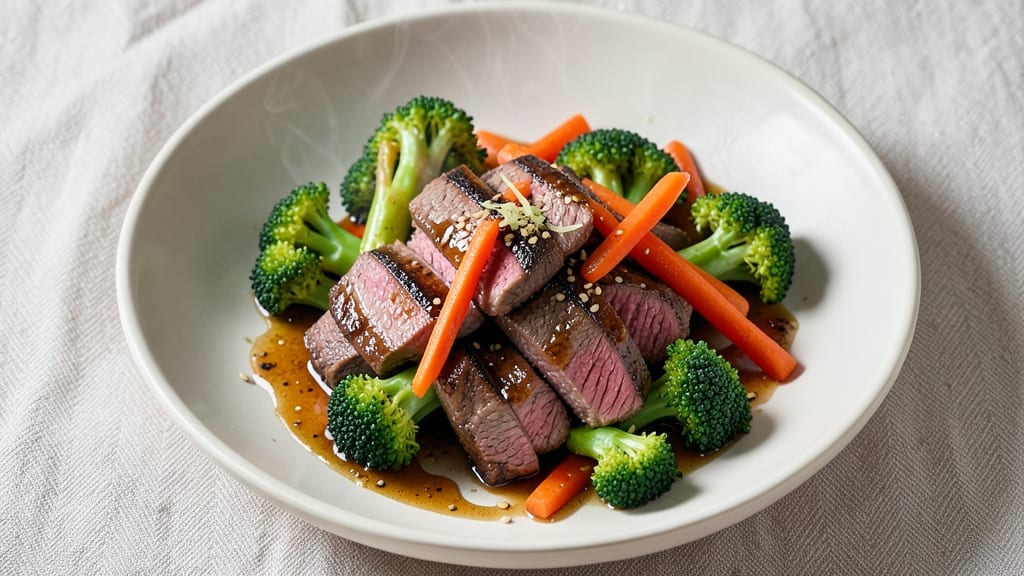
This beef and broccoli with carrots recipe delivers restaurant-quality stir-fry in just 20 minutes, combining tender beef, crisp-tender vegetables, and a savory soy-ginger sauce. The secret lies in high-heat searing and precise timing—each ingredient gets its moment in the wok to maintain texture and flavor.
I developed this version after years of perfecting stir-fry techniques, ensuring every bite delivers that perfect balance of crispness and tenderness.
The process starts with marinating the beef in a simple soy-ginger mixture, which tenderizes while adding depth of flavor. Meanwhile, the carrots and broccoli are prepped to cook quickly—cutting them uniformly ensures even cooking and that signature wok-hei (breath of the wok) aroma.
The sauce ties everything together with its umami-rich profile, cutting through the richness of the beef while complementing the natural sweetness of the vegetables.
By the time you plate this dish, you'll have perfectly seared beef strips, vibrant green broccoli florets, and bright orange carrots that stay crisp-tender. The sauce clings to everything, creating a dish that's as visually appealing as it is delicious.
This recipe proves that weeknight dinners can taste like they came from your favorite Asian bistro—without the wait.
Serve over steamed rice or noodles to soak up every bit of that flavorful sauce. The technique is straightforward, but the results are impressive—ideal for feeding a family or impressing guests. Let's get started on this foolproof stir-fry that comes together faster than takeout.
Ingredients for beef and broccoli with carrots
Restaurant-quality stir-fry starts with these 14 ingredients—simple but powerful for that signature soy-ginger crunch.
| Ingredient | Amount | Notes |
|---|---|---|
| Flank Steak 🥩 | 1 lb | Thinly sliced against grain |
| Broccoli Florets 🥦 | 2 cups | Medium-sized florets, stems peeled |
| Carrots 🥕 | 3 medium | Julienned into matchsticks |
| Low-Sodium Soy Sauce 🥢 | ½ cup | Kikkoman preferred |
| Sesame Oil 🫒 | 1 tbsp | Toasted for aroma |
| Fresh Ginger 🧄 | 1 tbsp | Finely grated, peeled |
| Garlic Cloves 🧄 | 4 cloves | Minced, not pre-minced |
| Honey 🍯 | 1 tbsp | For sauce balance |
| Cornstarch 🌾 | 1 tbsp | For sauce thickening |
| Vegetable Oil 🫒 | 3 tbsp | High smoke point |
| Green Onions 🧅 | 2 whole | Sliced, white and green |
| Sesame Seeds 🌾 | 1 tbsp | Toasted for garnish |
| Diamond Crystal Kosher Salt 🧂 | ½ tsp | For seasoning |
| Black Pepper 🌶️ | ¼ tsp | Freshly cracked |
The beef is everything here. Flank steak delivers that signature chew, but sirloin or ribeye work too if you prefer tenderness. Slice it thinly against the grain—1/4-inch slices is ideal. Most butchers will slice it for you if you ask. For the veggies, broccoli florets should be bright green with no yellowing, and carrots should be crisp with no soft spots. I grab mine from the produce section at Whole Foods—they keep better than pre-cut mixes. The Kikkoman soy sauce is non-negotiable for that authentic umami punch, but any low-sodium soy works in a pinch.
No sesame oil? Toasted peanut oil adds a similar nutty depth. Running short on fresh ginger? Powdered ginger at half the amount gets you close, though it lacks that bright zing. The honey in the sauce might seem odd, but it balances the saltiness beautifully—trust me on this. For the cornstarch, arrowroot powder works too, but cornstarch gives you that classic stir-fry sheen. Pre-minced garlic? Fresh is worth the 30 seconds—it makes all the difference in flavor. And if you're using pre-cut broccoli or carrots, pat them dry thoroughly before cooking to avoid a soggy stir-fry.
This dish reheats like a dream—microwave for 1 minute with a splash of water to revive the crispness. Store leftovers in airtight containers for 3 days, or freeze portions for up to 2 months. I always make extra because it's perfect for lunches. The sauce thickens as it cools, so stir in a splash of water if it seems too stiff when reheating. Garnish with toasted sesame seeds right before serving—they add that final crunch that makes this dish restaurant-worthy.
Why You'll Love This Recipe
- One-Pan Magic: I swear by this recipe because it’s that kind of dish—just toss the flank steak, broccoli, and carrots on a sheet pan, drizzle with soy sauce and sesame oil, and roast. No chopping boards, no extra pots, no stress. (Between us, I’ve burned enough stir-fries to know this is a game-changer.)
- Umami Bomb: That combo of low-sodium soy sauce and sesame oil? It’s like a flavor superpower. The steak gets this caramelized crust, the broccoli stays crisp-tender, and the carrots soak up just enough savory goodness—no one’s reaching for the salt shaker. Honestly, my picky-eating partner actually finishes his plate now.
- Lunchbox Hero: Between us, this is my go-to for meal prep. Slice the steak thin, toss everything in a container, and it keeps for days. Pack it cold or reheat it—either way, it’s a hit. (Yes, even on a Tuesday night when I’m too tired to think.)
- Budget Win: Flank steak stretches further than you’d think, and broccoli and carrots are cheap staples. I make this twice a month, and it feeds four people for under $15. Not the prettiest, but the taste makes up for it—and my wallet thanks me.
Step-by-step instructions for beef and broccoli with carrots
Here's how to create restaurant-quality stir-fry with perfect soy-ginger balance.
Prep Ingredients for Optimal Texture
Start by slicing the 1 lb flank steak thinly against the grain into ¼-inch thick strips. This ensures tender bites that cook quickly and evenly. Pat the slices dry with paper towels - moisture prevents proper searing.
Julienne the 3 medium carrots into ¼-inch matchsticks and trim the stems from the 2 cups broccoli florets. Finely grate the 1 tbsp fresh ginger and mince the 4 cloves garlic. Slice the 2 whole green onions into ½-inch pieces, separating white and green parts. Toast the 1 tbsp sesame seeds in a dry skillet over medium heat for 1-2 minutes until fragrant - this enhances their nutty flavor.
Create the Sauce Base
In a small bowl, whisk together the 0.5 cup low-sodium soy sauce, 1 tbsp honey, and 1 tbsp cornstarch. This mixture should be smooth with no lumps. The honey adds subtle sweetness that balances the soy's saltiness, while the cornstarch will create that signature glossy, thickened sauce.
Set aside 2 tablespoons of this sauce mixture for later use. The remaining sauce will thicken as it cooks, so reserving some prevents over-thickening. You'll use this reserved portion to deglaze the pan after cooking the vegetables.
Stir-Fry Vegetables Until Crisp-Tender
Heat 2 tablespoons vegetable oil in a wok or large skillet over high heat until shimmering. Add the carrots and broccoli, stirring constantly for 3-4 minutes until they begin to soften but still maintain a vibrant green color and slight crispness.
Watch the vegetables carefully - they should be cooked to al dente perfection, not mushy. Remove them from the pan and set aside. If the pan isn't hot enough, the vegetables will steam instead of stir-fry, resulting in a watery dish.
Sear the Beef to Perfect Doneness
Add the remaining 1 tablespoon vegetable oil to the same pan and increase heat to maximum high. Working in batches if needed, add the steak strips and cook for 1-2 minutes until they develop a deep brown crust. The beef should be 70-75% cooked at this point - it will finish cooking when combined with the vegetables.
Season each batch with 0.5 tsp diamond crystal kosher salt and 0.25 tsp black pepper right before removing from the pan. This ensures even seasoning without over-salting the entire dish prematurely.
Combine and Finish with Sesame Oil
Return the cooked vegetables to the pan with the beef. Pour in the remaining sauce mixture and add the 1 tbsp sesame oil. Stir-fry everything together for 1-2 minutes until the sauce thickens and coats the ingredients evenly. The sesame oil adds depth and aroma that can't be replicated with other oils.
Finish by sprinkling with the toasted sesame seeds and sliced green onions. Serve immediately over steamed rice while the beef and vegetables are still sizzling hot. The dish should have a perfect balance of tender beef, crisp vegetables, and glossy sauce that clings to every bite.
Pro Tips For Making Beef And Broccoli With Carrots
- CUT STEAK AGAINST THE GRAIN: I learned this the hard way—flank steak fights you if you slice with the grain. After a few chewy batches, I finally measured the difference: 1/4-inch slices cut perpendicular melt in your mouth instead of turning to shoe leather. Grab a sharp knife and don’t rush it.
- BLANCH CARROTS FIRST: Skip the crowded wok and blanch the carrots in boiling water for 2-3 minutes before stir-frying. They’ll soften faster and stay bright, while the broccoli gets its moment in the heat. (Yes, it’s extra work, but your future self will notice the difference.)
- USE SESAME OIL LAST: Pour that golden sesame oil right at the end, right after the pan comes off the heat. Drizzle it over everything—it burns fast and turns bitter if you add it too soon. A teaspoon is enough; you’re not making a massage oil.
- SALT THE STEAK BEFORE SEARING: Pat the flank steak dry, then hit it with 1/2 teaspoon of salt per pound 30 minutes before cooking. This seasoning penetrates deeper than a quick sprinkle before hitting the pan, and it guarantees that crust you’re craving. (Pro move: Let it sit uncovered on a wire rack.)
Dietary considerations for this recipe
Gluten-Free Adaptation
Swap the regular soy sauce for tamari—a naturally gluten-free alternative with the same rich umami flavor. I use San-J brand tamari because it has a deep, slightly sweet profile that mimics traditional soy sauce perfectly.
Just replace the 0.5 cup low-sodium soy sauce with 0.5 cup tamari in the sauce mixture. For extra insurance, check labels on other ingredients like sesame oil or cornstarch to ensure they're certified gluten-free.
For the beef marinade, use gluten-free soy sauce or tamari instead of regular soy sauce. The rest of the recipe—including the vegetables and sauce—remains exactly the same. The key is maintaining that salty-sweet balance, which tamari delivers beautifully. 💛
Low-Carb Options
Skip the rice entirely and serve your beef and broccoli over cauliflower rice for a low-carb twist. I like to steam the cauliflower rice first until tender, then drain well to prevent sogginess.
For even fewer carbs, serve the stir-fry as-is with a side of butter lettuce leaves—they hold up well to the sauce and add a crisp contrast. The beef and veggies already provide plenty of protein and fiber, so you won't miss the carbs.
To boost flavor without adding carbs, sprinkle the finished dish with crushed pork rinds instead of sesame seeds. They add a savory crunch that pairs perfectly with the soy-ginger sauce.
For extra richness, drizzle with a little avocado oil before serving. This version keeps carbs under 10g per serving while delivering all the satisfying textures and flavors.
Vegetarian Swap
Replace the beef with extra-firm tofu or mushrooms for a vegetarian version. For tofu, press and slice 1 block (14 oz) firm tofu into strips, then marinate in the same soy-ginger mixture for 15 minutes before cooking.
Pan-fry until golden brown—this step is crucial for texture. Mushrooms like shiitake or oyster work well too; slice them thickly and sear until deeply caramelized for that "meaty" bite.
For a protein boost, add edamame to the stir-fry. Shell 1 cup frozen edamame and toss it in with the broccoli and carrots during the final 2 minutes of cooking.
The peas add a pop of color and a satisfying crunch. The sauce will cling beautifully to everything, creating a cohesive dish that even meat lovers will enjoy. 🌱
Allergy-Friendly Adjustments
If sesame allergies are a concern, omit the sesame oil and seeds entirely. Replace the 1 tbsp sesame oil in the sauce with an extra 1 tbsp neutral oil like avocado or grapeseed oil.
For garnish, use toasted pumpkin seeds or crushed peanuts instead of sesame seeds—they add a similar nutty crunch without the allergen risk. Always double-check all ingredients for hidden sesame traces, especially in soy sauces.
For a nut-free version, stick with the original sesame seeds or use sunflower seeds as a safe alternative. These adjustments keep the dish flavorful while accommodating common allergies. The beauty of this recipe is its flexibility—you can adapt it to almost any dietary need without sacrificing taste or texture.
Nutrition facts
Frequently asked questions
Can I use frozen broccoli and carrots instead of fresh?
Yes, but with adjustments! Thaw frozen veggies first and pat them completely dry to prevent a soggy stir-fry. For best results, add frozen broccoli and carrots 1 minute earlier than fresh (they're already partially cooked). The texture will be slightly softer but still delicious. Avoid pre-cut frozen mixes—they often contain ice crystals that can dilute your sauce.
What's the best cut of beef for this recipe?
Flank steak is ideal for its lean texture and flavor, but you can use sirloin, ribeye, or skirt steak too. The key is slicing thinly against the grain—this ensures tender bites. For extra tenderness, marinate the beef for 15-30 minutes before cooking. Avoid tougher cuts like chuck, which won't become tender enough in this quick cooking method.
Why does my sauce get too thick or too thin?
Sauce consistency depends on timing and heat. If it's too thick, stir in 1-2 tsp water or broth while cooking. For thin sauce, add ½ tsp cornstarch mixed with 1 tsp water and stir until thickened. The sauce should coat the ingredients lightly but not be gluey. Always reserve 2 tbsp sauce before cooking to prevent over-thickening—this is your secret weapon for perfect balance.
Can I make this in an air fryer?
Yes! Cook the beef first in the air fryer at 400°F for 4-5 minutes until browned, then remove. Stir-fry the veggies in a separate pan (air fryers can't handle large batches of veggies well). Combine everything in the air fryer with sauce for 2-3 minutes at 375°F to finish. The texture won't be identical to wok-seared, but it's a great alternative when you're short on time.
How do I prevent the beef from getting chewy?
Chewiness happens when beef isn't sliced thinly enough or cooked properly. Always slice ¼-inch thick against the grain and cook over maximum high heat for only 1-2 minutes. Remove beef when it's 70-75% cooked—it'll finish cooking with the veggies. Pat slices dry before cooking to ensure proper searing. Overcrowding the pan also causes steaming instead of searing, so cook in batches if needed.